Through the Heart of Hokkaido:
Furano & BieiCycling with the Tokachi Mountain Range and Local Gourmet Delights
As spring approaches in Hokkaido, why not set out on a ride from Asahikawa through the rolling hills of Biei to Furano?
With the majestic Tokachi Mountain Range as your backdrop, this cycling route takes you past expansive fields and flower farms, with stops at popular sights along the way. It’s a luxurious experience where ever-changing landscapes and local food culture can be enjoyed all at once.
Visit iconic spots such as the Seven Stars Tree and Shikisai no Oka, sample regional sweets en route, and make your way toward the final destination of Furano. This is a ride that fully immerses you in both the scenery and flavors of Hokkaido—an ideal way to experience the region by bike.
Table of Contents
1. Depart from Asahikawa Station
2. Seven Stars Tree
3. Ken and Mary Tree
4. Hokusei no Oka Observatory Park
5. Mild Seven Hills
6. Shikisai no Oka
7. Local sweet in Nakafurano: “Santa no Hige”
8. Farm Tomita
9. Finish at Furano Station
10. Wrap up with Furano curry at “Yuiga Dokuson”
Text_Hokokara
1. Depart from Asahikawa Station
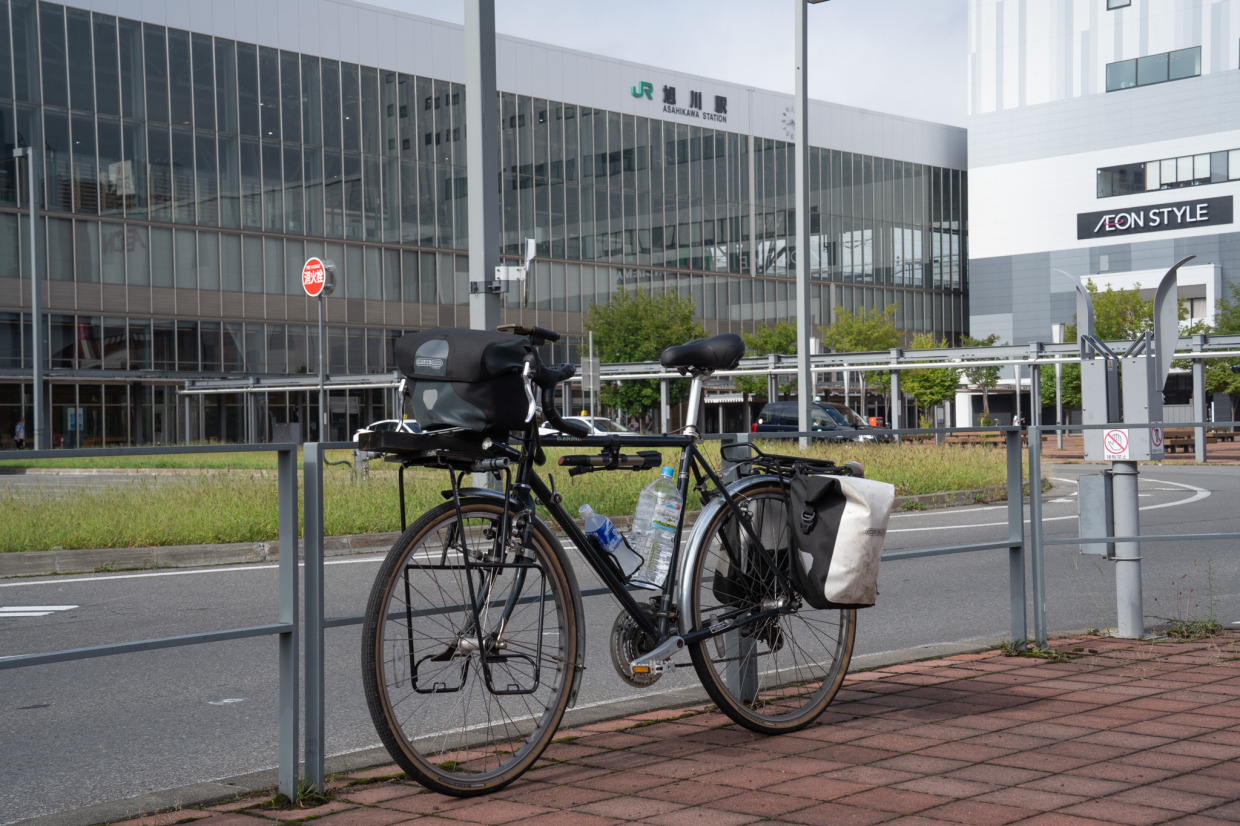
The starting point is Asahikawa Station, the gateway to Asahikawa—Hokkaido’s second-largest city after Sapporo—and a lively hub bustling with activity.
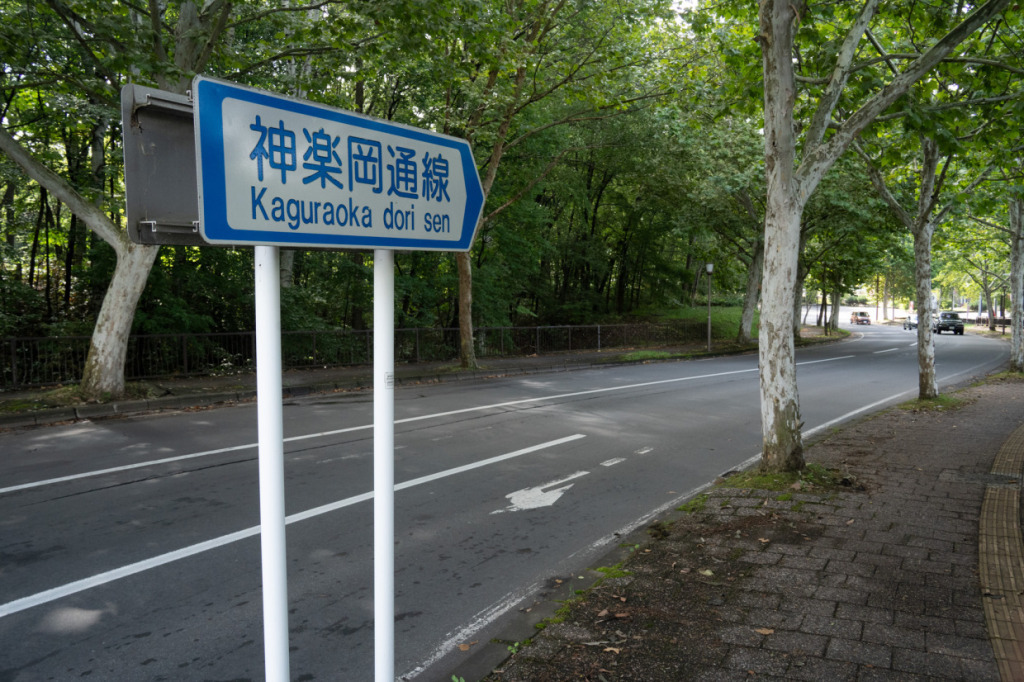
First, leave Asahikawa Station and head onto Kaguraoka-dori. Rows of large plane trees line both sides of the street. Their mottled trunks are distinctive, and in summer their broad leaves create a refreshing canopy, offering welcome shade for cyclists.
Even before leaving the city center, you’re enveloped in a sense of natural coolness, making it easy to settle into a smooth, comfortable rhythm on the pedals.
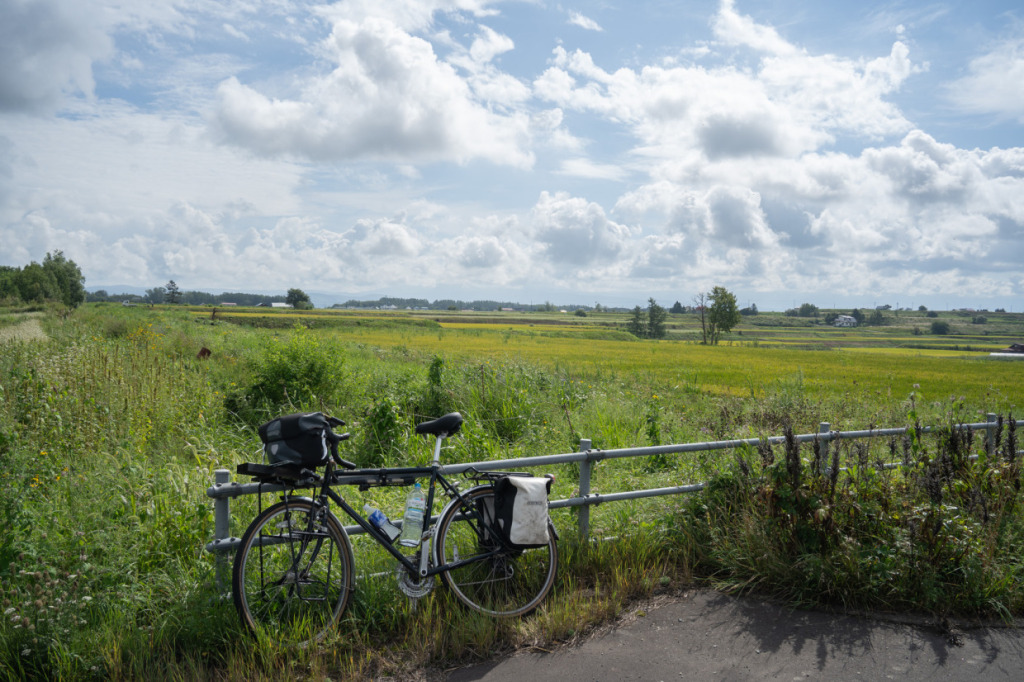
As you leave the city of Asahikawa behind, the scenery gradually opens up. Before long, you’re greeted by expansive rural landscapes stretching as far as the eye can see.
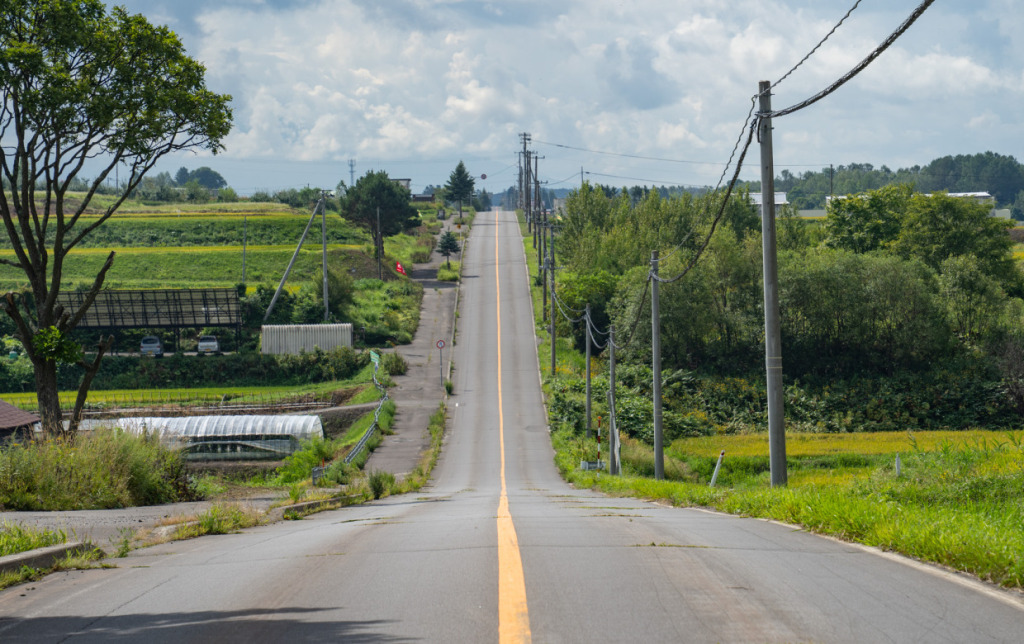
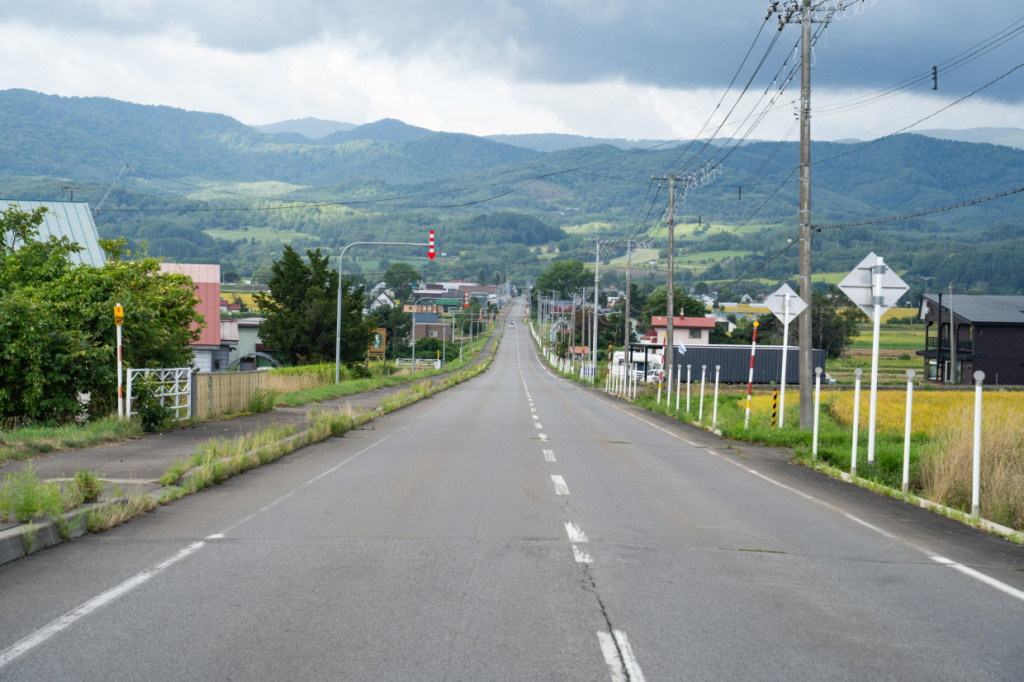
As you approach Biei, the landscape opens up even further, with fewer obstacles in sight and long, straight roads becoming the norm. The endless stretch of farmland and sky is so captivating that it’s tempting to take your eyes off the road—but safety comes first, so be sure to stay focused ahead.
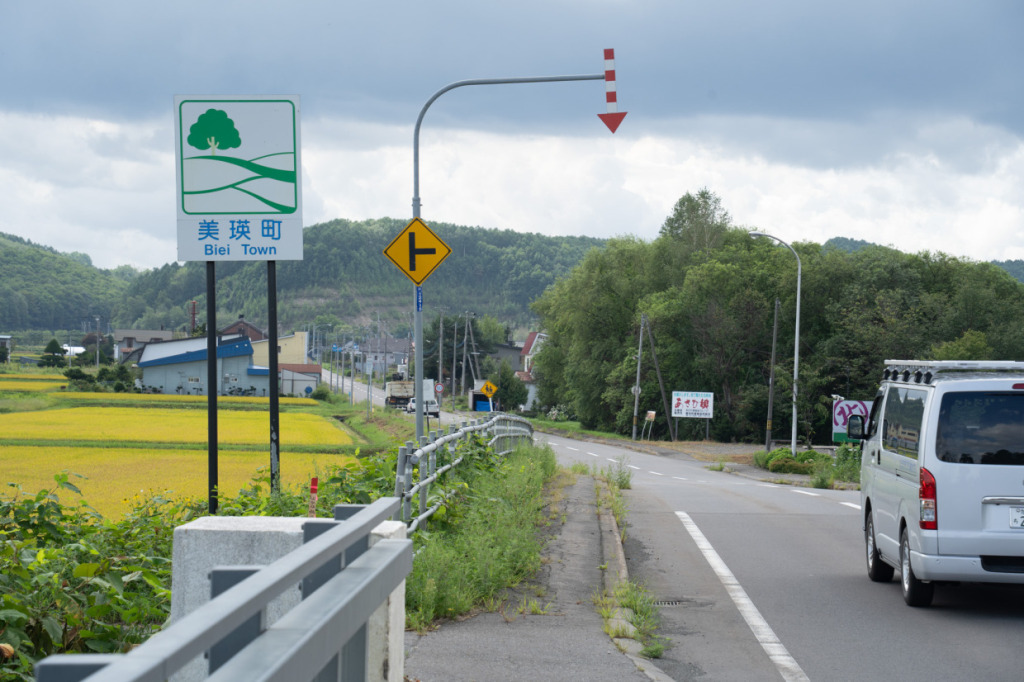
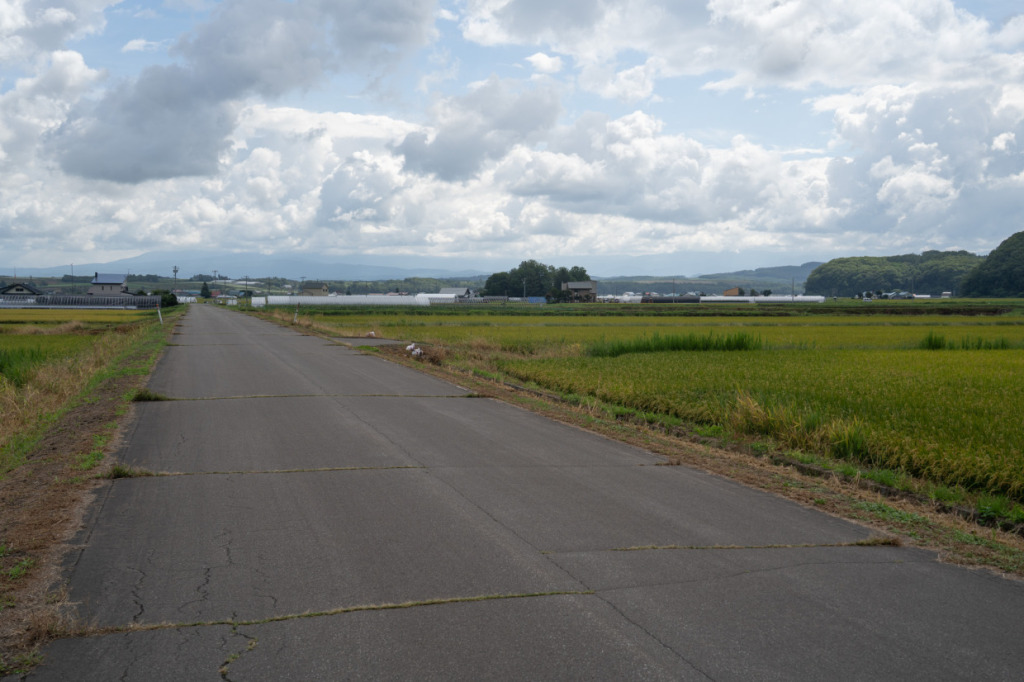
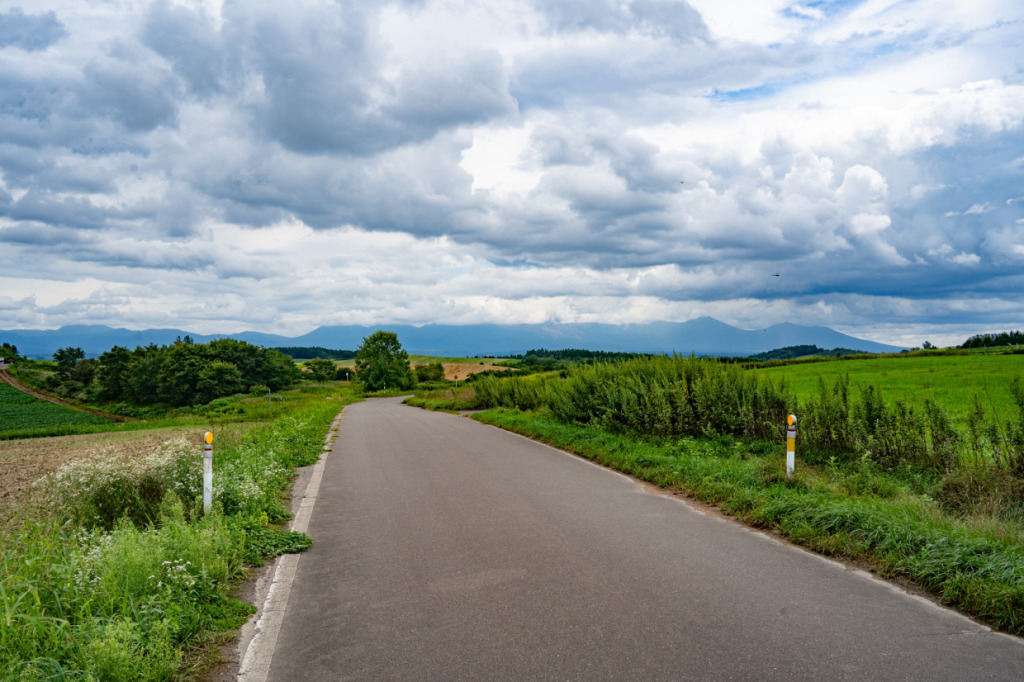
Upon entering Biei, you’ll find farm roads cutting straight through the fields. Originally built for agricultural work and transport, these roads are on an entirely different scale in Hokkaido. With generous width and long, uninterrupted stretches, they feel less like farm roads and more like small national highways.
Traffic is light, and as you ride, there’s a sense of freedom—as if the road were yours alone. Combined with the vast rural scenery, it’s a moment where you can truly feel the grand scale of one of Japan’s leading agricultural regions.
2. Seven Stars Tree
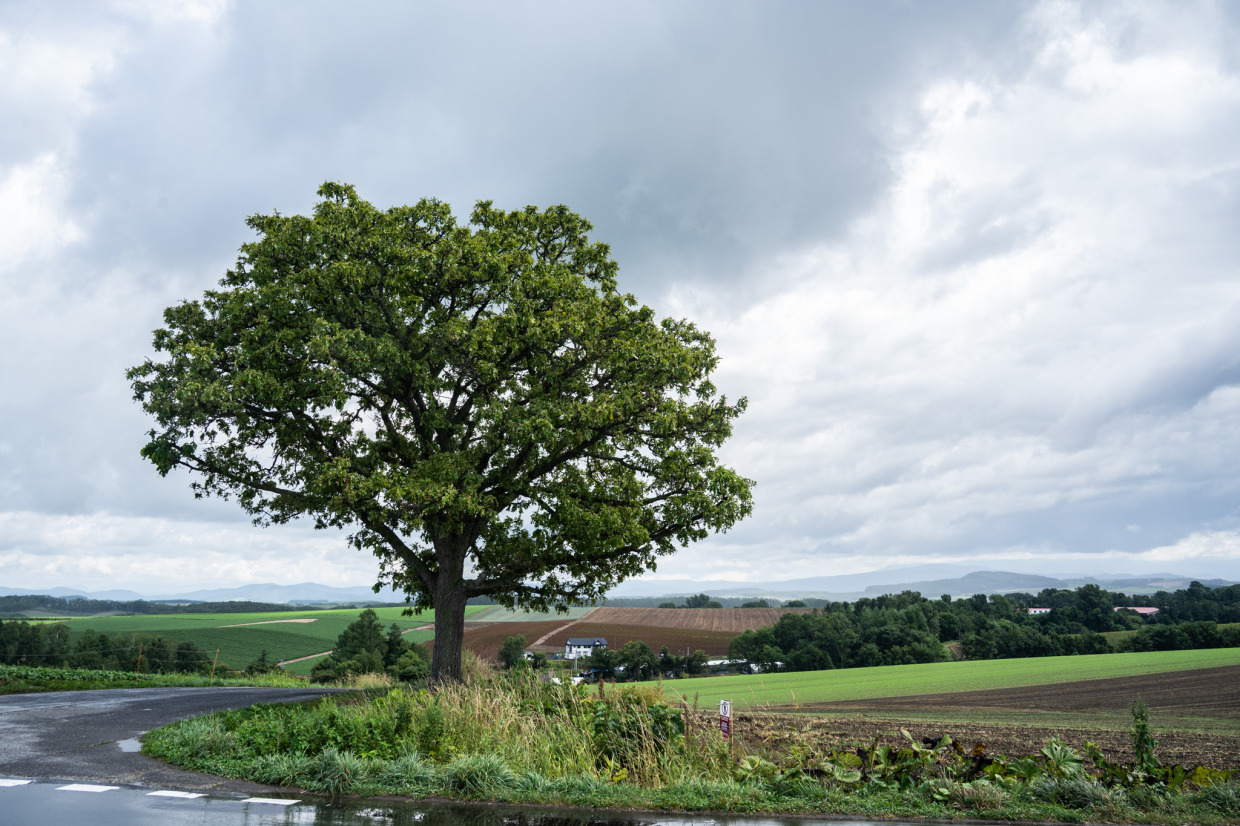
One of Biei’s most iconic landmarks is the Seven Stars Tree. It became widely known after being featured on the packaging of the Seven Stars cigarette brand in 1976, and has since grown into a popular destination for visitors.
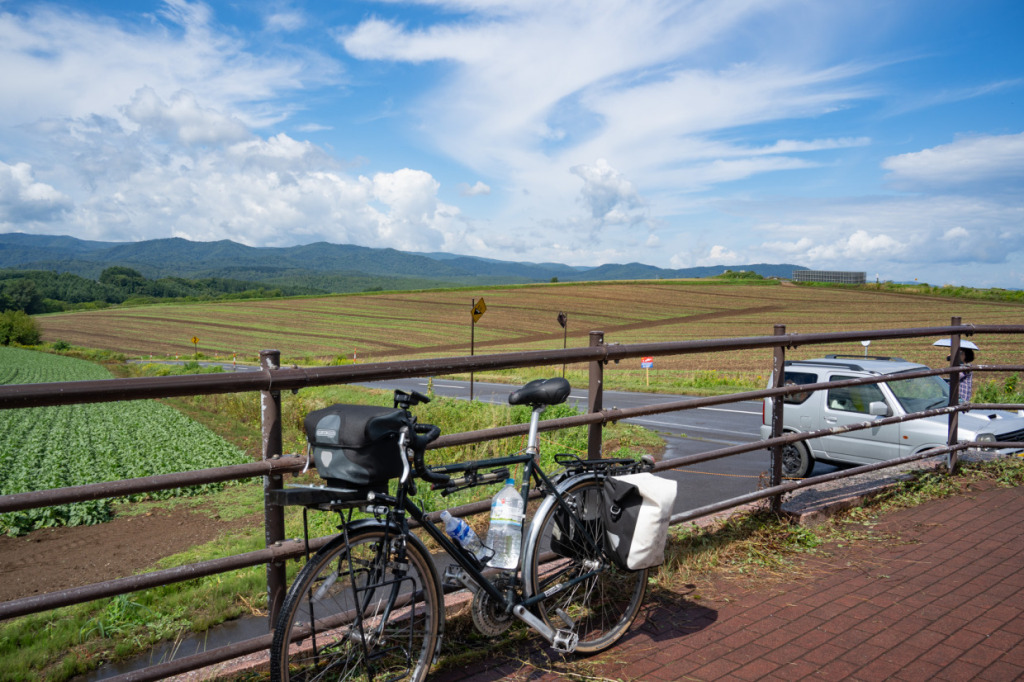
Standing before it, the tree itself is not particularly large or rare. It is a Japanese oak—commonly seen across Hokkaido—and on its own, it would be considered quite ordinary.
Yet, set alone amid Biei’s vast rolling hills, it creates a sense of rhythm in the landscape, accentuating the sweeping fields and the expansive sky that surrounds it.
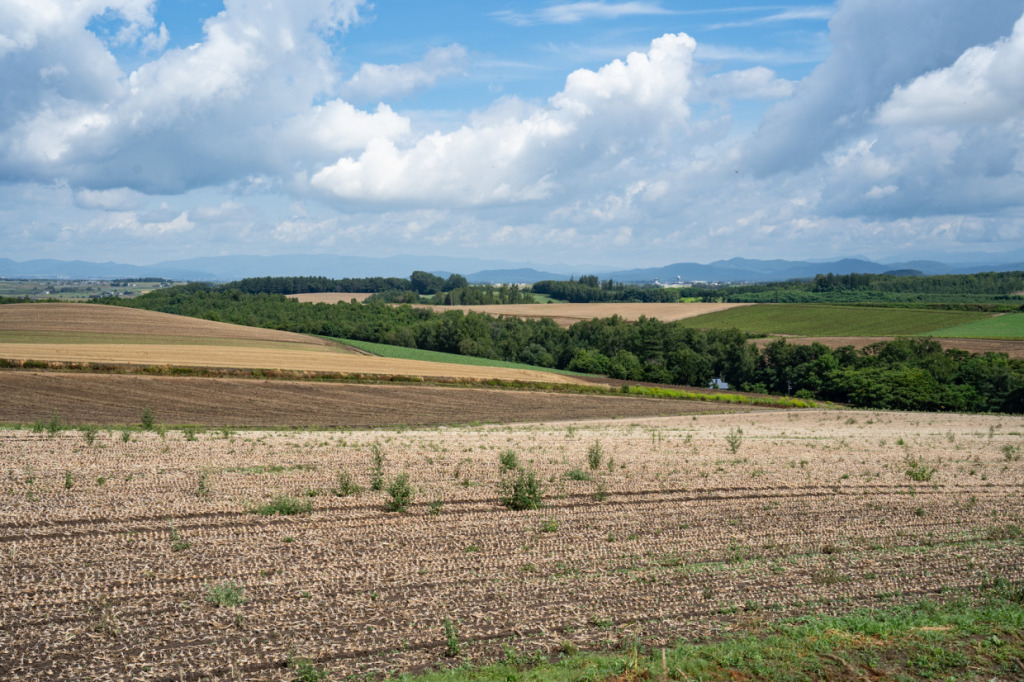
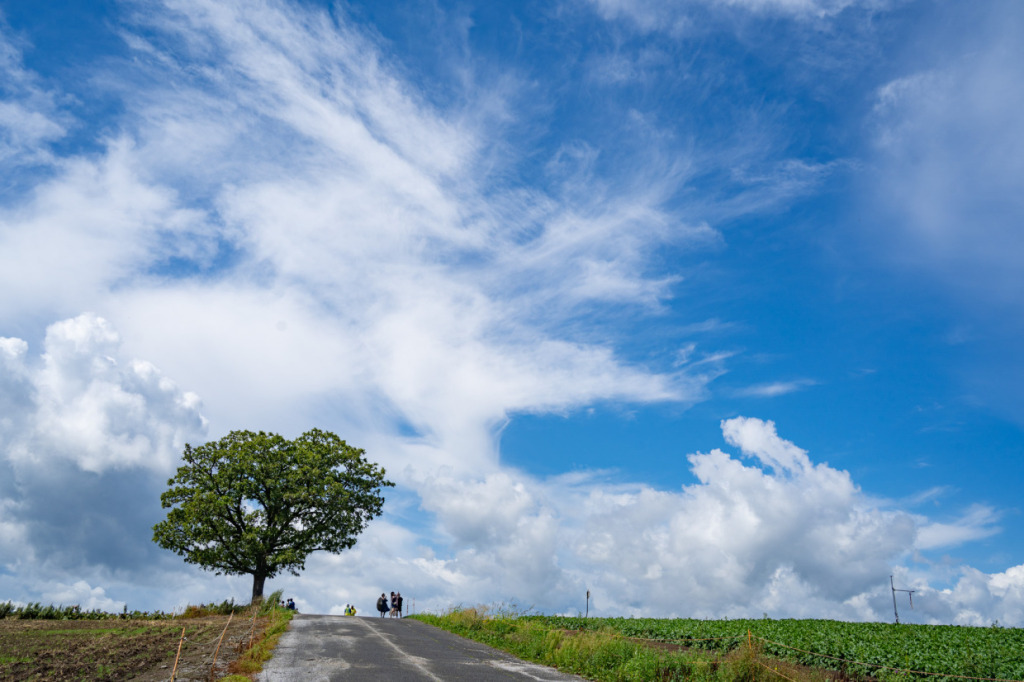
A single tree brings definition to the landscape and leaves visitors with a sense of what makes Biei so distinctive—the Seven Stars Tree is truly a symbolic landmark that embodies the area’s character.
3. Ken and Mary Tree
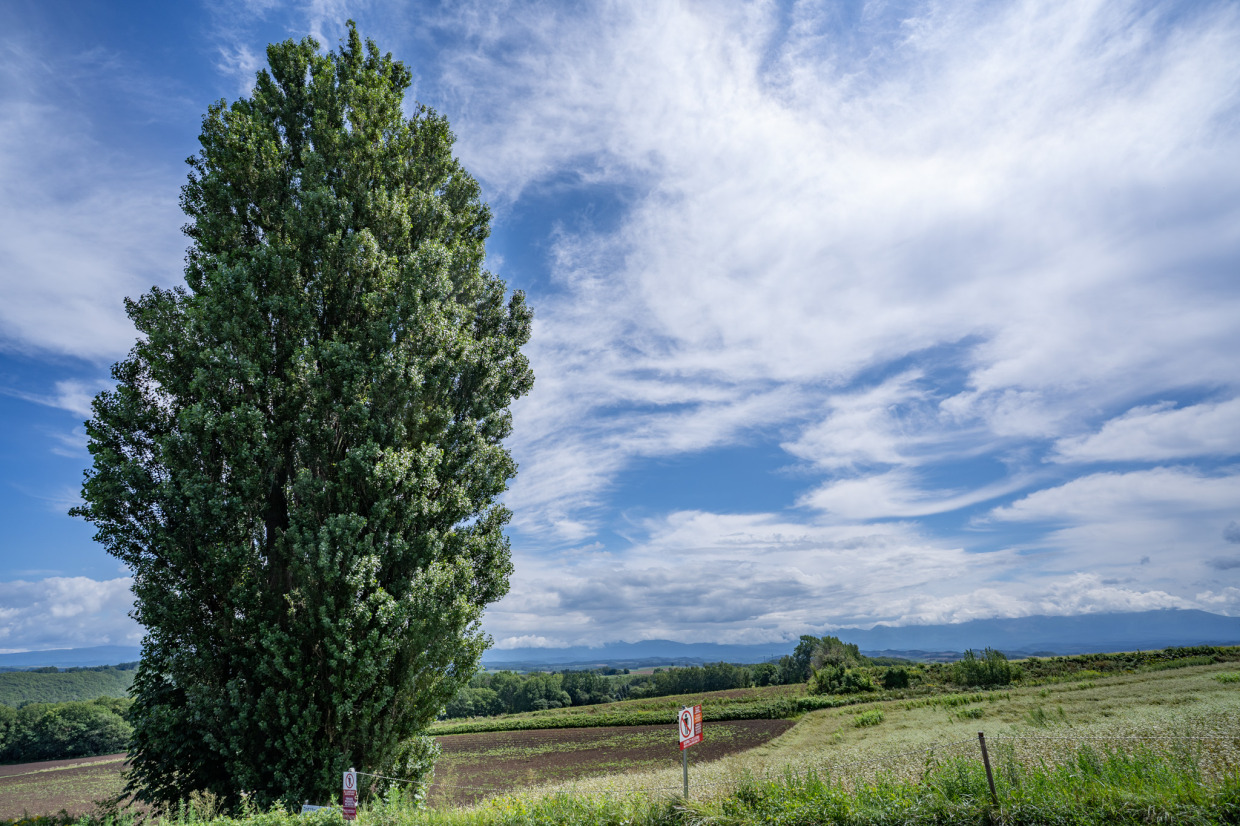
Standing tall on the hills of Biei, the Ken and Mary Tree is a lone poplar with a story behind its name. It was featured in the 1972 TV commercial for the Nissan Skyline, “Ken and Mary Skyline,” and rose to nationwide fame alongside the ad’s success.
The tree itself grows straight toward the sky, its vertical form striking against Biei’s gently rolling hills. While it carries the dignified presence of a tall tree on its own, it is the combination with the surrounding fields and distant mountain ranges that truly defines the scene.
Within Biei’s open landscape, it continues to evoke both the nostalgic mood of the original commercial and the grandeur of the land for those who visit.
4. Hokusei no Oka Observatory Park
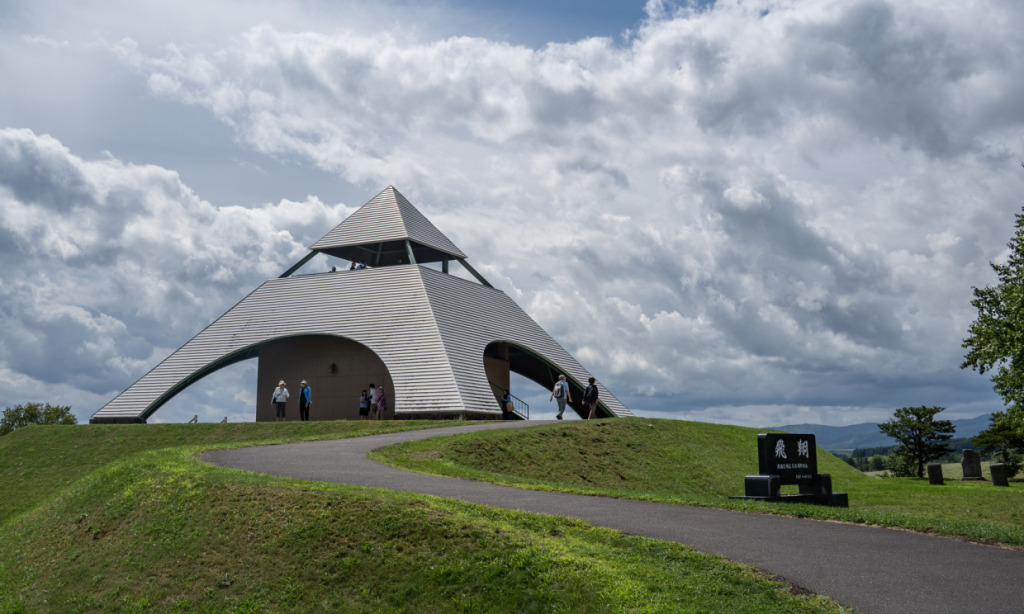
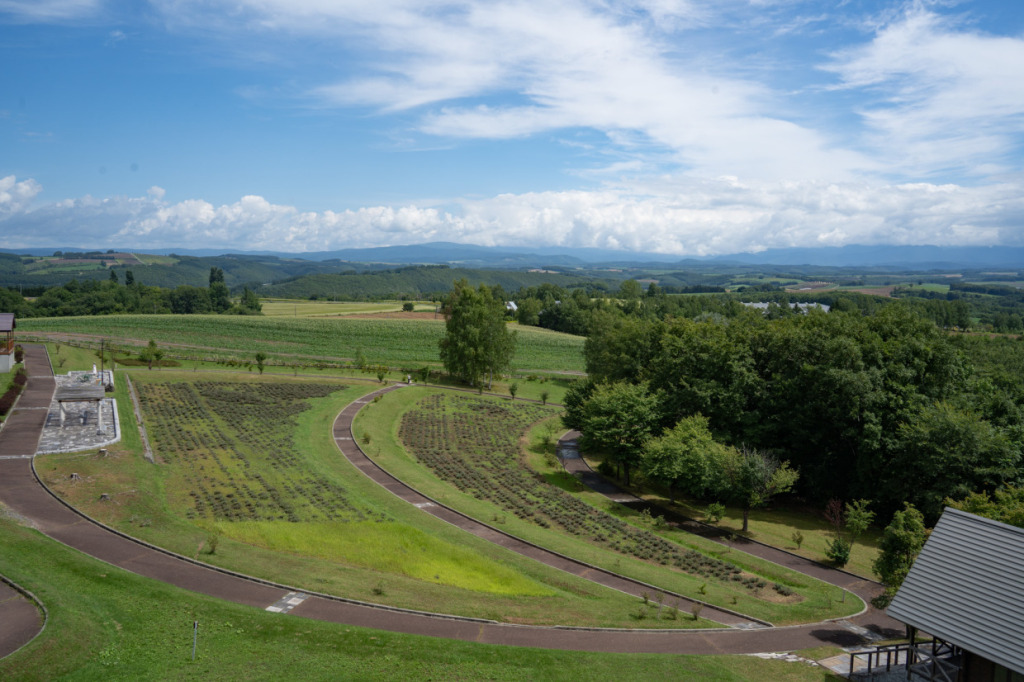
The Hokusei no Oka Observatory Park, instantly recognizable by its distinctive pyramid-shaped observation tower, is one of Biei’s premier viewpoints. Climb to the top, and you’ll be rewarded with sweeping views of the town, the patchwork of expansive fields, and, in the distance, the Tokachi Mountain Range.
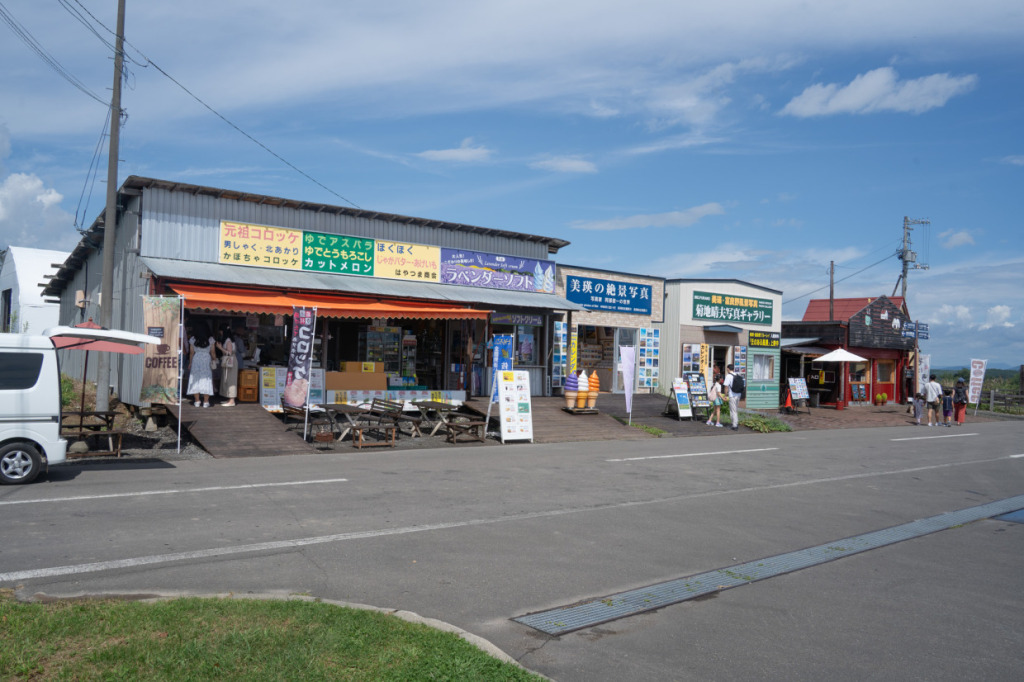
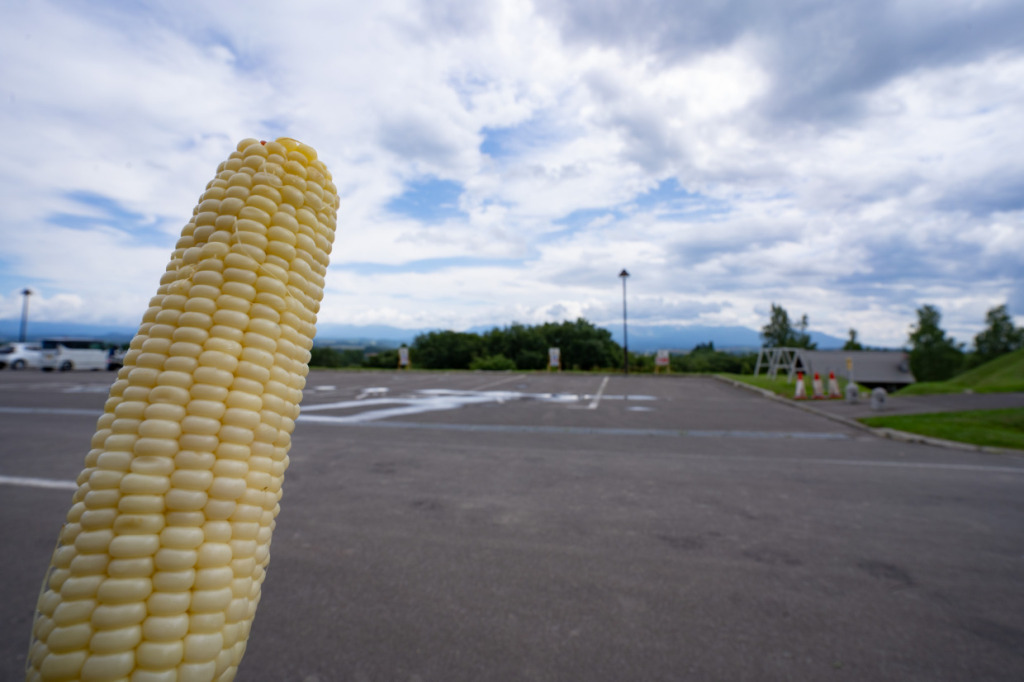
We took a short break here, making it a perfect spot for a quick snack. At the stalls near the park entrance, we tried a rare variety of white corn—so sweet it can be eaten raw. It was incredibly delicious.
5. Mild Seven Hills
Next, we visited the spot once known as the Mild Seven Hills. Its name became widely recognized after a 1978 TV commercial for the Mild Seven cigarette brand featured a stand of larch trees here, turning it into one of Biei’s most iconic sightseeing locations.
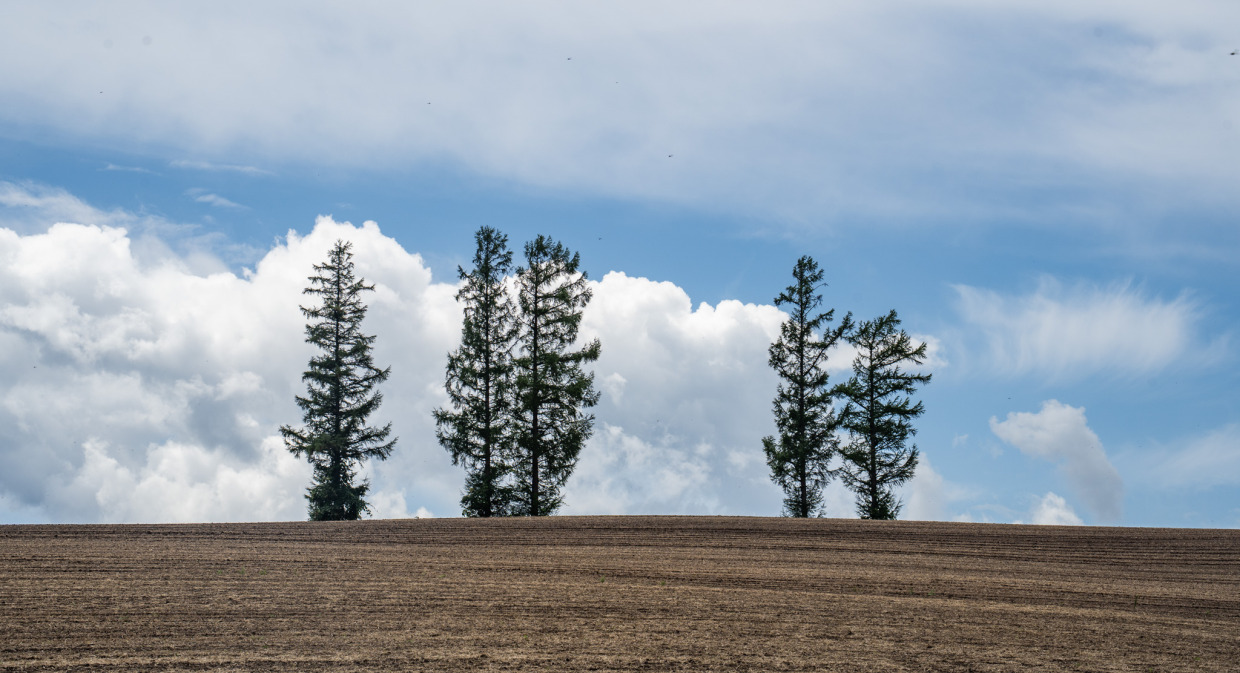
However, the grove has since been cut down, and the original scene can no longer be seen here. Only five trees remain today where the larch forest once stood. The removal was due to local considerations such as the aging of the trees, and its role as a tourist attraction has effectively come to an end.
Even so, the Mild Seven Hills remains an essential part of Biei’s tourism history—an iconic landscape that lives on, even if it no longer exists in its original form.
6. Shikisai no Oka
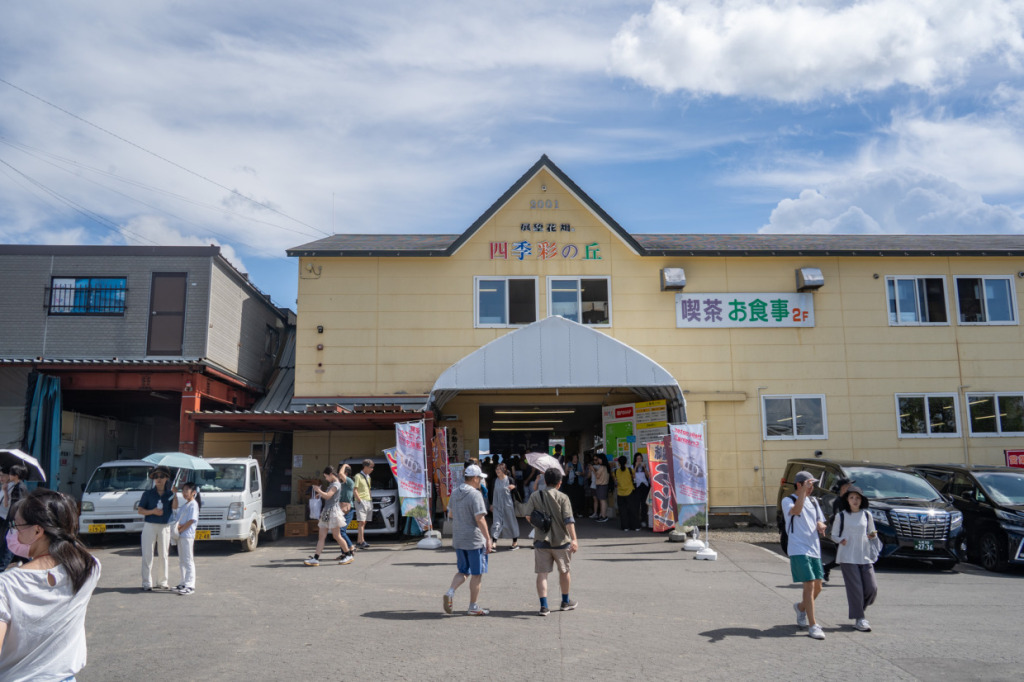
After about an hour of enjoyable riding from the Mild Seven Hills, we arrived at Shikisai no Oka.
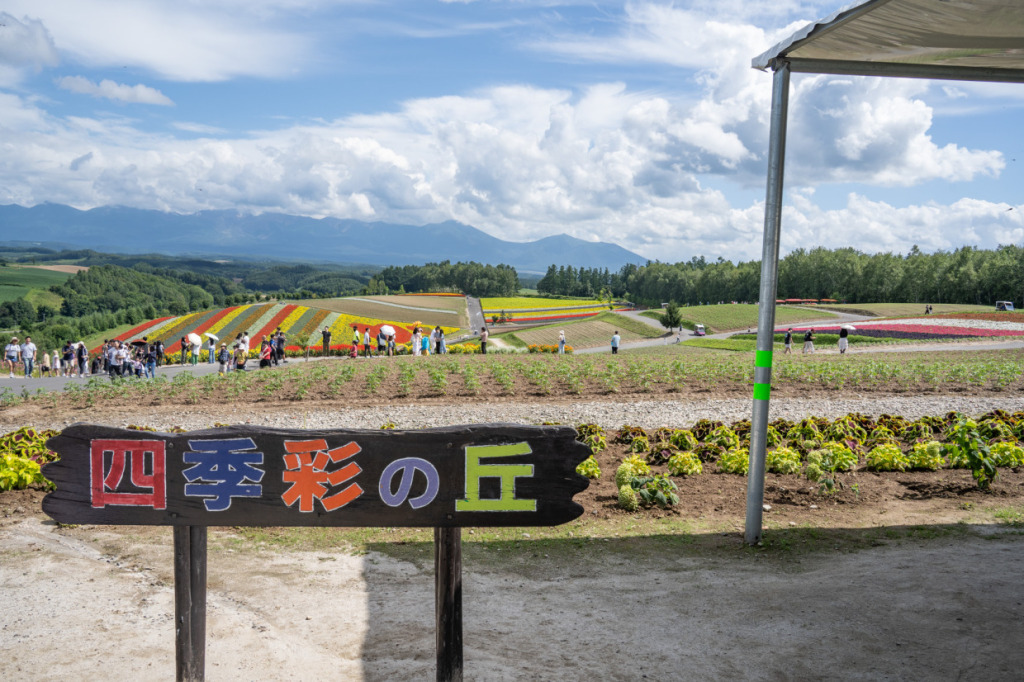
Within the park, you’ll find shops and restaurants where you can enjoy treats like lavender soft-serve ice cream and dishes made with local vegetables, as well as purchase farm products and original souvenirs.
You can also tour the flower fields by tractor bus, known as the “Norokko-go,” or by cart. For cyclists, it’s an ideal stop to take a break while exploring the area.
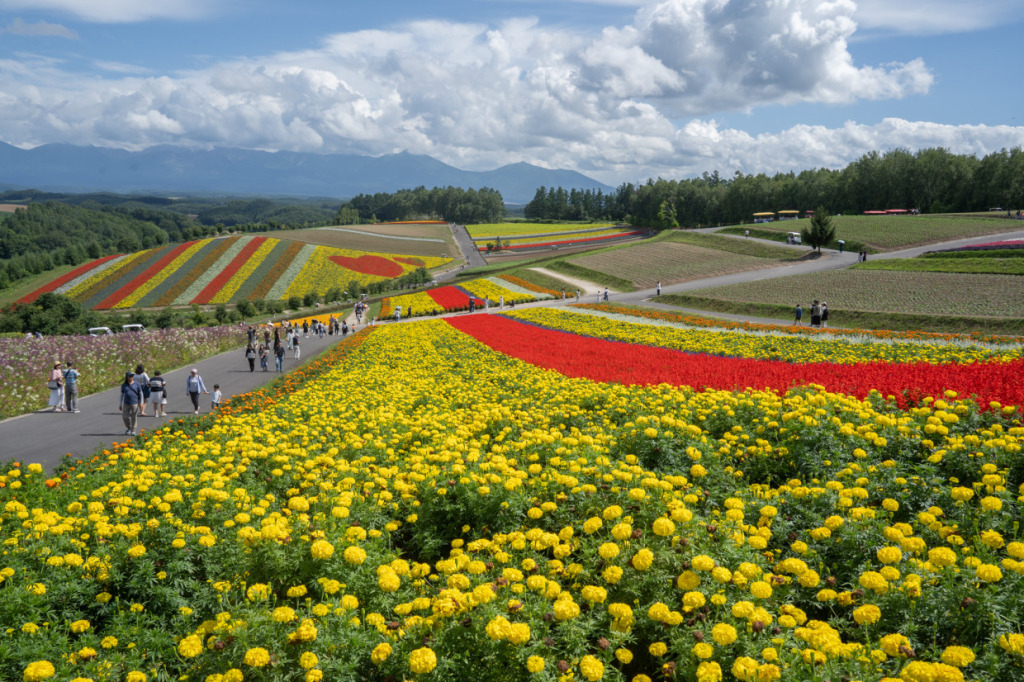
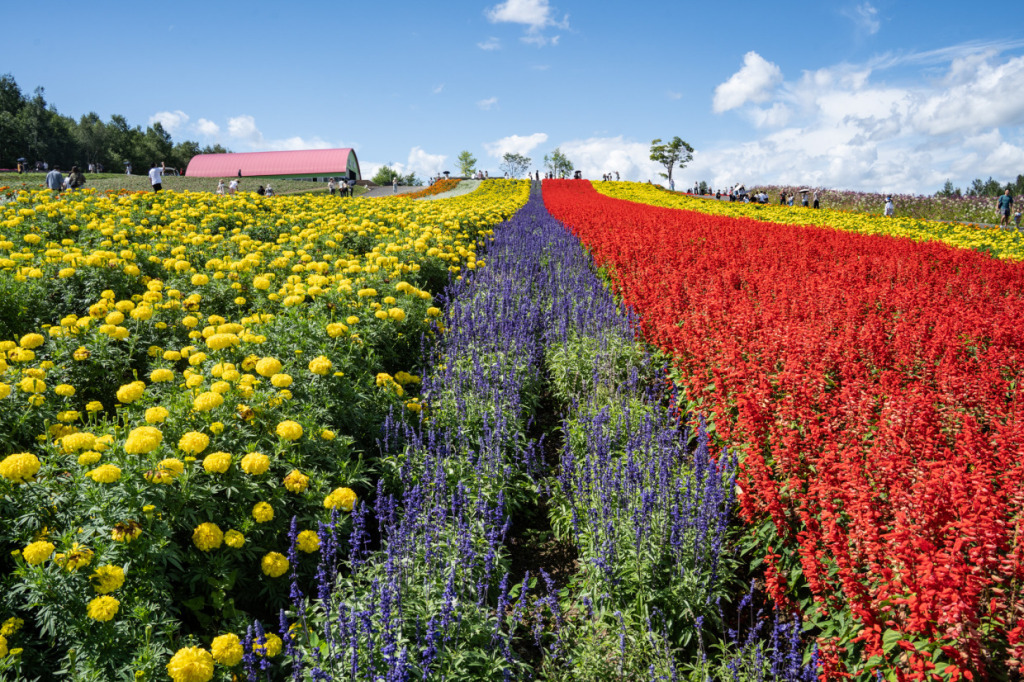
During the green season—from spring through autumn—flowers such as tulips, lavender, salvia, and marigolds are planted in succession, allowing visitors to enjoy ever-changing colors with each season.
In contrast, winter transforms the fields into a blanket of snow, when the area shifts into its winter season, offering activities like snowmobiling and snow rafting.
Shikisai no Oka
https://www.shikisainooka.jp/
7. Local sweet in Nakafurano: “Santa no Hige”
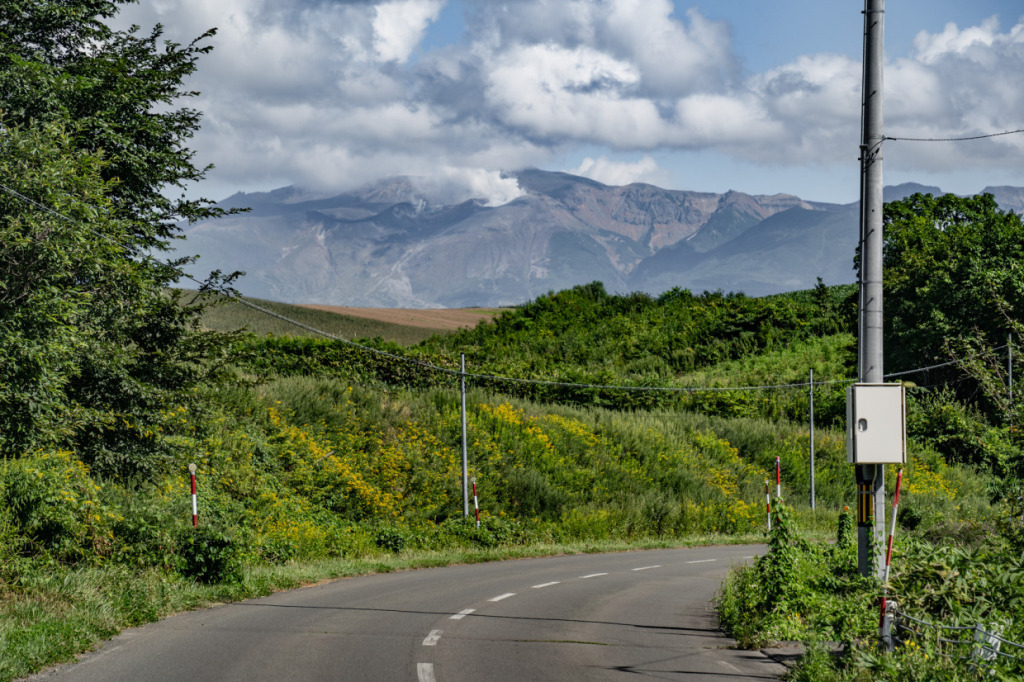
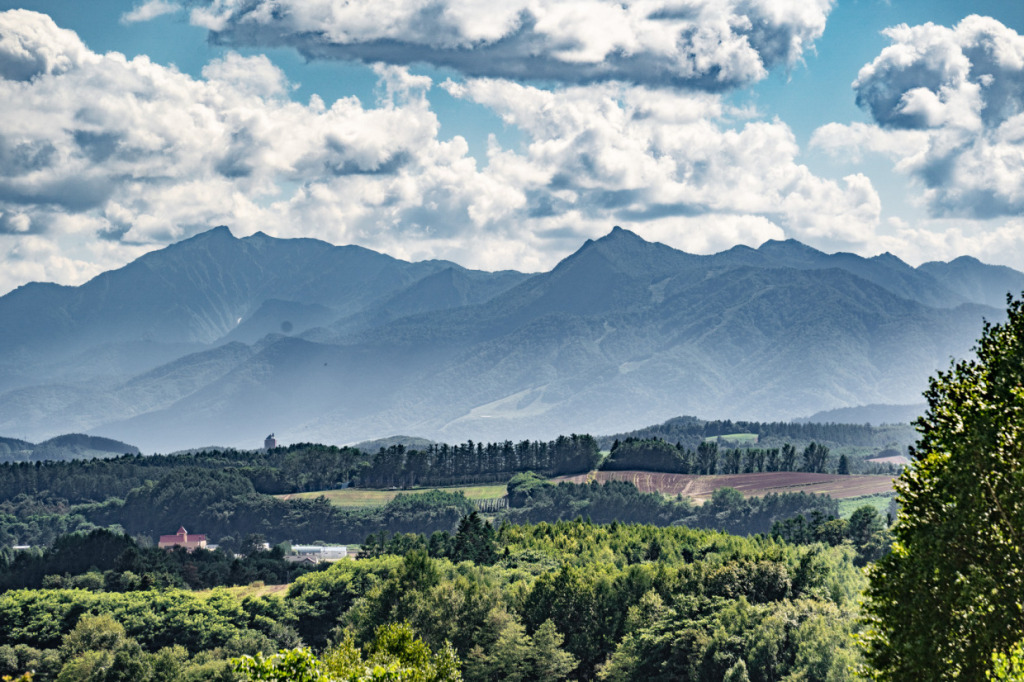
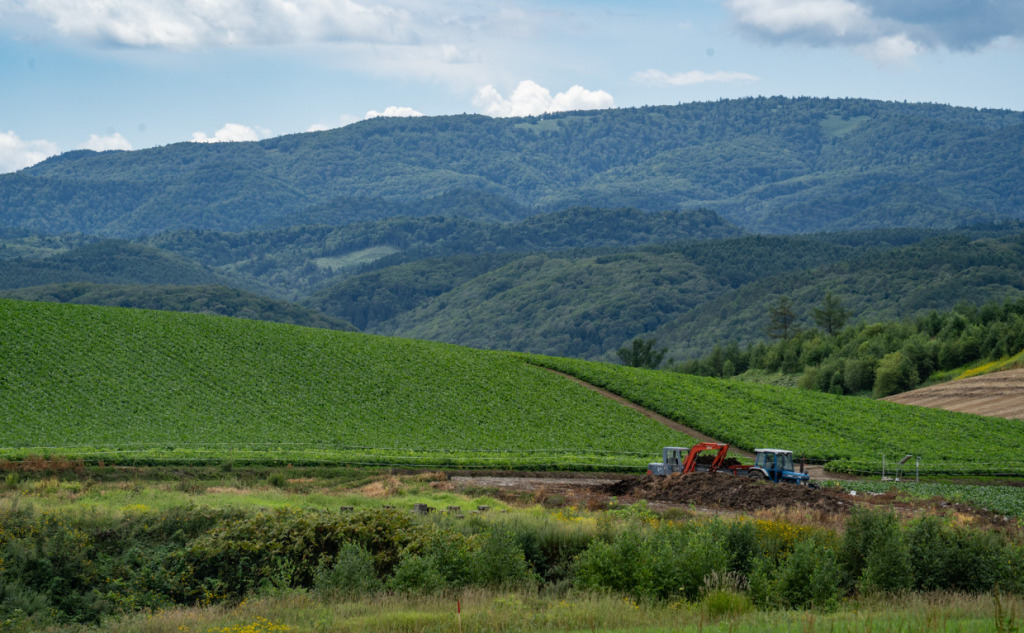
After leaving Shikisai no Oka, we continued cycling with sweeping views of the surrounding mountains. Leaving Biei behind, we made our way toward Nakafurano.
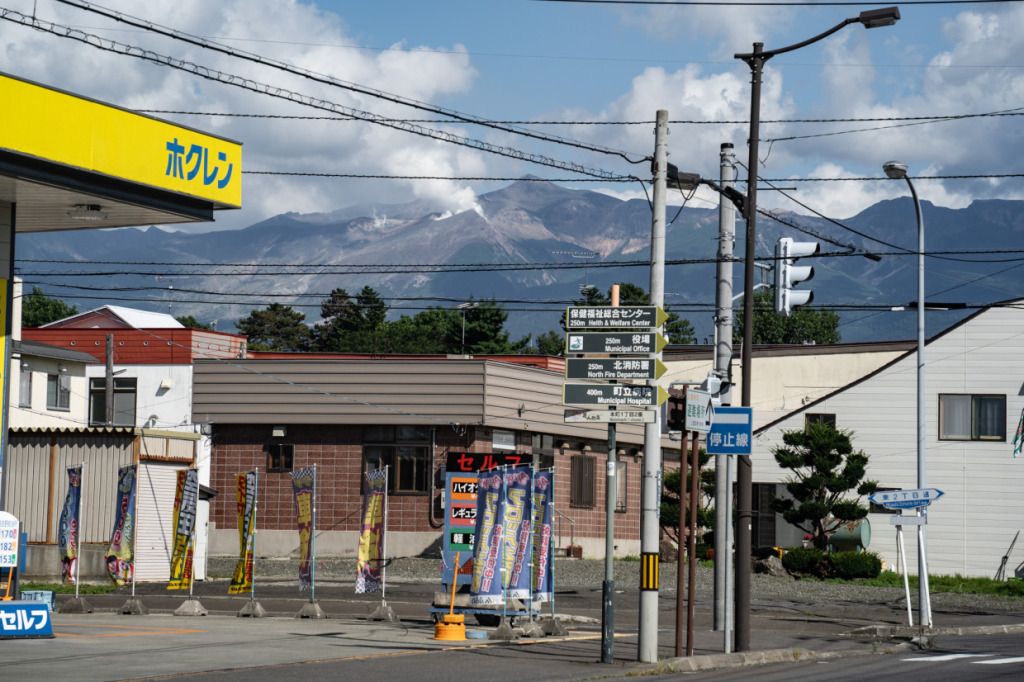
Upon entering Nakafurano, you find yourself at the foot of the Tokachi Mountain Range. Its highest peak, Mount Tokachi, stands out with an especially commanding presence.
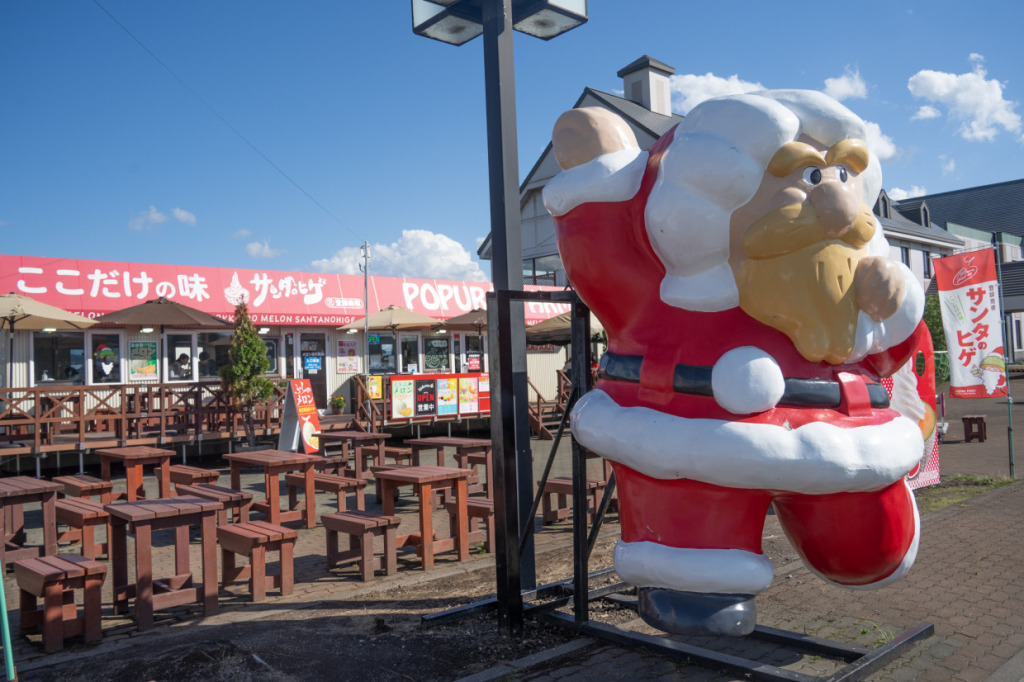
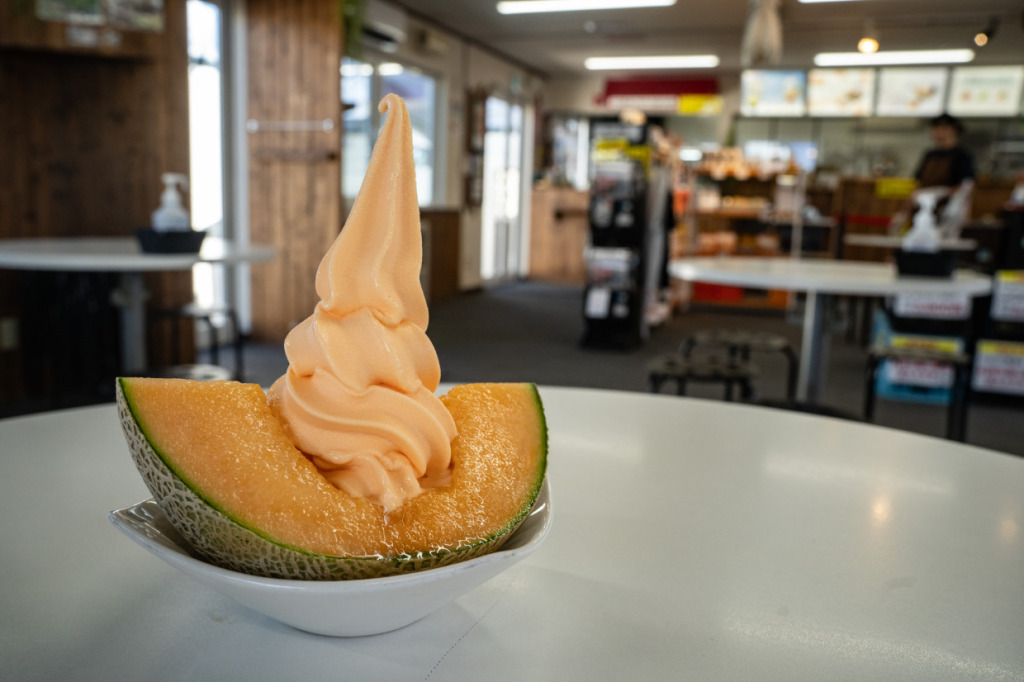
In Nakafurano, we stopped to try the local specialty sweet, “Santa no Hige.” This indulgent treat uses a Furano melon as a bowl, topped with a generous serving of soft-serve ice cream.
The price might raise an eyebrow at first, but one bite makes it all worthwhile. The fully ripened melon is so juicy it feels as if the juice itself has taken the form of flesh. Its natural sweetness pairs perfectly with the rich, chilled soft-serve. It’s a dessert that truly captures the essence of Furano and leaves a lasting impression.
While it’s on the pricier side for a tourist treat, the use of premium melon makes it well worth it.
Popura Farm “Santa no Hige”
https://popurafarm.com/lineup.html
8. Farm Tomita
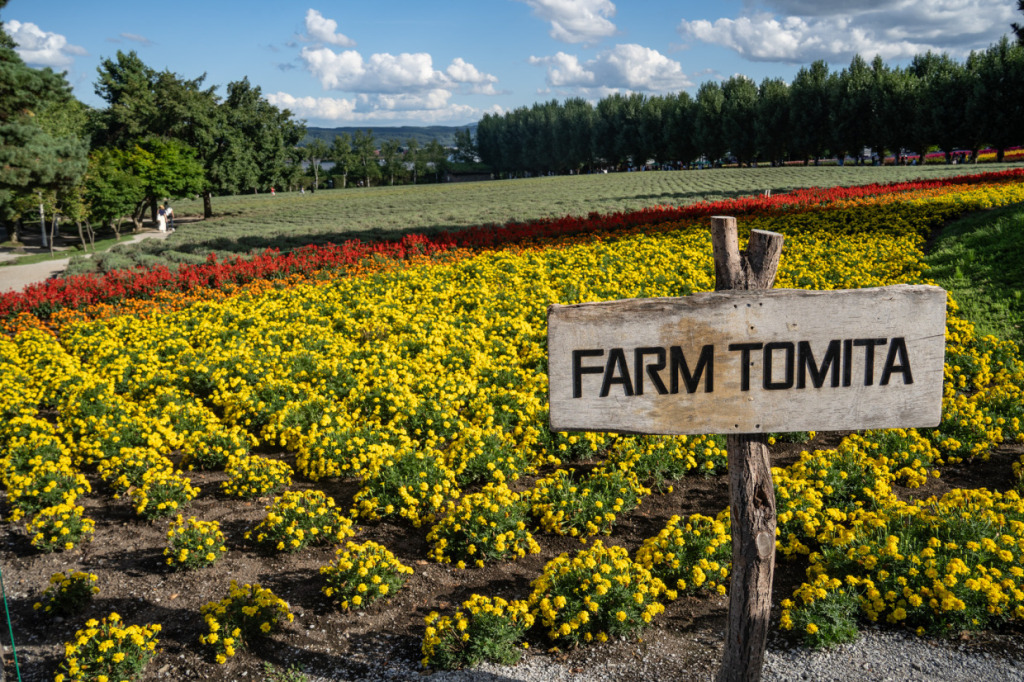
The final sightseeing stop on this ride is Farm Tomita, a lavender field famous throughout Japan. Within its grounds, lavender and a variety of seasonal flowers are carefully arranged, and at the height of summer, a vivid purple carpet spreads across the landscape.
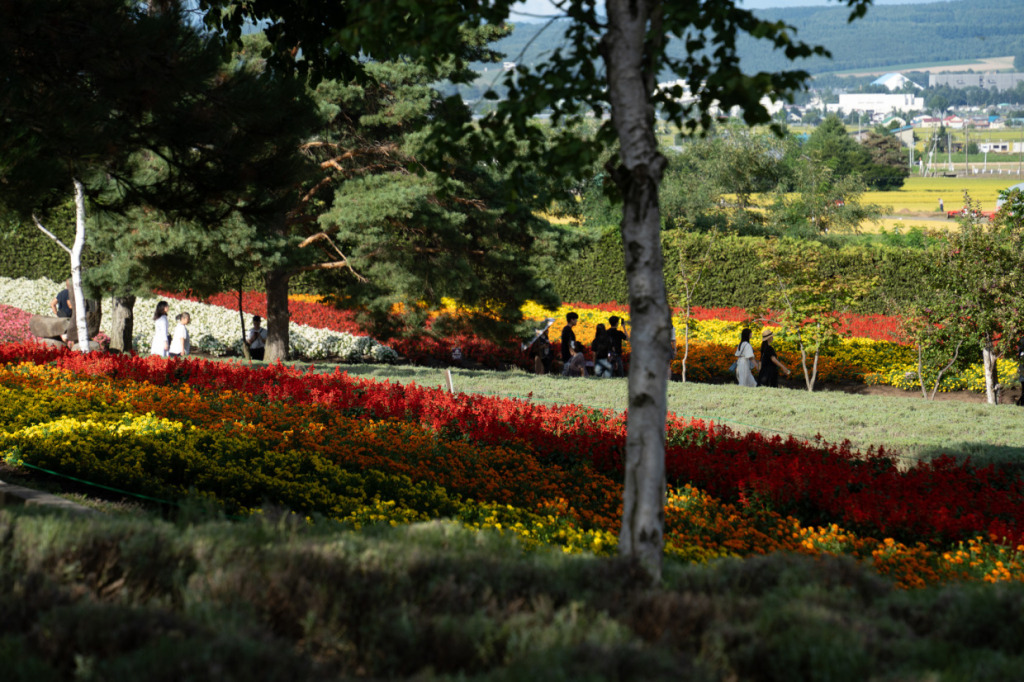
Comparable in scale and variety of flowers to Shikisai no Oka, Farm Tomita is remarkably free to enter. Its open access is part of what makes it so appealing—anyone can drop by and enjoy it with ease.
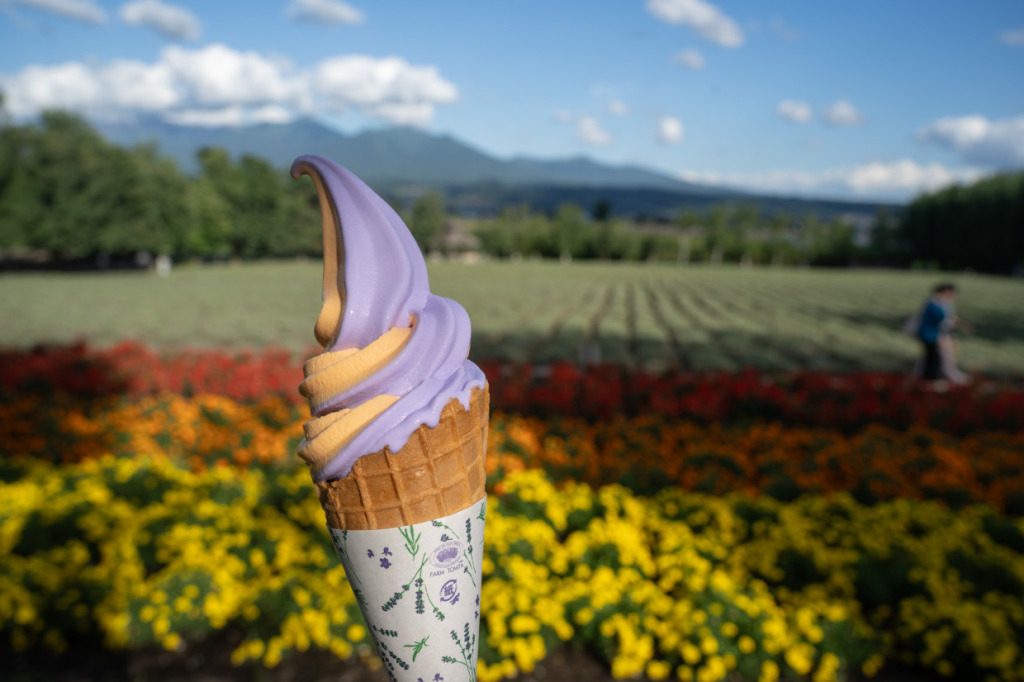
Relaxing as we gaze over the flower fields, we enjoy a unique lavender-flavored soft-serve—something you can only find at Farm Tomita.
At first, we were a bit skeptical about how well lavender would pair with ice cream, but it turned out to be a surprisingly perfect match. The refreshing floral aroma adds a clean, pleasant finish to each bite.
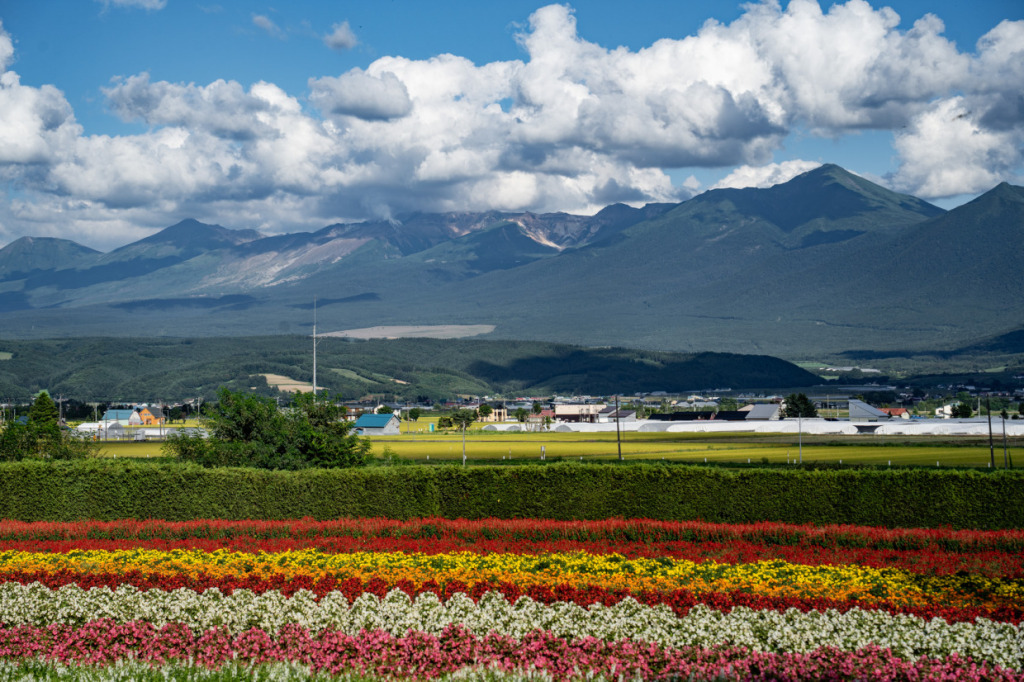
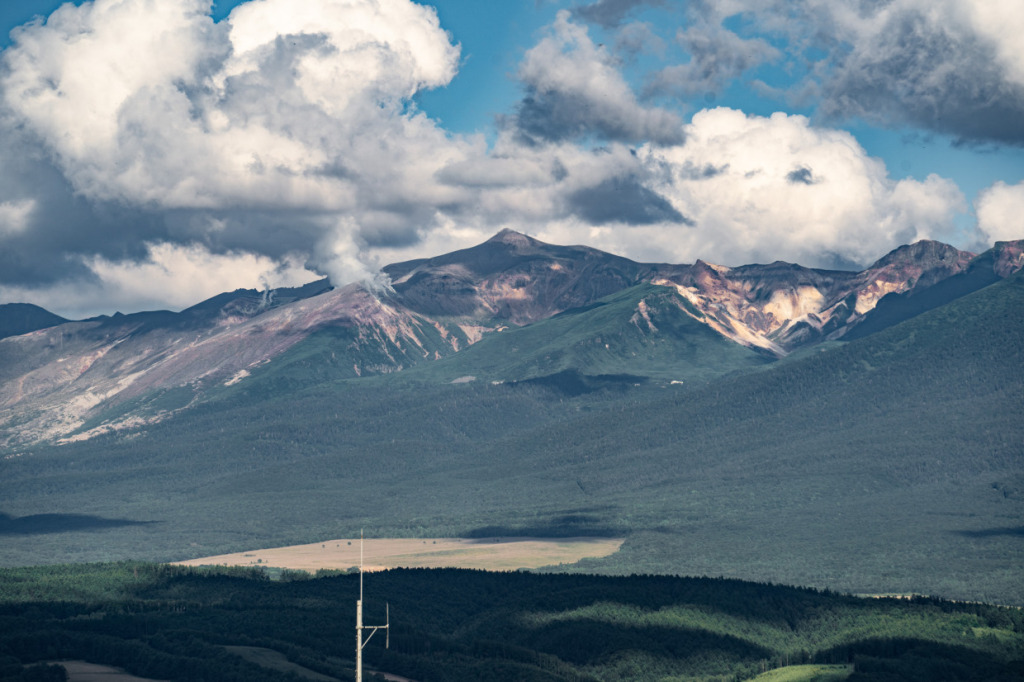
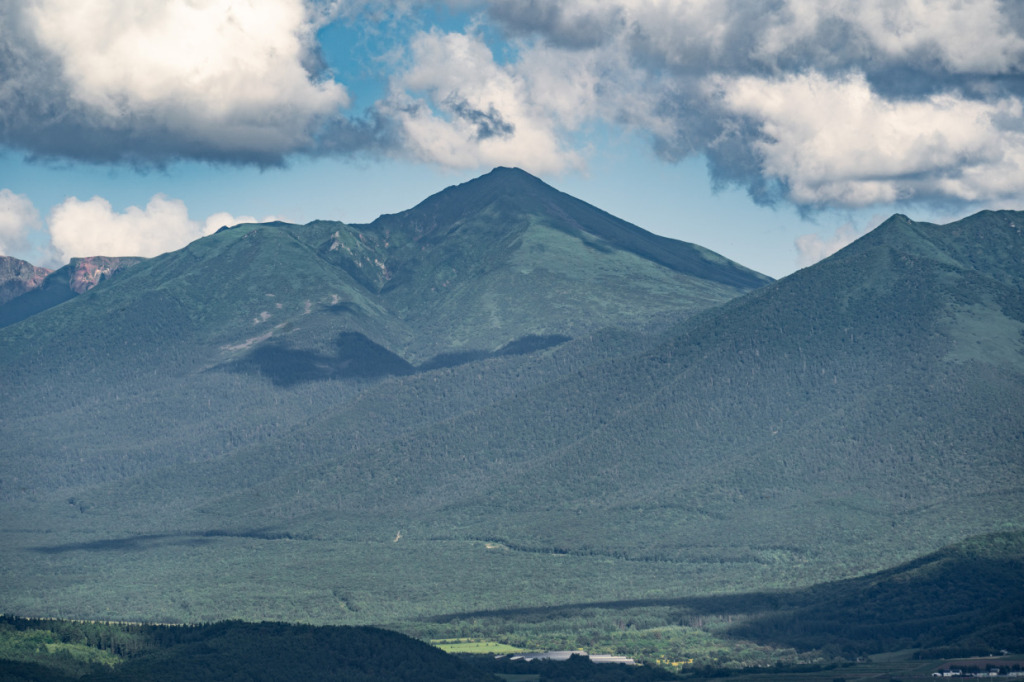
Just as I arrived, the clouds parted, revealing the ridgeline of the Tokachi Mountain Range in sharp detail. The combination of vibrant flower fields and the sweeping mountain backdrop is a view unique to this area.
Farm Tomita
https://www.farm-tomita.co.jp
9. Finish at Furano Station
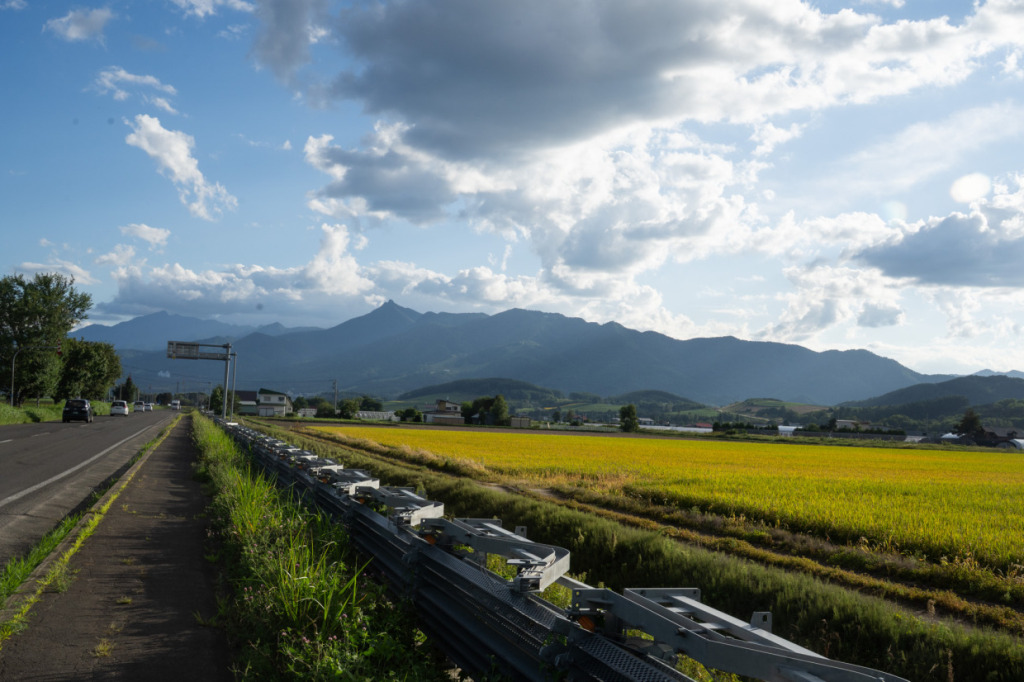
By the time we left Farm Tomita, dusk was just setting in. The sight of the mountains—led by Mount Ashibetsu—glowing in the evening light, paired with golden rice fields, created a scene rich in atmosphere.
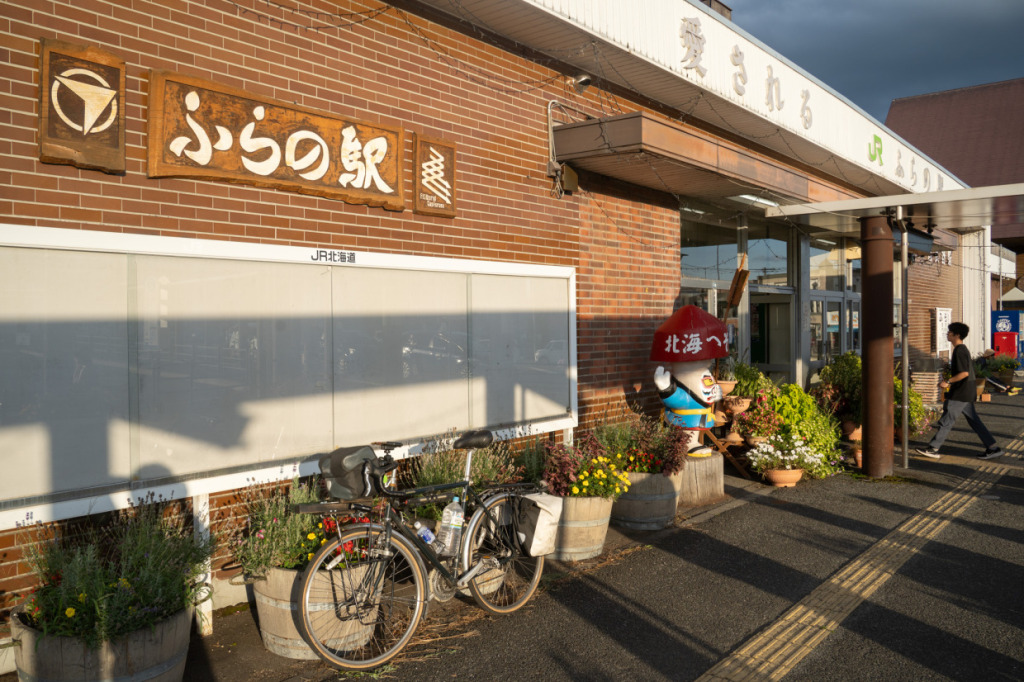
We arrived at Furano Station just before sunset, bringing the ride to a smooth and satisfying close. From here, you can either pack up your bike and head home, or stay the night in Furano.
As for me, I plan to return to Asahikawa by train—but since I’m already here, I’ve decided to enjoy dinner in Furano first.
10. Wrap up with Furano curry at “Yuiga Dokuson”
We headed to a curry restaurant called Yuiga Dokuson—one of the most well-known spots that immediately comes to mind when talking about curry in Furano.
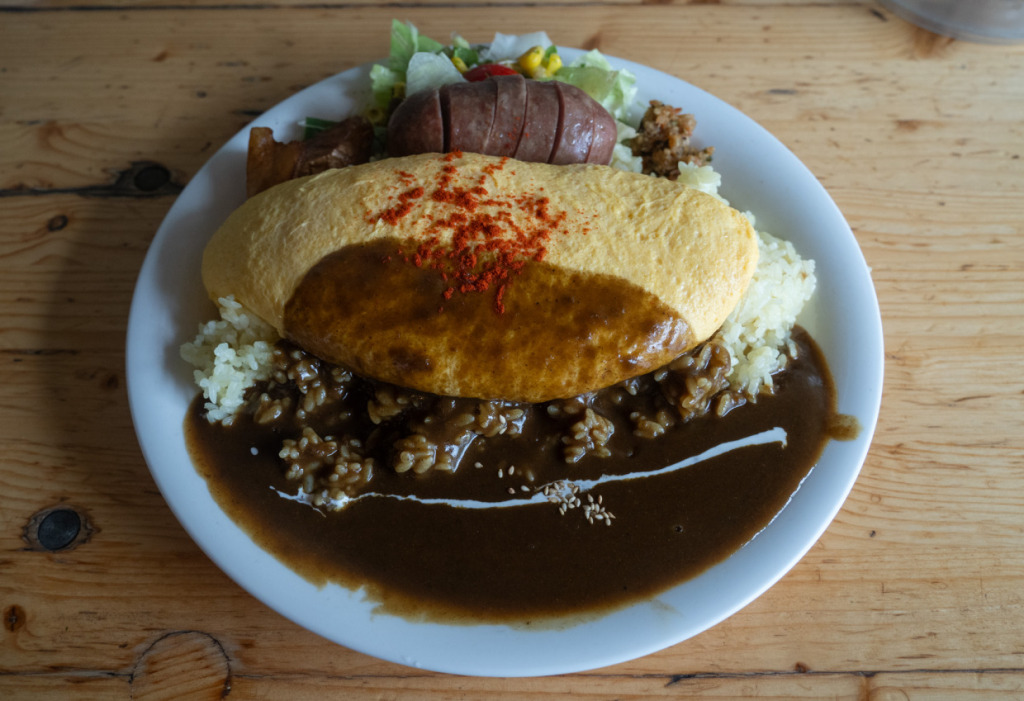
The dish to order here is their signature omu-curry. A soft, fluffy omelet wraps the rice, generously topped with rich, house-made curry. The curry carries a fragrant blend of spices without being overly hot, offering a gentle flavor with hints of sweetness from vegetables and fruits.
At first, it may feel like there’s not quite enough sauce for the rice and omelet—but don’t worry. Go ahead and enjoy it with plenty of curry, because at Yuiga Dokuson, refills of the sauce are free.
What makes it even more fun is how you order a refill: bring your plate to the kitchen and say the magic phrase, “Rurururū,” and you’ll be served more curry.
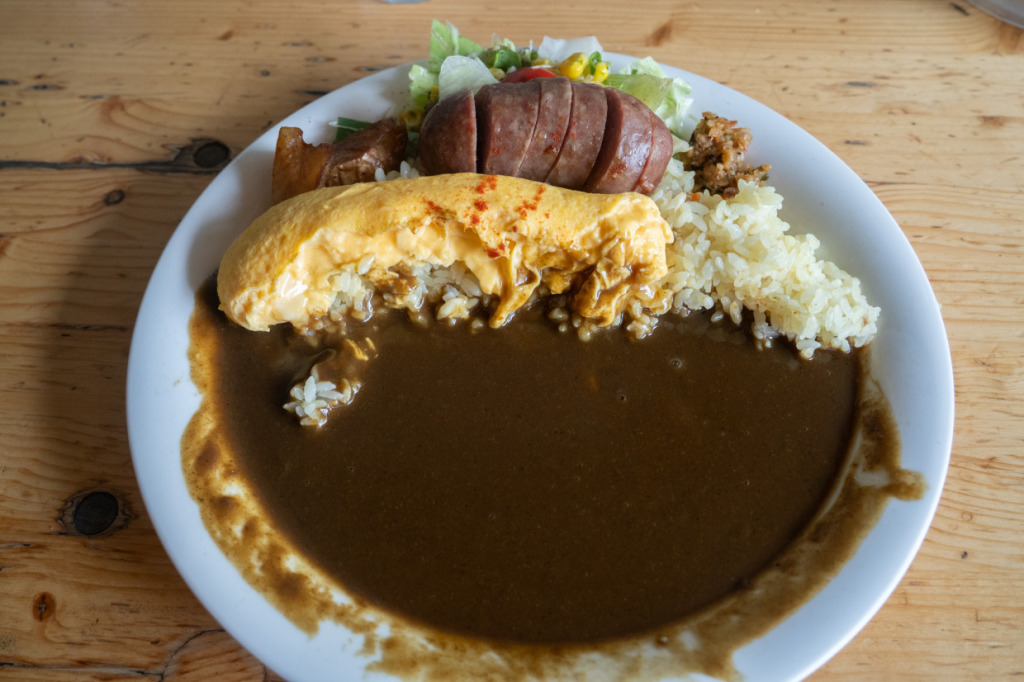
After saying the magic phrase, the curry was replenished. We generously mixed the revived sauce with the remaining ingredients and finished the dish in pure satisfaction.
Yuiga Dokuson
http://doxon.jp/
In this way, a day spent riding from Biei to Furano became a cycling experience that offered not only stunning scenery, but also the rich flavors of the region. From being moved by the rolling hill landscapes, to pausing among vibrant flower fields, and finally finishing with a locally loved omu-curry—each moment was unique to this area.
These are the sights and tastes you can truly discover only by traveling by bike. Why not experience them for yourself?
Profile
Hokokara
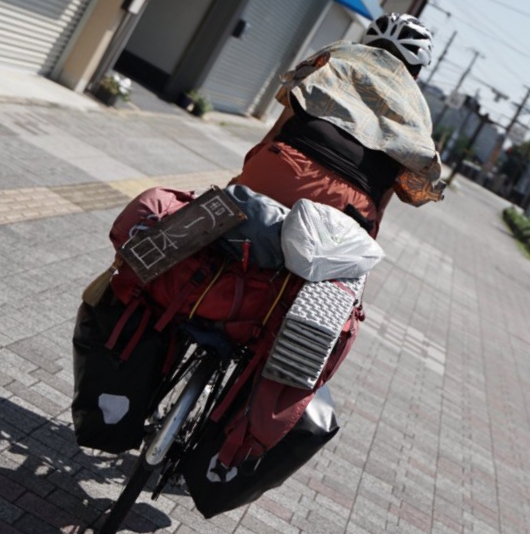
Originally from Miyazaki Prefecture, Hokokara is a blogger who travels across Japan with a focus on mountains and shrines. In the past, he completed a cycling journey around the entire country. Currently, through his blog Hinomoto Angya, he shares articles on mountaineering, history, and landscapes. In the future, they he plans to expand his reporting internationally, showcasing the charms of both Japan and the world.
Blog: https://fawtblog.com/