“All I Could Say Was ‘It Feels Amazing!’” — A Road Cycling Beginner’s First Trip to Hawaii and First 160 km Ride
Designer Y, a Friend of Editor M
“To be honest, it felt absolutely amazing.”
When I started riding the Honolulu Century Ride—and even after I finished—those were the only words I could find. The exhaustion, the sense of accomplishment, the frustration… somehow, they all seemed to be wrapped up in that one phrase. I couldn’t think of a better way to describe it.
So how did I, a graphic designer by profession, end up taking part in a 160 km cycling event in Hawaii? That’s the story I’d like to share this time.
My first trip to Hawaii, my first visit to the United States, and my first long-distance ride. As someone who rarely rides a bicycle except to drop off and pick up my kids, these few days were filled with one new experience after another. I’ll do my best to look back on it all as honestly as I can.
My First Trip to America Was to Hawaii
To be honest, this wasn’t just my first trip to Hawaii—it was my first time in the United States, period. The journey began with applying for ESTA (the Electronic System for Travel Authorization).
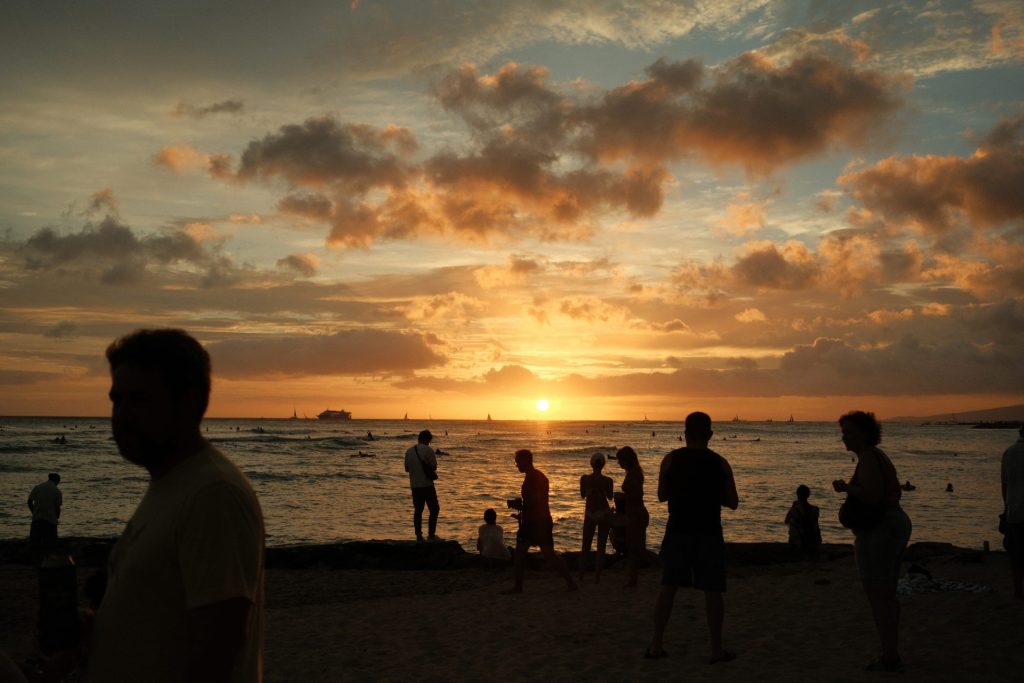
When I first arrived in Waikiki, the thing that struck me was how easy it was to walk around. As a tourist destination, it was certainly crowded, but the streets were wide and the sky felt vast. Living in Tokyo, I’m used to crowded places feeling somewhat cramped and overwhelming, but Waikiki was different. There was a wonderful sense of openness, and it was simply a comfortable place to be.
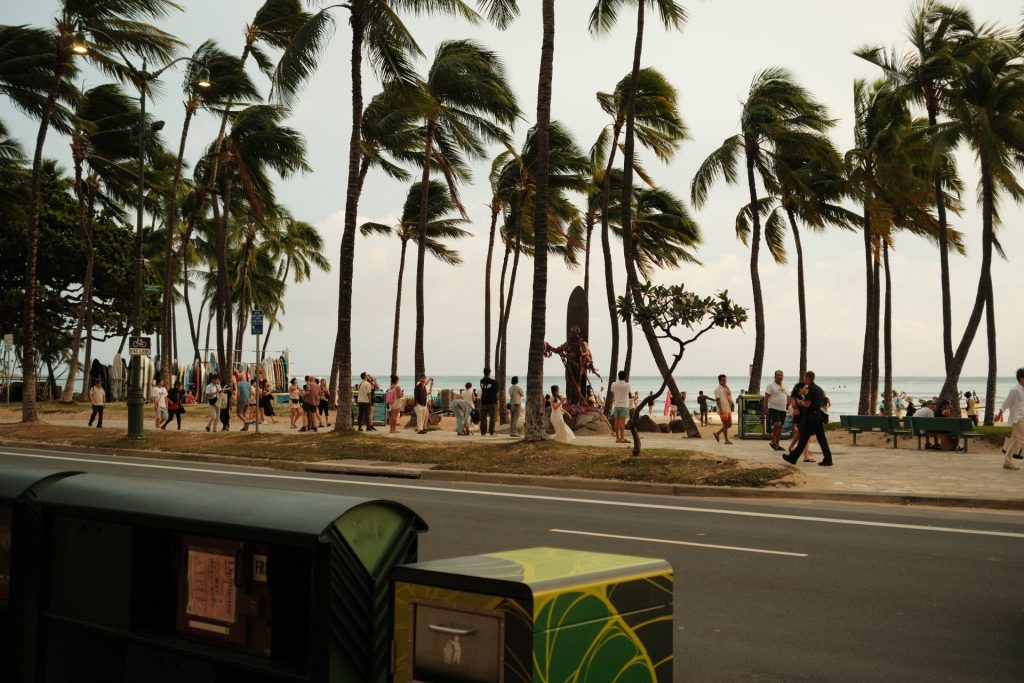
From the way people dressed to the overall atmosphere, Hawaii had exactly the open, laid-back feeling I had imagined. Rather than being stylish or cool, it simply felt good to be there. The warm weather meant everyone was dressed lightly, and somehow their clothes blended naturally into the surrounding scenery. It felt like a place where everything was effortless and natural, and where you could simply be yourself.
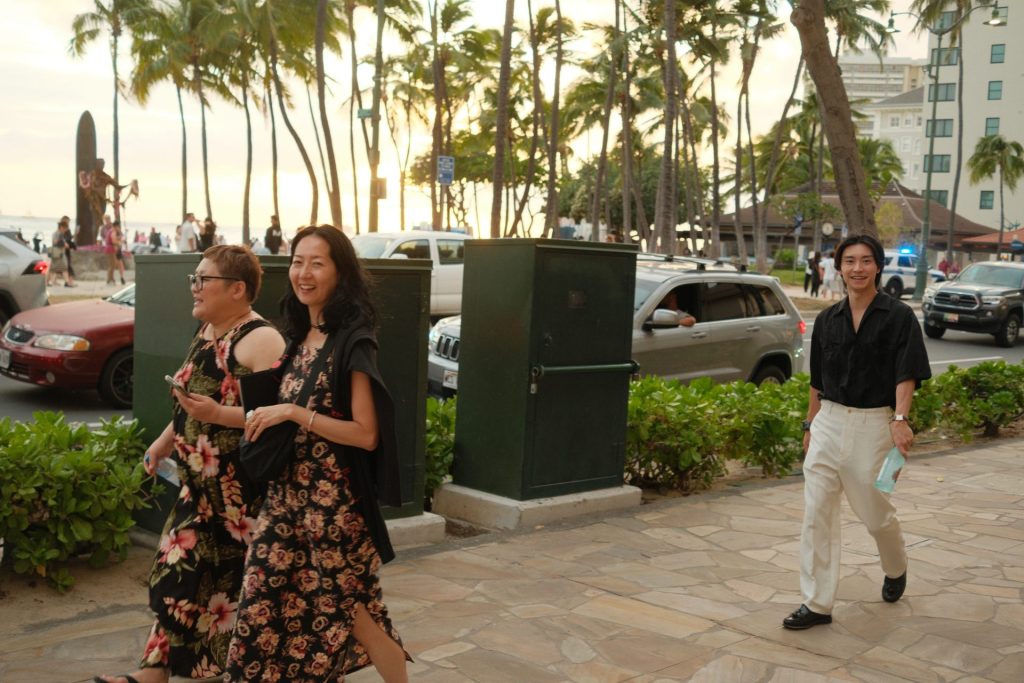
The traffic culture also left a strong impression on me. Whenever I made eye contact with a driver, they would stop and give me a hand signal to say, “Go ahead.” Even when drivers honked their horns, it was usually to encourage someone to move rather than to express frustration. There was nothing intimidating about it.
On the bus, younger passengers would naturally move toward the back and take their seats, and whenever an elderly person or someone with a disability boarded, they would give up their seats without hesitation. I felt that this was a society where such simple acts of consideration had truly become second nature.
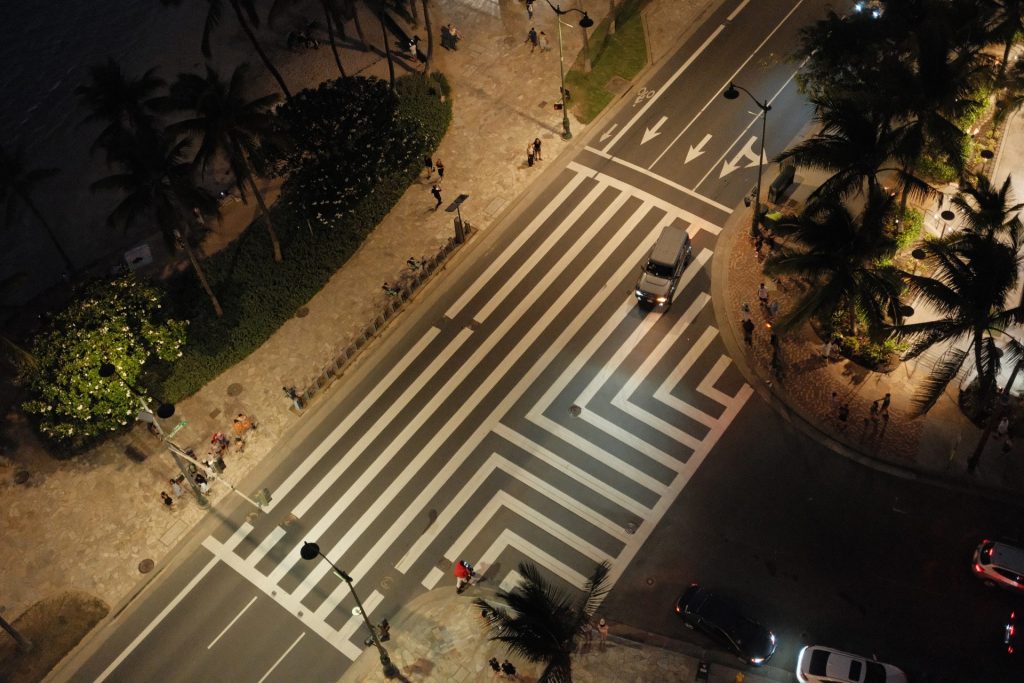
I experienced the same thing while cycling. I never felt intimidated by cars. If anything, I almost felt that cyclists were being treated with special care. At intersections, there seemed to be a clear order of priority: pedestrians first, cyclists second, and cars last.
There were also posts for locking bicycles everywhere. All of this made me realize just how genuinely bicycle-friendly this city is.
Downtown, Bookstores, and Record Shops
Whenever I arrive in a new city, there’s one thing I always do first: look up the local bookstores and record shops. No matter where I go, that’s where I start. And Hawaii was no exception.
I came across a fantastic shop called Skull-Face Books & Vinyl near Chinatown. With a skeleton displayed in the shop window, it had a distinctly rock ’n’ roll vibe. Inside, there was a great selection of vinyl records, cassette tapes, and books, along with some really charming rugs displayed overhead. I asked the staff if it was okay to take photos, and they kindly let me capture a few shots.
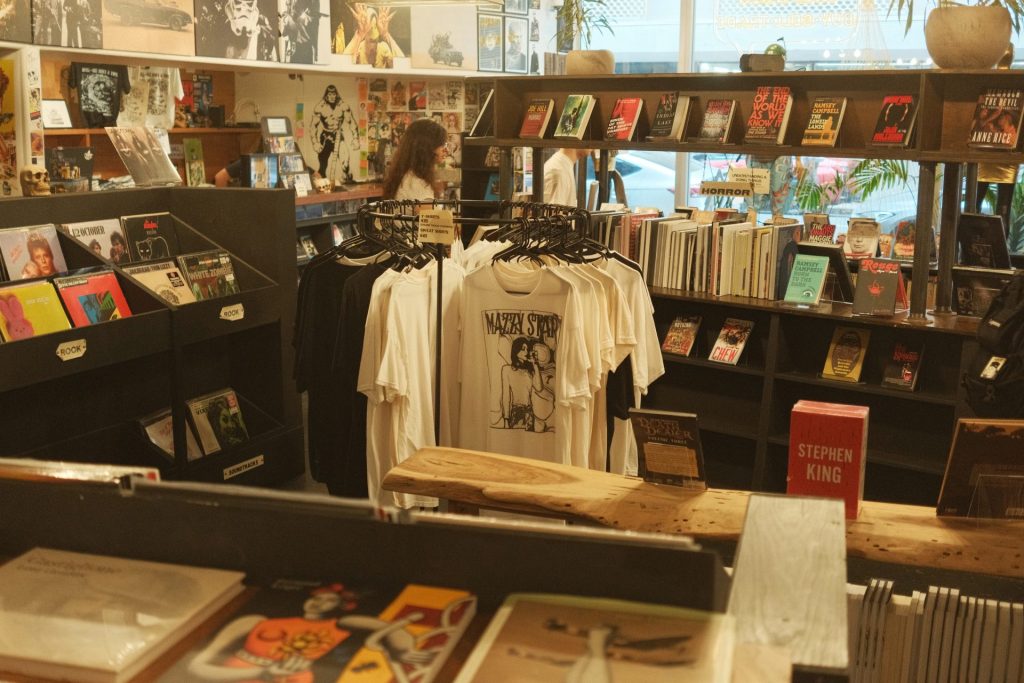
I also stopped by another bookstore called Native Books. You have to take off your shoes before entering, which creates a peaceful atmosphere in striking contrast to the hustle and bustle of the streets outside. There was something deeply sincere about the place. I was also struck by the words “Art & Letters” in its subtitle. In this age when AI seems to be everywhere, I found myself feeling especially grateful that spaces like this still exist.
Incidentally, bookstores overseas often carry books you’d never stumble upon in an online bookstore. Of course, there’s always the issue of how much weight you can carry home, but there are discoveries you can only make in places like these. I feel that moments of discovery like this are among the richest and most meaningful experiences of traveling.
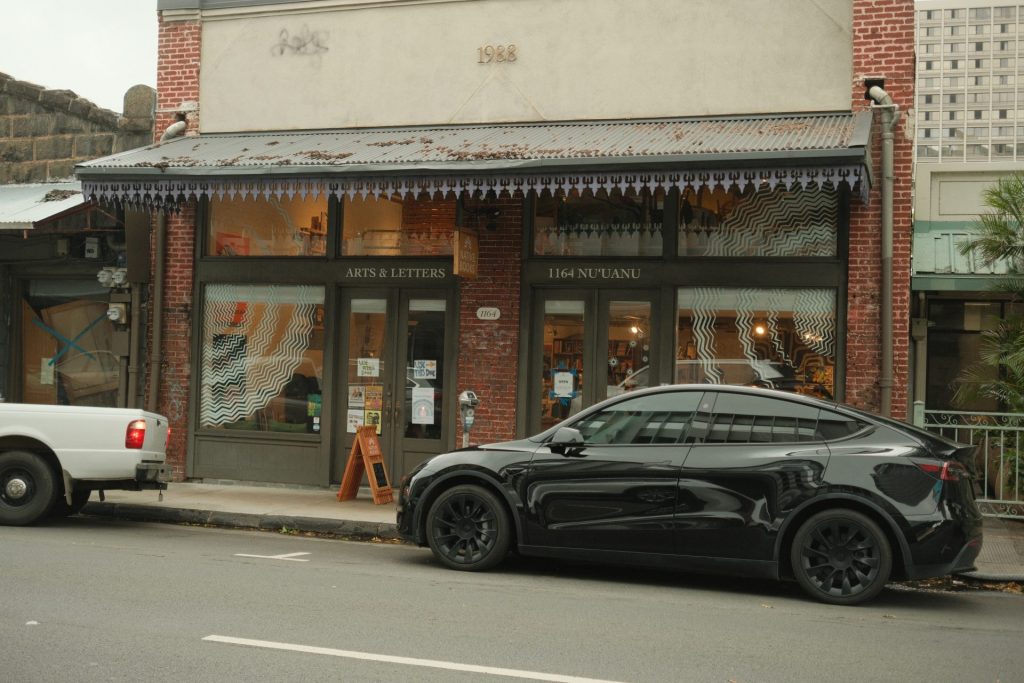
The area around SALT, beyond Chinatown from downtown Honolulu, also had a distinctive atmosphere. It felt like a neighborhood where culture and subculture coexist, with a certain underground vibe to the streets. There were rows of apartment buildings, and while the area wasn’t necessarily stylish or cool, it definitely had its own character. It was a strangely fascinating place that’s hard to put into words.
Why I Decided to Take on the 160 km Challenge
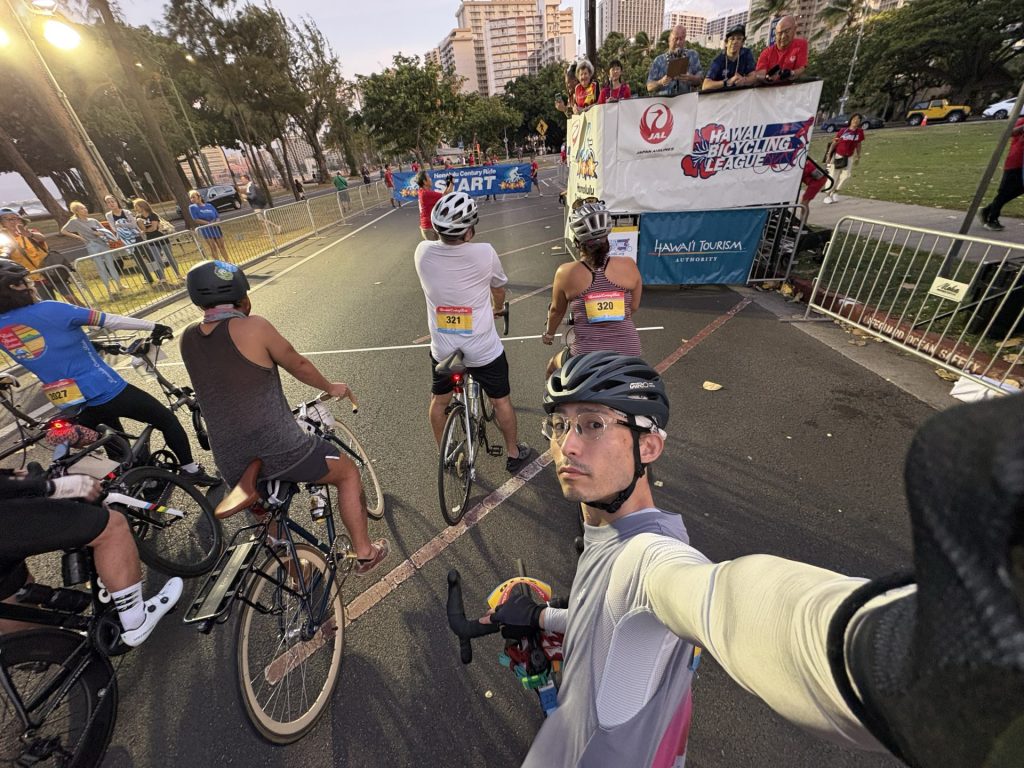
The Honolulu Century Ride offers several distances to choose from: 25 miles (40 km), 50 miles (80 km), 75 miles (120 km), and 100 miles (160 km). At first, I was planning to ride the same 50-mile distance that Editor M had completed on her first ride. But in the end, I signed up for the full 100 miles.
If you ask me why, the truth is, I didn’t really have any solid reason. Part of it was a sense of adventure—a desire to push myself beyond my limits while I had the chance. And after reading a few personal blogs written by past participants, I somehow started thinking, “Maybe I can actually do this.” That was pretty much it.
I rode a rental bike. The only one left had a slightly small 48 cm frame, while the other option had deep-section rims that would be more vulnerable to crosswinds, so I decided against it. With the strong winds caused by the approaching hurricane on event day, I think that turned out to be the right decision.
The moment the ride started, my excitement was through the roof. The Hawaii state anthem was playing, and I was surrounded by cyclists from all sorts of countries. I still had plenty of energy as I rode past Diamond Head, and I found myself thinking, “Hey, I might actually be able to pull this off!”
Beyond the Ocean, It Felt Like Another Planet
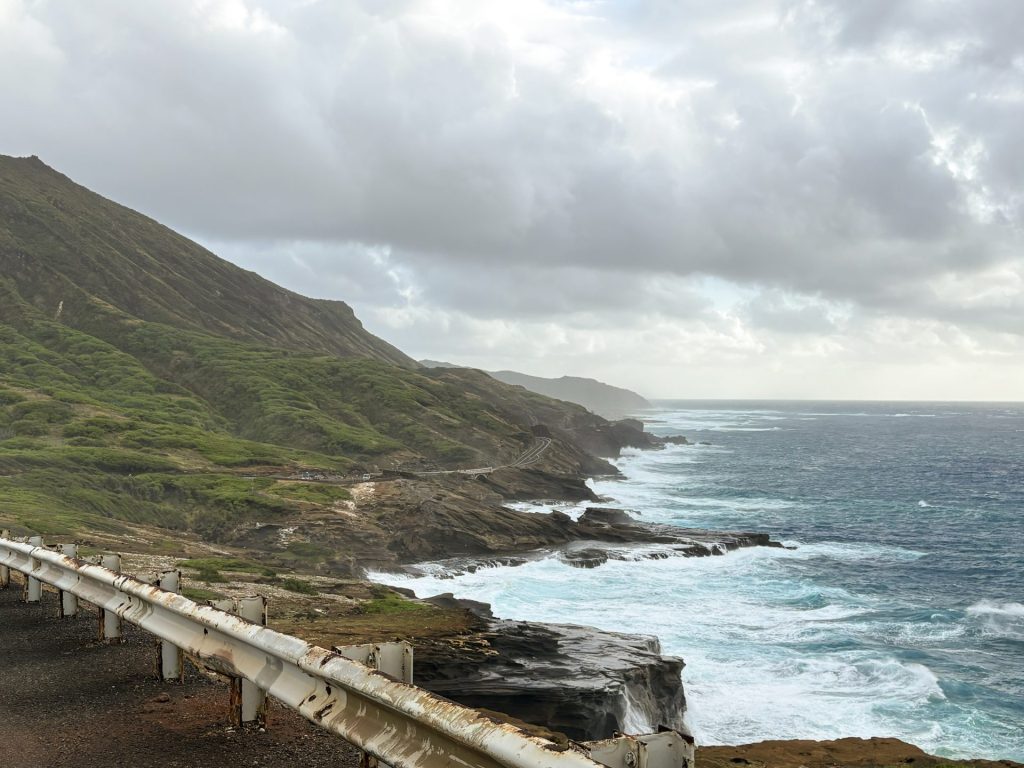
The part of the course that left the strongest impression on me was the stretch along the mountainside after passing the Hanauma Bay area. Once I rode through a section that was completely closed to cars, the sheer scale of the landscape seemed to defy my sense of perspective. I found myself thinking, “I know this is Earth, but is it really?”
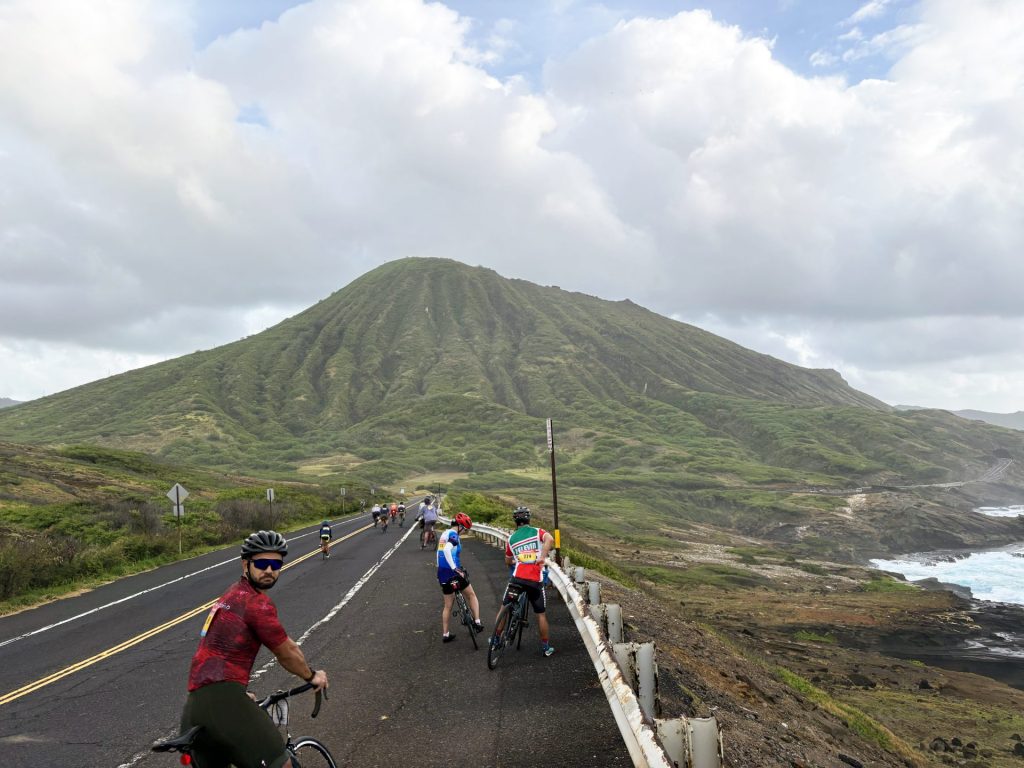
The ocean and mountains come into view at the same time. It’s a sensation you rarely experience in Japan. That incredible feeling of riding downhill with the mountains stretching out before you is hard to put into words. It’s something you can’t experience in a car or on foot. I think only a bicycle allows you to feel the landscape in quite that way.
For this one day, cyclists get to have roads that are normally busy with traffic—and potentially dangerous—all to themselves. That, to me, is what makes the Honolulu Century Ride so special.
Once you enter the mountains, the wind is blocked, creating a sense of calm that’s completely different from the coast. Riding through residential neighborhoods lined with large houses, with mountains that look like something out of Jurassic Park rising in the background, I could really get a sense of the everyday lives of the people who call this place home. I loved that feeling—the way nature and human life exist side by side.
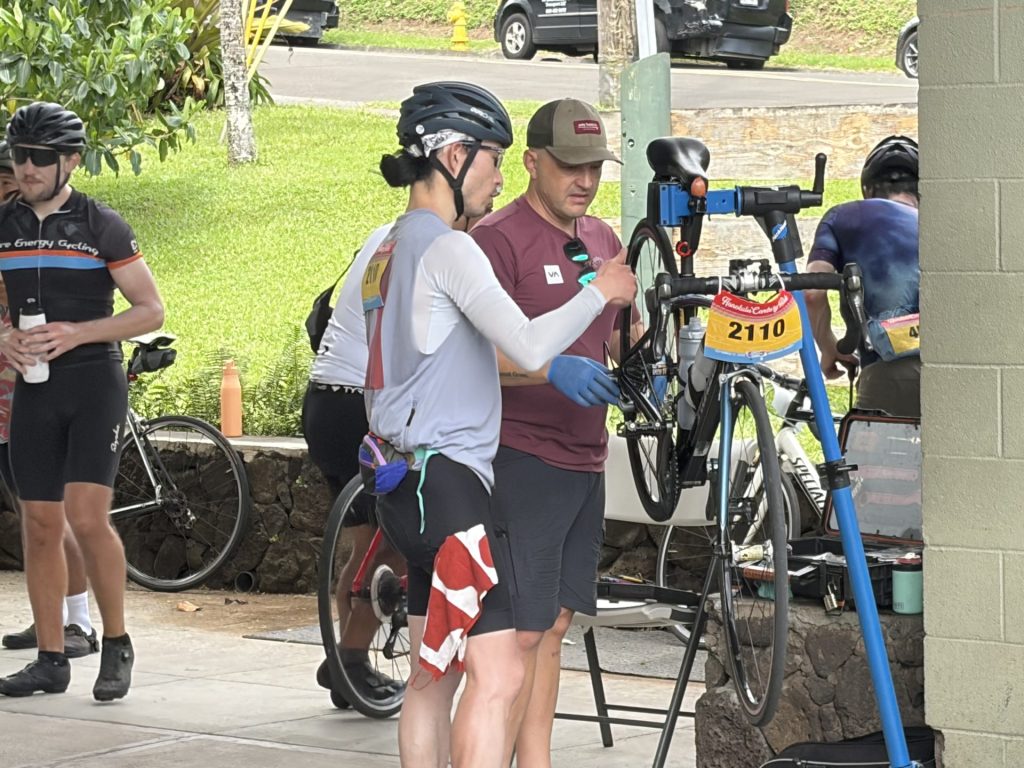
Every aid station had mechanics on hand to provide bike maintenance and support. At the KEY Project aid station, I had my bike checked because it was making a slight, unusual noise. The mechanic decided it was still rideable, so I continued on my way. Having this kind of support available throughout the course makes even beginners feel reassured and confident about taking part.
Of all the food I tried at the aid stations, two treats really stood out. One was a purple taro donut at the first aid station. Unfortunately, it wasn’t available anywhere else along the course, which was a shame because it was absolutely delicious. The other was a coconut pudding at KEY Project. It was the perfect treat to refuel with during the ride.
40 Kilometers Without Water
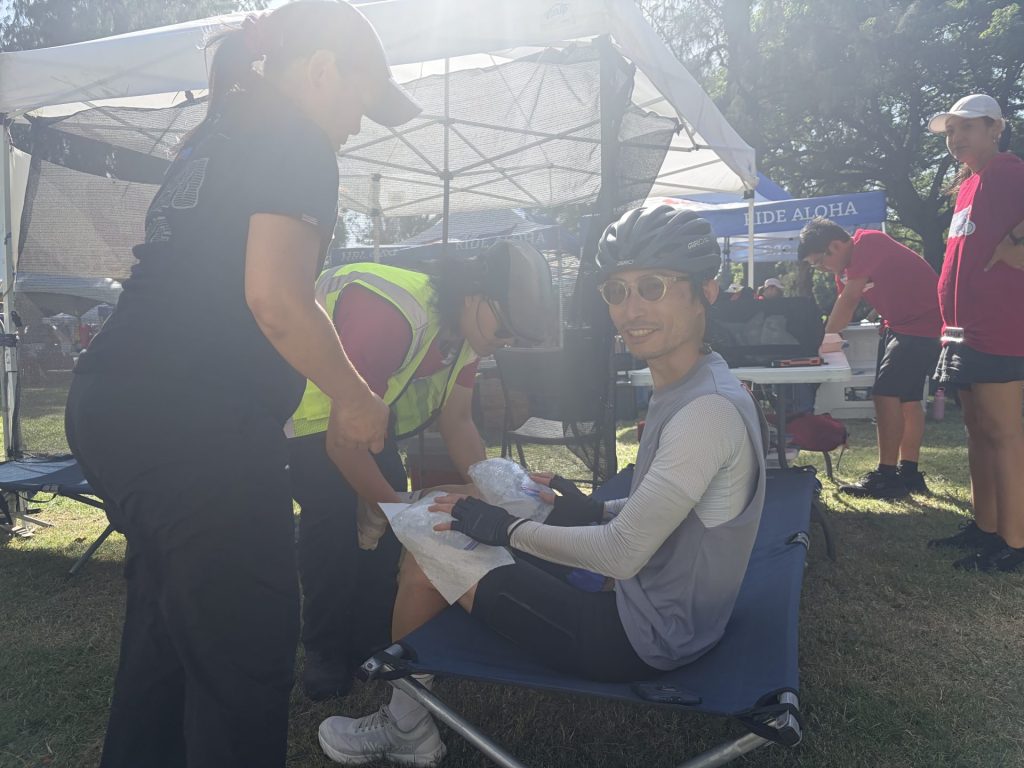
Shortly after passing the turnaround point, my body suddenly started to feel incredibly heavy. The temperature was around 30°C, and the afternoon sun was beating down relentlessly. Mentally, I still wanted to keep going, but my legs were gradually losing the strength to turn the pedals. My backside was starting to hurt, too.
On the way back, I somehow missed one of the aid stations, and before I knew it, I had ridden more than 40 km without any water. At one point, my chain even came off. Still, I kept pushing forward, driven by a single thought: “I just want to make it to the finish.”
It never even occurred to me to stop at a café or buy some water at a convenience store. I was completely focused on the road ahead, determined to keep moving.
With just two miles to go, a woman who seemed to live nearby came out to the roadside and called out, “Only two miles left! You can do it!”
That made me incredibly happy. I never imagined that a few words of encouragement from a complete stranger could give me so much strength.
What Awaited Me at the Finish Line
At the finish line, there were riders who had already completed their rides. The moment I arrived, they greeted me with a big cheer, and that alone made all the effort feel worthwhile.
But then I thought, “Wait, who are these people?”
It turned out they were a group of serious cyclists in stylish cycling kits who had effortlessly overtaken me earlier on the course. They were incredibly fast and had such an impressive presence that, to be honest, I had found them a little intimidating. But when I crossed the finish line, they gave me an enthusiastic “Yeah!” and a huge welcome.
Being congratulated by people I’d never even spoken to was something truly special—an experience you can only have at an event like this. It made me really happy.
In the end, I rode just under 130 km, with 968 meters of elevation gain. Since the full course has around 1,000 meters of climbing, that meant I’d managed to tackle almost all of the uphill sections.
I didn’t quite reach my original goal of 160 km, but covering that much distance on my very first attempt gave me a tremendous sense of confidence.
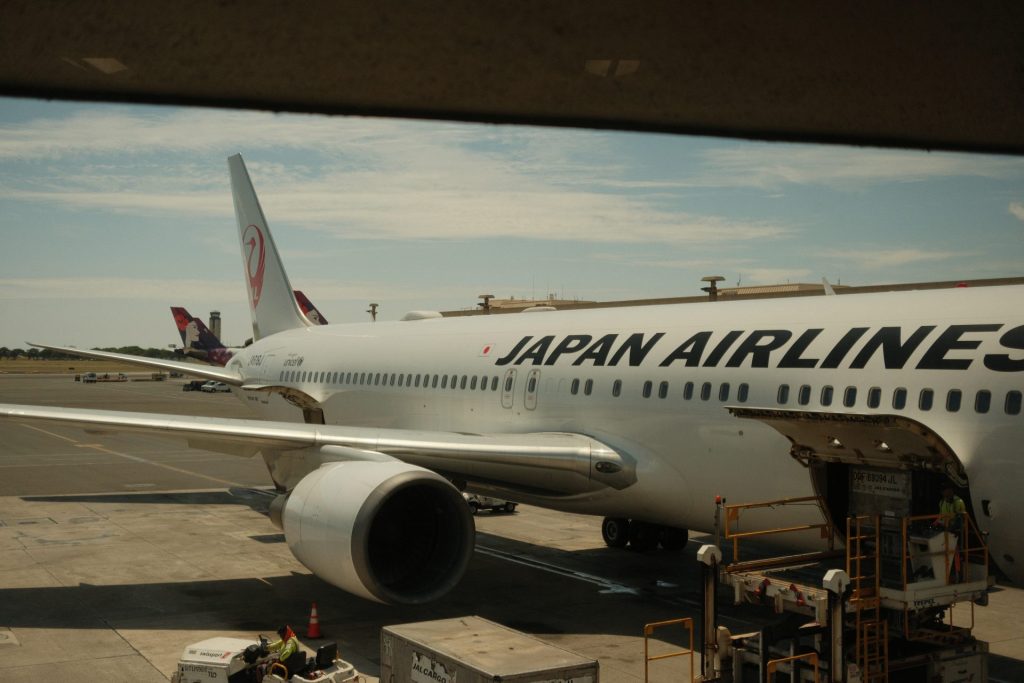
On the flight home, I spent the entire time looking up road bikes. I kept staring at the screen, wondering, “Which one should I buy?” Maybe that says it all.
“I Want to Come Back Next Year.” My First Thought After Finishing.
I want to take part in the Honolulu Century Ride again next year. And this time, I’m going for the full 160 km. I’m confident I can complete the entire course next time.
Having learned from this experience, I plan to be better equipped for my next ride. What really struck me was the value of tight-fitting cycling apparel and clip-in cycling shoes. I came to understand firsthand why reducing air resistance matters so much on windy days, and how having your feet attached to the pedals allows you to use your muscles to pull up as well as push down. These were things I learned through experience while riding. It was precisely because I rode through such strong winds that I came to appreciate them.
I’m also planning to buy a road bike. Someone told me that rather than buying a cheap bike only to find myself wanting a higher-end model soon afterward, I might as well invest in a good one from the start. And I think they’re right. A bicycle is something you can keep using for years, so when you look at it in the long term, it’s not necessarily such an expensive purchase.
Ideally, I’d love to come back with my whole family, including my parents. They could enjoy the 25-mile course or simply relax in Waikiki while I’m out riding. I realized that Hawaii is the kind of place where everyone can enjoy their time in their own way.
If I Could Tell First-Timers Just One Thing
“Don’t worry about a thing. Just sign up, get yourself a bike, and go. You’ll be fine.”
That’s the biggest takeaway from my experience.
My first trip to Hawaii, my first time in America, my first long-distance ride. Everything was new to me, but somehow, it all worked out. There are bike mechanics stationed along the course, local residents cheering you on from the roadside, and fellow cyclists waiting to welcome you at the finish line. Even if you’re riding alone or you’re a complete beginner, there’s always someone there to help.
That said, I do think it’s important to have the right gear. A helmet, gloves, sunglasses, and padded cycling shorts—those four things are essential. Sunglasses are particularly important because small particles and debris can fly toward your face while you’re riding. I’d also recommend wearing long sleeves or arm covers to protect yourself from the wind, sun, and possible falls.
There’s no need to push yourself to ride a longer distance than you’re comfortable with. Whether it’s 25 miles or 50 miles, you can choose a course that suits your fitness level and experience. No matter which part of the course you ride, you’ll be able to feel Hawaii’s ocean, mountains, and wind with your whole body.
That experience alone makes it more than worthwhile.

I want to ride the Honolulu Century Ride again next year. This time, I’ll complete the full 160 km—and hopefully have a little more energy to spare so I can take in the scenery along the way. As I browsed road bikes on the flight home, that was pretty much all I could think about.
You can register for the Honolulu Century Ride through the official HBL Ride Aloha website. With several distances to choose from, even those who aren’t used to cycling should definitely consider giving it a try.
“Once you try it, you’ll realize just how amazing it is.”
That’s what everyone who’s taken part seems to say. And now, I’m one of them.
Text_Masahiro Yamasaki
Photos_Masahiro Yamasaki / HONOLULU CENTURY RIDE / HM-A
Profile
Masahiro Yamazaki (Art Director / Graphic Designer)
He has designed books, art books, and photo books for a wide range of artists, including Kazuya Yoshii and SKY-HI, as well as the music magazine DONUT. He also creates official merchandise for Alan Abe’s fan club.
Despite being a newcomer to road cycling and a first-time Honolulu Century Ride participant, he took on the 100-mile challenge (ultimately completing 75 miles). Next year, he’s confident he can conquer the full 100 miles.
https://www.instagram.com/ymskkjm?stkn=djBvbjd4Ymh3bGcw&utm_source=qr