Tokyo Old Town Bike Strolls #05
Kanda – A Taste of Spring in Tokyo’s Book Town
This time, I set out to explore the Kanda area by bicycle—an essential neighborhood when talking about Tokyo’s old town and also my hometown.
Today, Kanda is no longer an official administrative district but rather a name used for the northeastern part of Chiyoda City, where the Tokyo Imperial Palace is located. A distinctive feature of the area is that most neighborhood names begin with “Kanda,” though in everyday conversation people usually drop the prefix.
Feeling the breeze that signals the arrival of spring, I wander around Jimbocho, known as the world’s greatest book town, stop by a long-established wagashi shop in Ogawamachi for a chat, and visit museums and shrines along the way.
Text_Shitamachi Kombu
Table of Contents
Mitsubishi Ichigokan Museum: An Oasis in the Business District
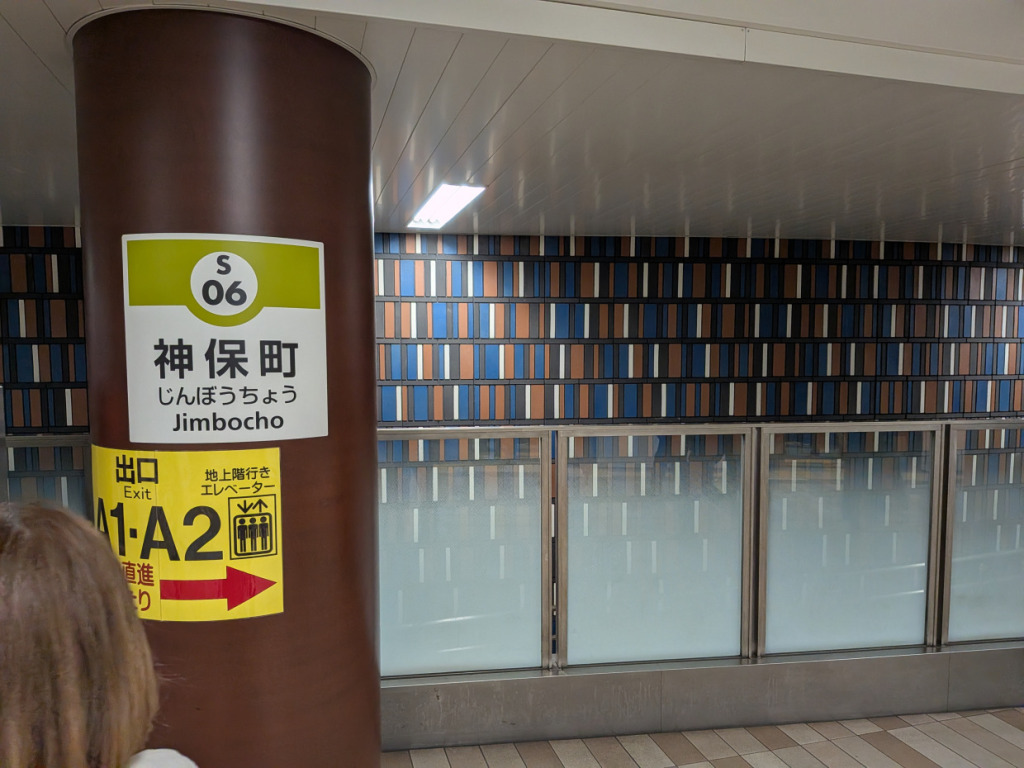
Jimbocho: The World’s Greatest Book Town
Wagashi Shop Sasama: A Taste of Traditional Sweets
Shrines and the Seido: A Plum Blossom Season Circuit
Mitsubishi Ichigokan Museum: An Oasis in the Business District
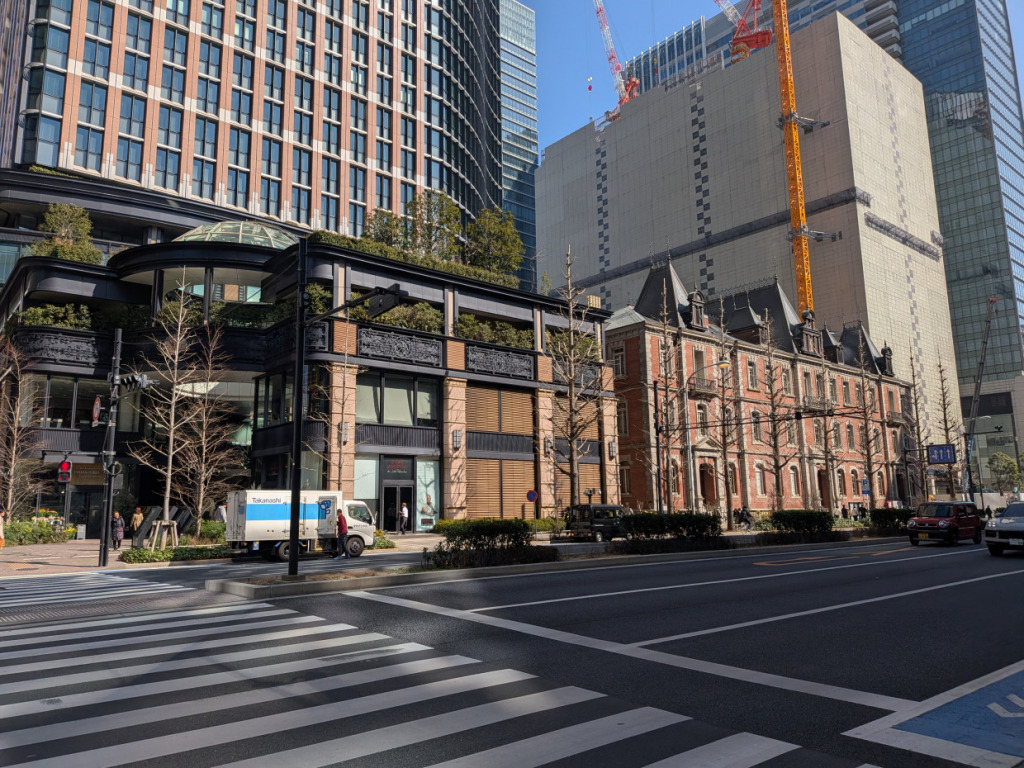
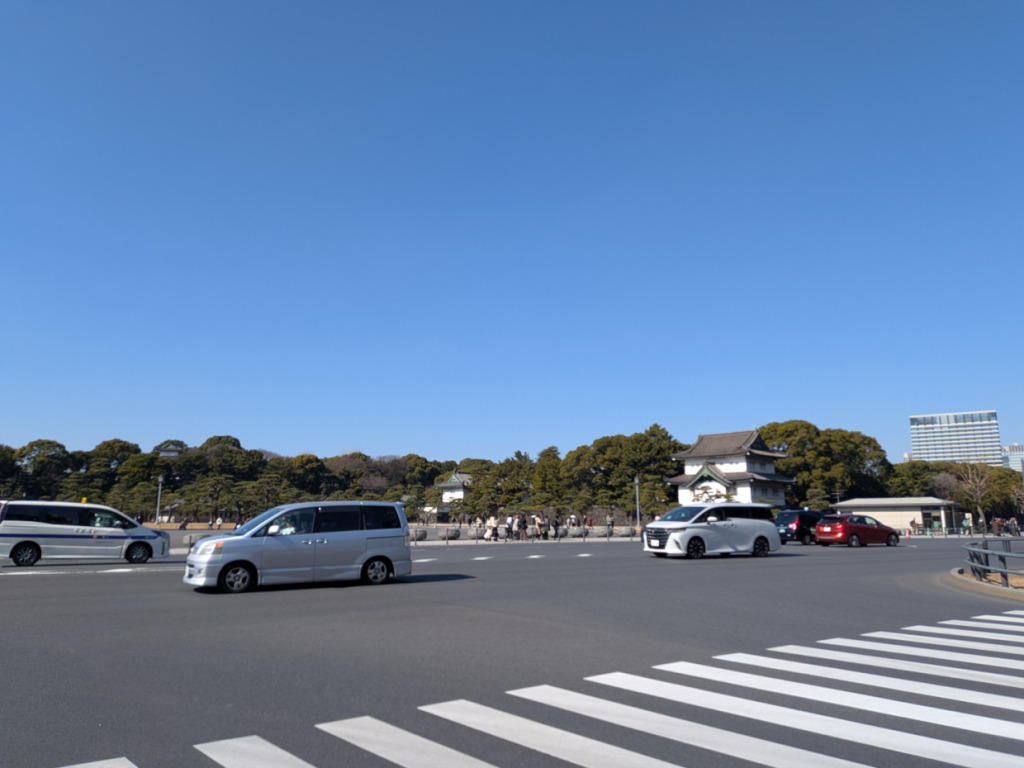
And yet, my ride begins in the Marunouchi area. Since it sits right next to Kanda, I’d say it practically counts as part of it. After all, Edokko—true Tokyo locals—aren’t too fussy about such details.
As I emerge from Hibiya Station to street level, an elegant red-brick building stands at the intersection. Designed by the Meiji-era foreign architect Josiah Conder, the building was originally used as an office by the Mitsubishi trading company.
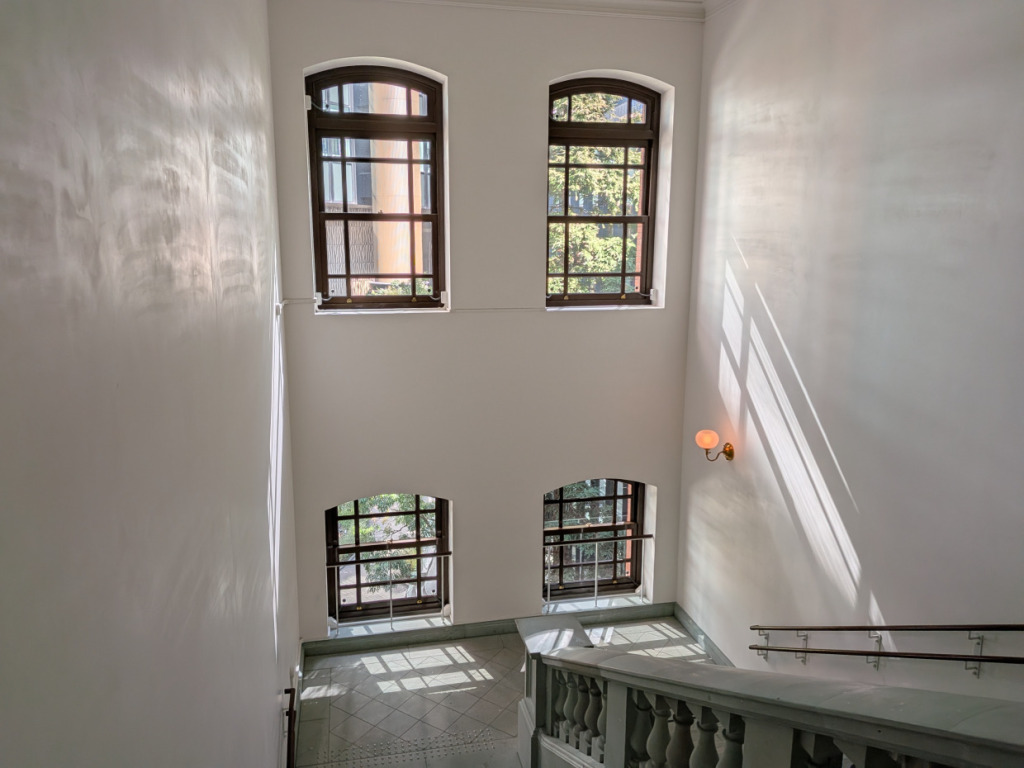
During renovations in 2010, careful thought was given to what kind of facilities the Marunouchi area needed. The idea was to bring a touch of cultural richness to the business district, and the building was reborn as the Mitsubishi Ichigokan Museum, with its original design reproduced as faithfully as possible.
Personally, the paintings and artworks displayed in this building—still carrying the lingering atmosphere of the Meiji era—feel about thirty percent more captivating.
The exhibition being held during my visit focused on shin-hanga, a style of printmaking that became a recognized genre of Japanese art from the late Meiji to Taisho periods. As a unique initiative, the museum has also begun distributing podcasts, allowing visitors to listen to talks by the curators beforehand—an enjoyable way to prepare before stepping into the galleries.
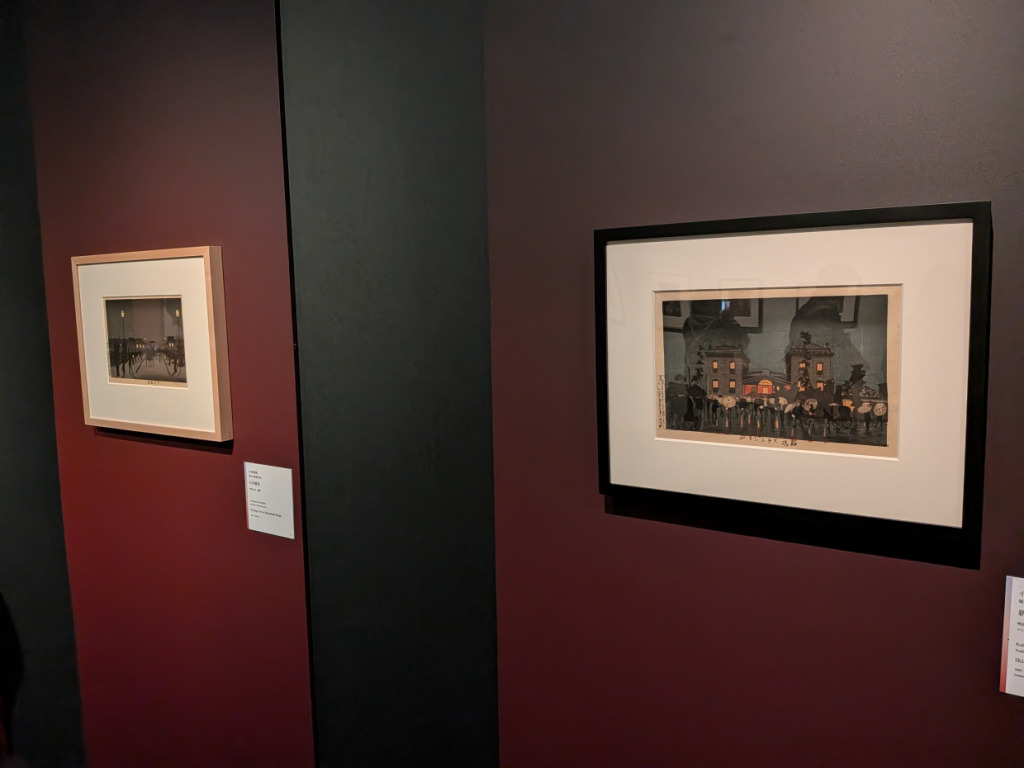
Interestingly, shin-hanga prints are said to be even more popular overseas than in Japan. According to the exhibition notes, a shin-hanga print of Fukagawa Shinbokuen (now Kiyosumi Garden) by Kawase Hasui—commissioned by the Mitsubishi family—was distributed abroad as a novelty gift, helping introduce the style to the world.
Over time, these prints would travel even further across cultures and eras. A shin-hanga print was famously used during the debut demonstration of Apple’s revolutionary graphical user interface computer, the Macintosh. Steve Jobs himself was also known to have displayed shin-hanga prints in his home.

Jimbocho: The World’s Greatest Book Town
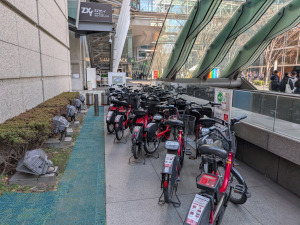
With the Imperial Palace on my left, I head north along Uchibori-dori. After about ten minutes, I arrive in Jimbocho.
I return the bike at a nearby port and begin wandering through what is often called the world’s greatest book town.
SOLIDA: A Shared Bookstore
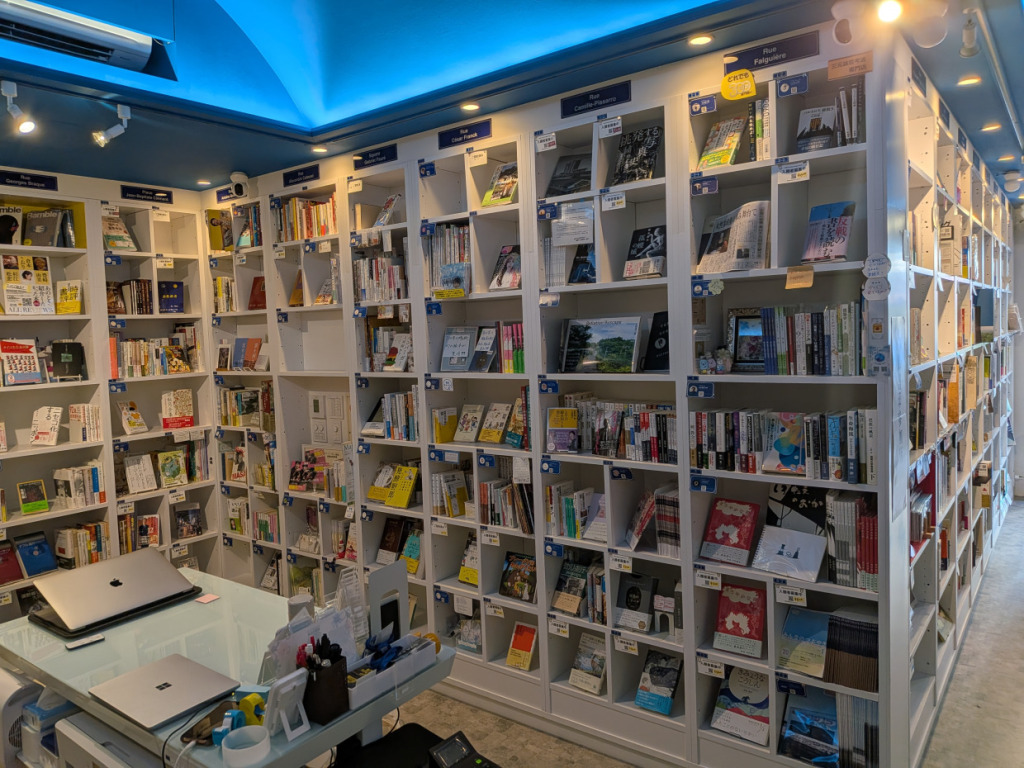
Among the rows of secondhand bookstores, one strikingly new building stands out. It’s a shared bookstore—a format that has been gaining popularity in recent years.
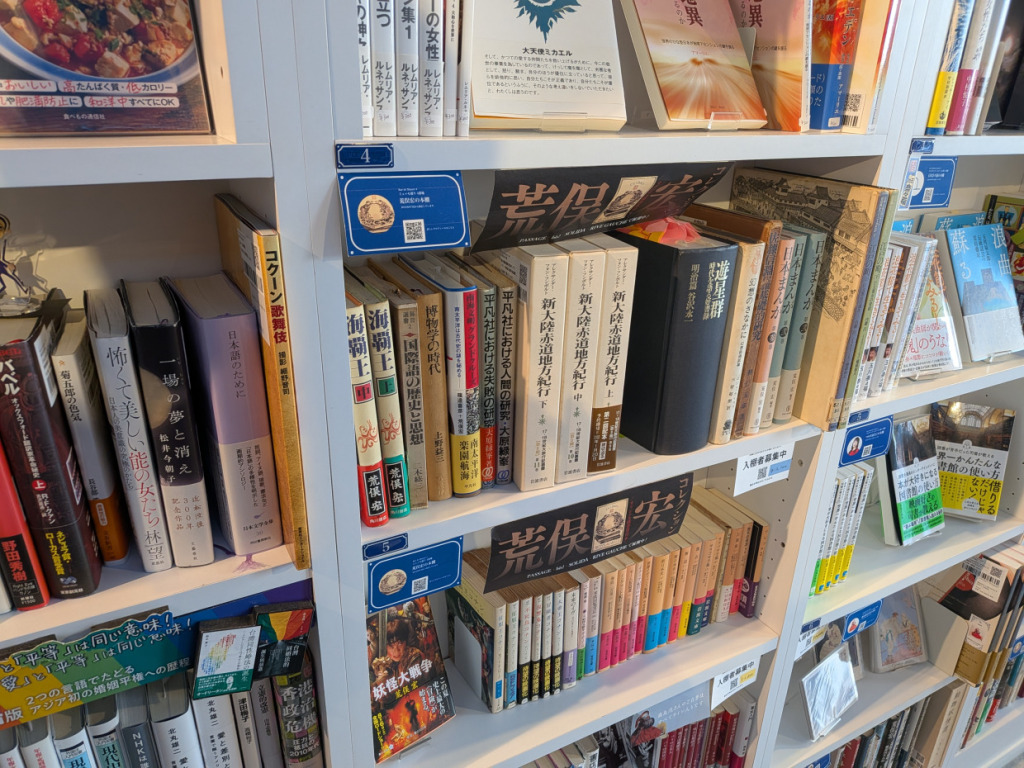
Each shelf is rented out by the tier, allowing different owners to display and sell their favorite books. Some are self-published authors, while others are well-known writers themselves. A few shelves even feature items other than books, such as tote bags or coffee, giving each space its own personality. Peeking into these shelves feels a bit like looking into someone else’s personal bookcase—slightly thrilling.
The group currently operates two locations in Jimbocho and three in Tokyo overall. Each shelf is named after a street in France, adding to the shop’s stylish atmosphere.
It’s also fun to imagine what kinds of books I would line up if I had a shelf of my own.

Anne Hathaway and a Secondhand Bookstore
Outside the secondhand bookstore Sawaguchi Shoten, wood boxes filled with ukiyo-e prints are sold for around 500 yen each. A couple who appear to be travelers from Europe carefully sift through the prints, studying each one. Before long, they head to the register with both arms full of them.
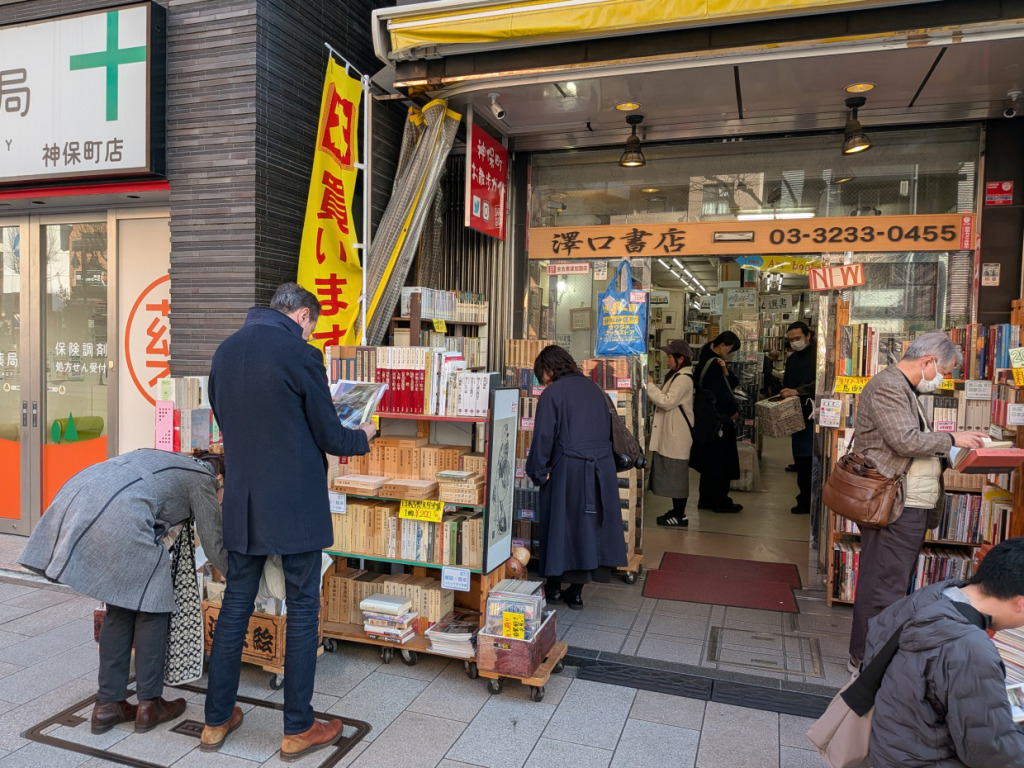
I also pick out a pictorial Tokyo exploration magazine published in the early Heisei era from one of the wooden boxes. As I head toward the register, a small POP sign catches my eye.
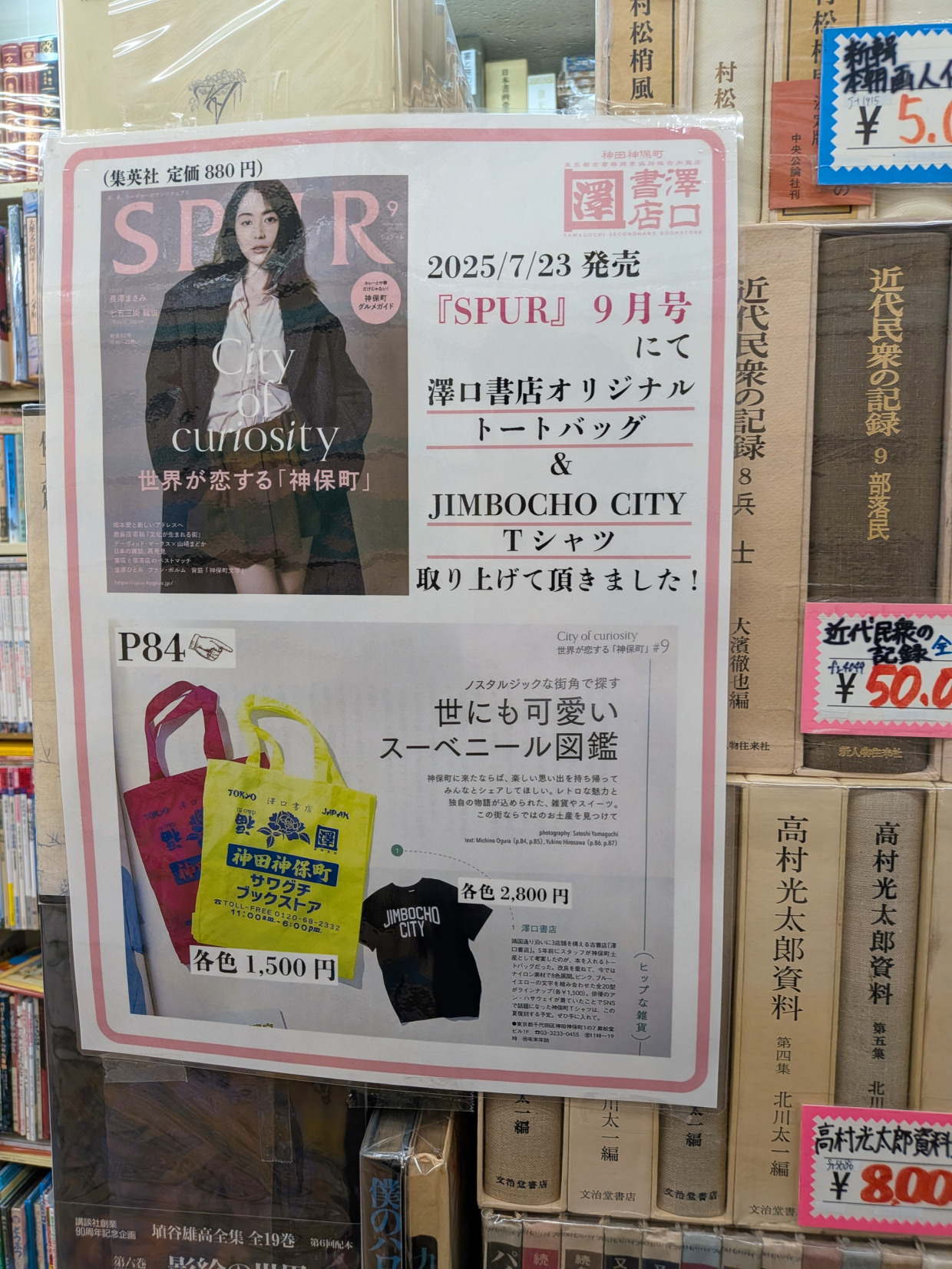
The shop’s original “JINBOCHO CITY” T-shirt, I learn, was once purchased by the book-loving actress Anne Hathaway when she visited Japan. The store also sells other retro-cute goods, and it makes me realize how secondhand bookstores are evolving with the times.
Thanks to the “Anne effect,” however, the T-shirt is already sold out. What a shame.
Hachimaki: A Tempura Shop Favored by Edogawa Ranpo
Jimbocho is not only a town of books, but also a town of food. It’s well known that the area has many curry shops—after all, curry is easy to eat with one hand while holding a book in the other. But there are also plenty of other dining options, from Chinese restaurants to ramen shops.
This time, I decide to stop for a meal at Hachimaki, a tempura restaurant that was a favorite of the writer Edogawa Ranpo.
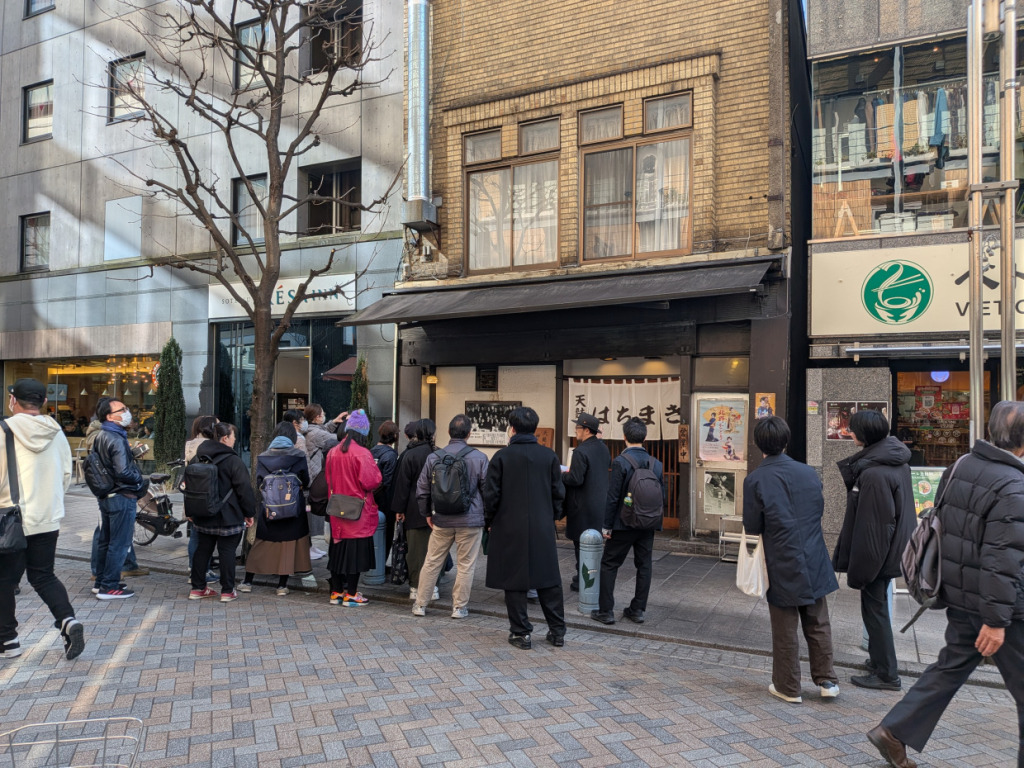
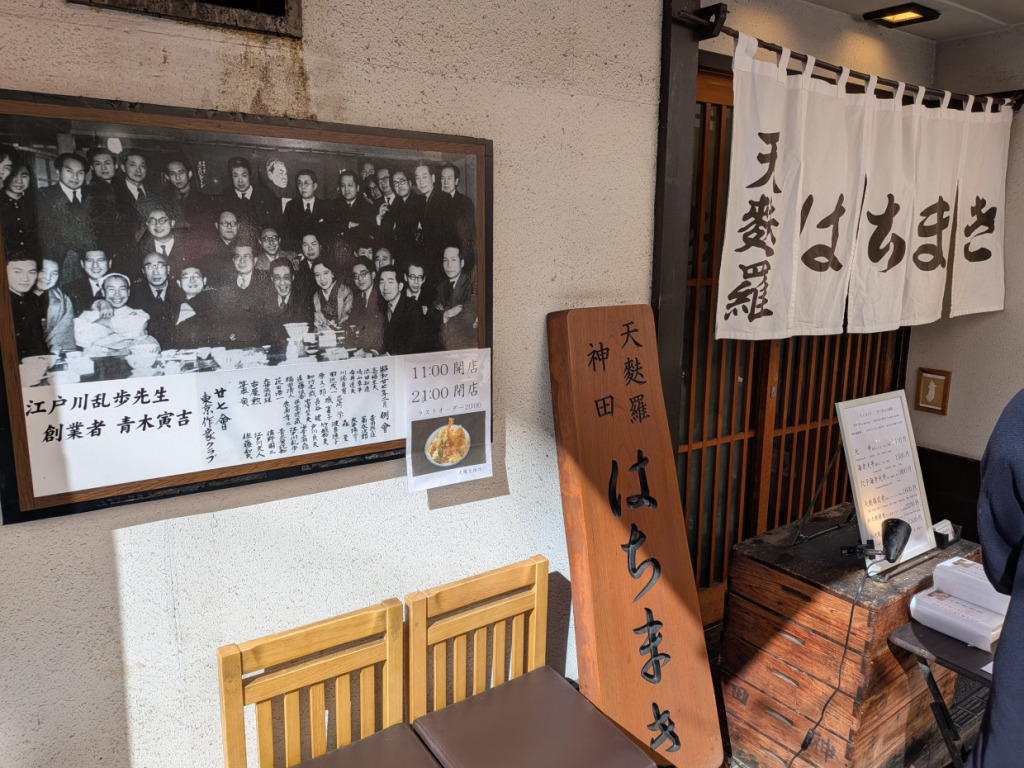
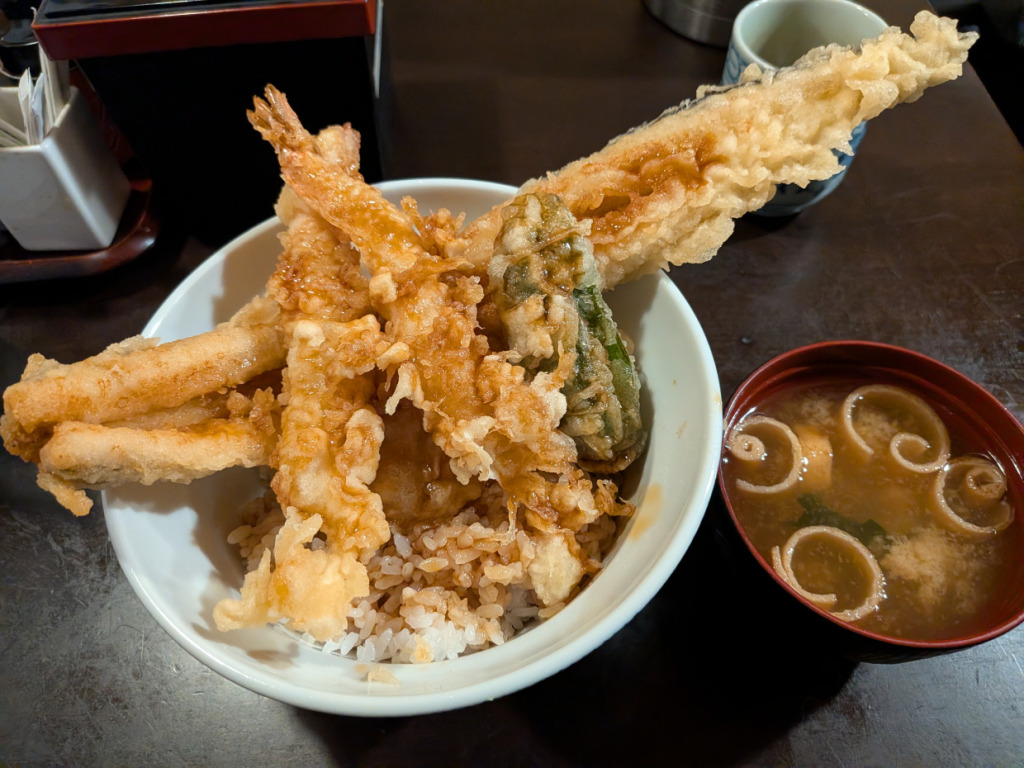
The “Anago and Shrimp Tempura Bowl,” featuring a large piece of anago tempura dramatically spilling over the edge of the bowl, is a local specialty that began with a request from Edogawa Ranpo. He reportedly asked to have the anago—usually served at the end of a tempura course—placed on top of rice so he could enjoy it that way.
Biting into the crisp, freshly fried batter reveals the soft, delicate flavor of fresh seafood inside. The sauce, lightly sweet and pleasantly mild, feels surprisingly gentle for a dish favored by Ranpo, a writer famous for his macabre stories. It’s also wonderful that a dish of this quality can be enjoyed at such reasonable, everyday prices.
Sasama: A Traditional Wagashi Shop
After the meal, it’s time for something sweet. I head to a long-established wagashi shop quietly tucked away in a corner of Jimbocho.
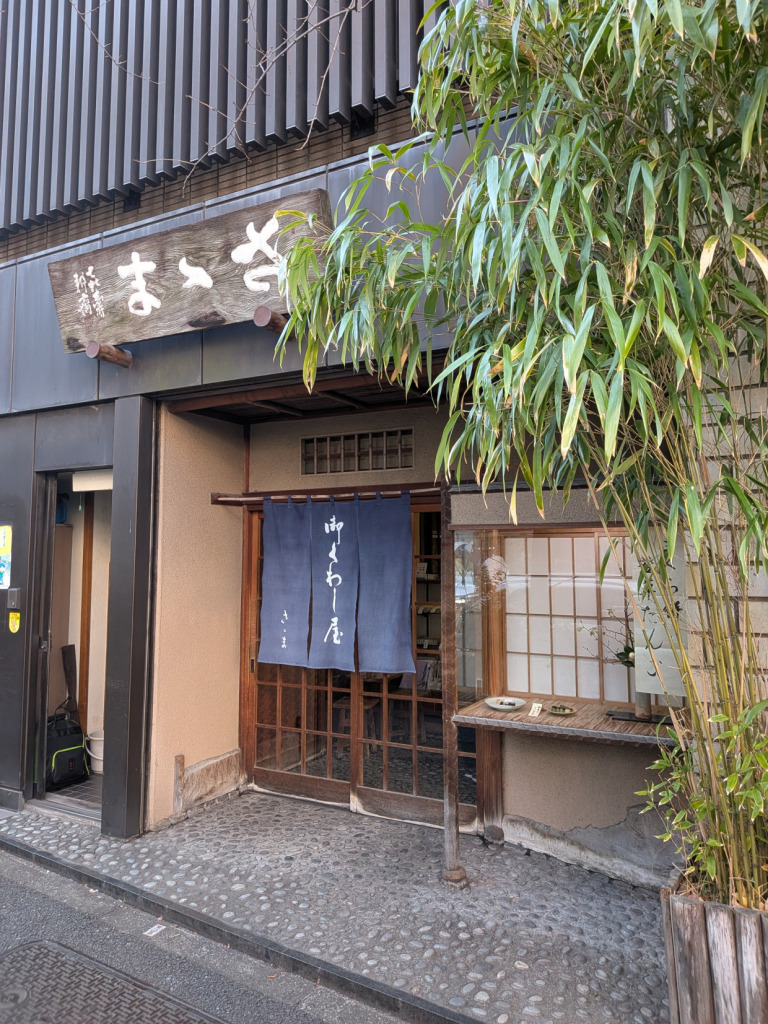
The specialty of Sasama, a traditional wagashi shop, is its Matsuba Monaka. Though it is considered one of Tokyo’s leading wagashi makers, the shop has no branches, no antenna stores, and does not sell online—meaning its sweets can only be purchased at this main shop.
Located just about thirty steps from the main street, the store has a calm, understated presence that feels worlds away from the bustle outside. Bamboo leaves displayed at the entrance add a refreshing touch.
Feeling a little nervous—what if the owner turns out to be one of those old-fashioned, stubborn craftsmen?—I gather my courage and ask if I might have a word with him.
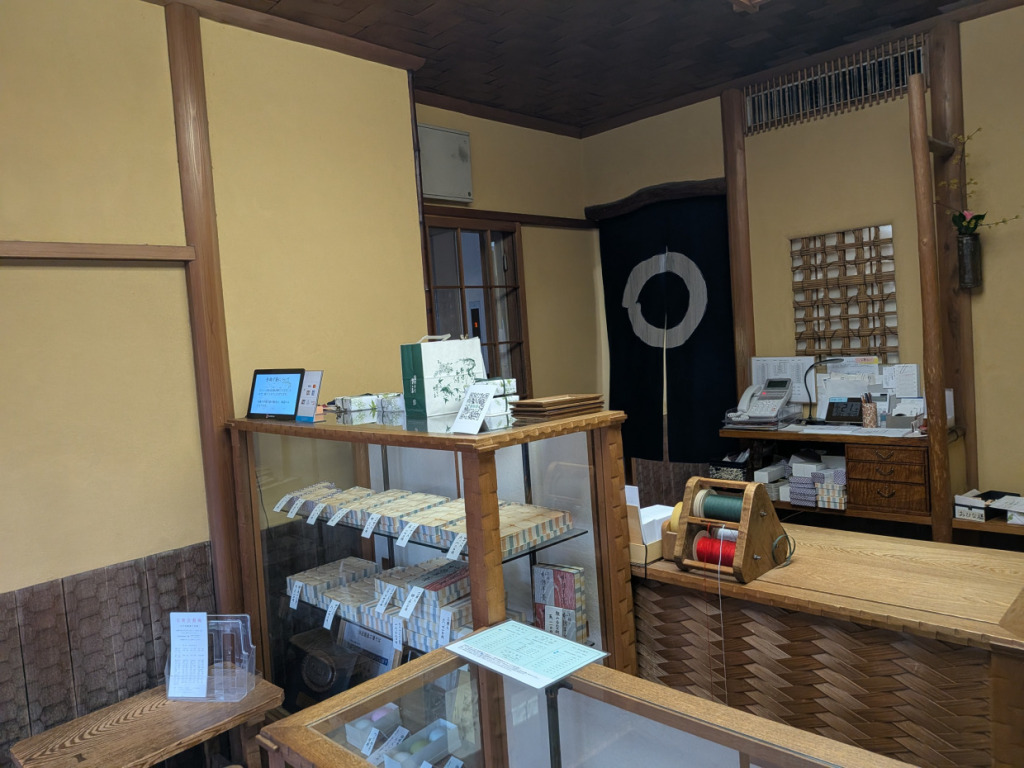
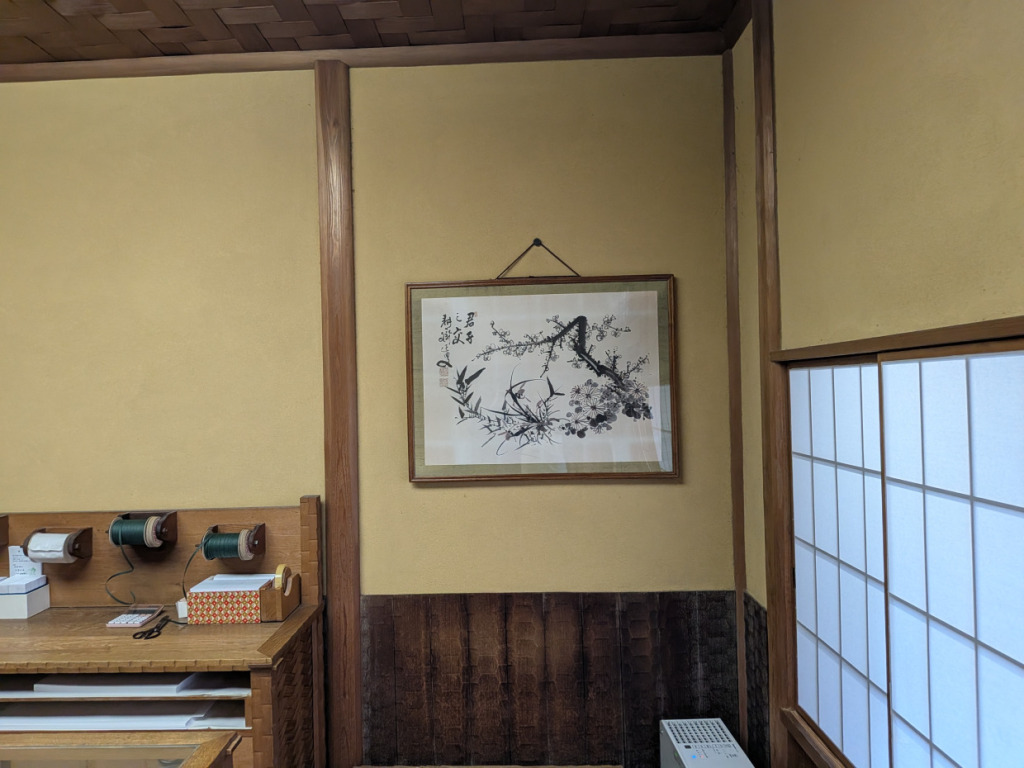
The current owner I spoke with, Chizuru Sasama, is the third-generation proprietor. Like the staff in the shop, she has a gentle and approachable manner. (What a relief.)
As for the shop’s history, it originally opened in 1929 as a bakery. Later, wagashi were added to the lineup, and by 1934 the store had become the wagashi specialty shop it is today.
During the week, many customers are people who live or work in the neighborhood, while on weekends more visitors come from outside the area. It seems the shop is comfortably woven into everyday life as a local wagashi store—some customers even drop by during their lunch break on weekdays just to buy a single sweet for dessert.
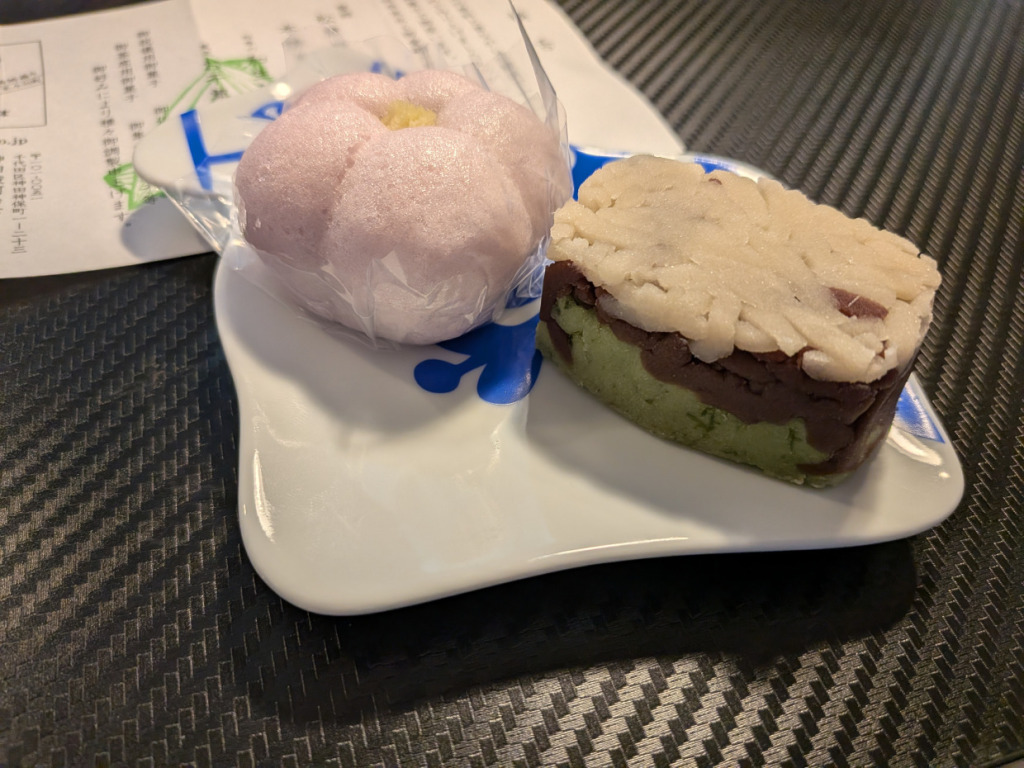
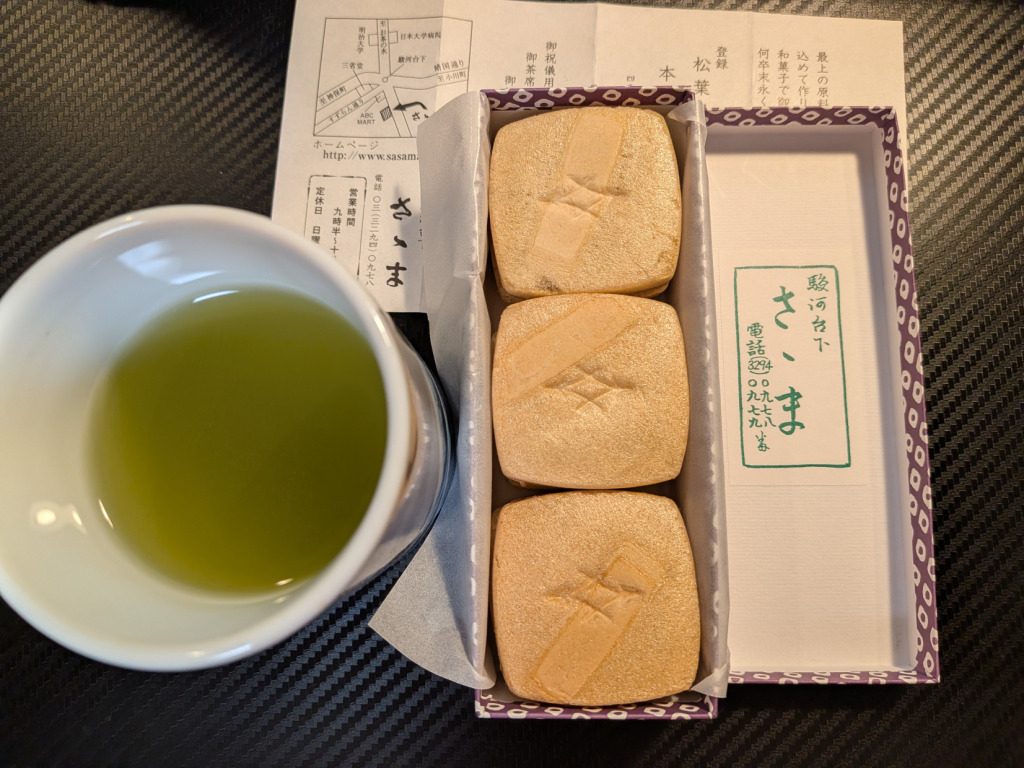
the wagashi I took home.
The three-layered sweet Shitamoe represents the plants beginning to sprout beneath snow-covered soil. Together with Kōbai, it gently evokes the feeling of spring just around the corner.
The shop’s specialty, Matsuba Monaka, is a small monaka whose crisp shell gives way to smooth, refined koshi-an with a slightly firm texture reminiscent of yōkan. Made from nothing more than azuki beans, the filling somehow carries a refreshing hint almost like citrus. Perhaps it tastes even better to me now than it did in childhood because my palate has finally caught up with it.
The twelve pieces I bought as souvenirs for my coworkers, however, never made it that far—I ended up finishing them all myself before bringing them in.
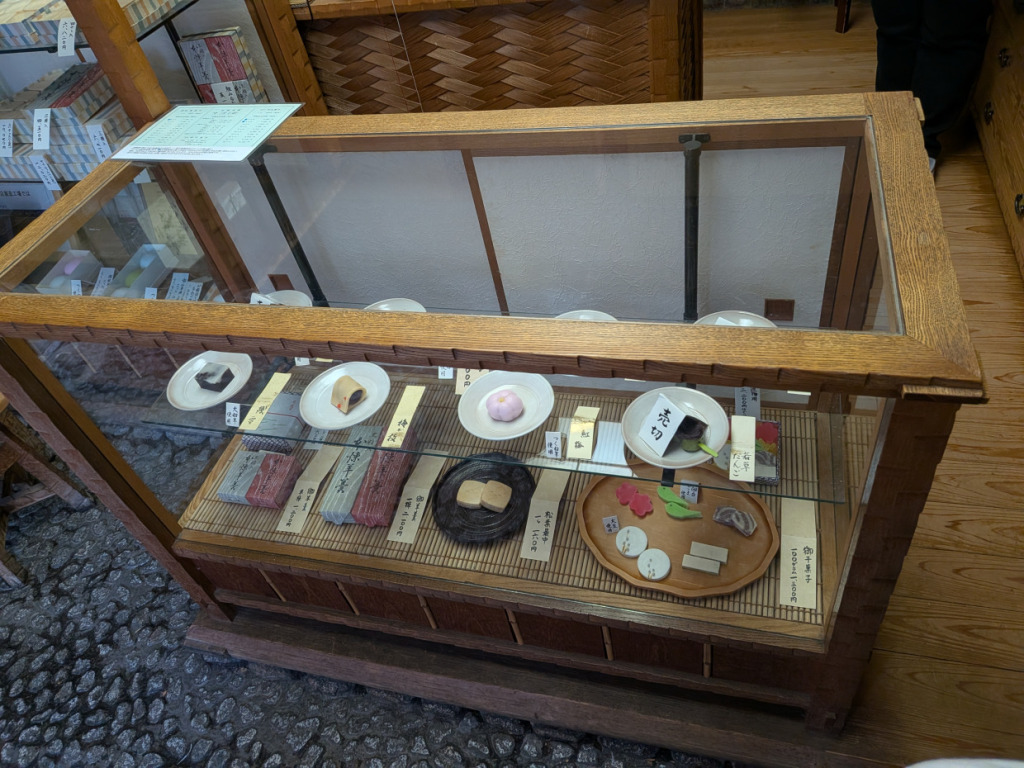
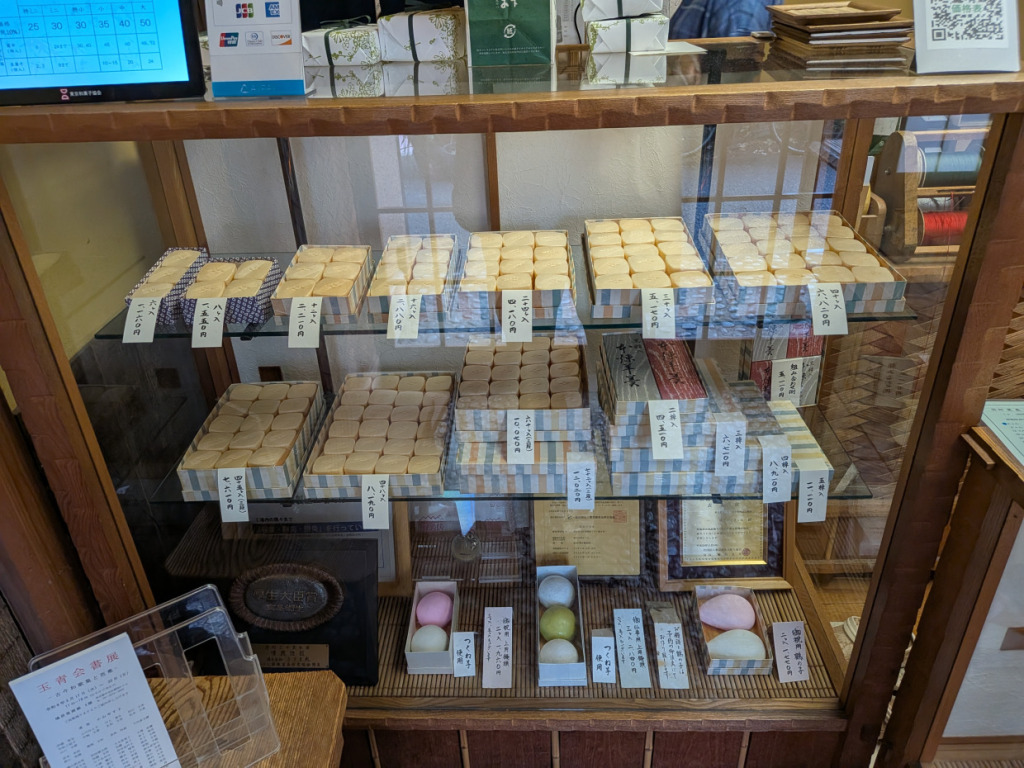
At Sasama, wagashi continue to be made using traditional methods and carefully selected domestic ingredients. Some customers enjoy marking the changing seasons through the shop’s monthly sweets, so the menu itself has deliberately remained unchanged over the years.
When I asked about the shop’s guiding philosophy, Ms. Sasama prefaced her answer modestly—“I’m not sure if you could call it a motto…”—before sharing a phrase passed down since the founding generation: “Don’t produce waste.”
Indeed, there is no individual packaging, and the interior has the quiet simplicity of a tea room, free of unnecessary items. Even the bean paste reflects this approach: the koshi-an is made without completely removing the natural shibu (a slightly bitter component) that is usually taken out during preparation. Perhaps this respect for the full bounty of the ingredients is what gives the sweets their distinctive flavor.
One of the goals of the UN’s SDGs—Goal 12, Responsible Consumption and Production—is to reduce waste generation. Yet this small shop has been quietly practicing that idea ever since it first opened its doors.
In the previous generation, the shop often delivered sweets for neighborhood gatherings and memorial services. I’m told that deliveries were even made by bicycle to the nearby Hilltop Hotel (currently closed). My father, who worked at a printing shop, once told me he also made deliveries by bicycle, so perhaps nimble bikes were simply the working tools of the trade in Tokyo’s old town neighborhoods.
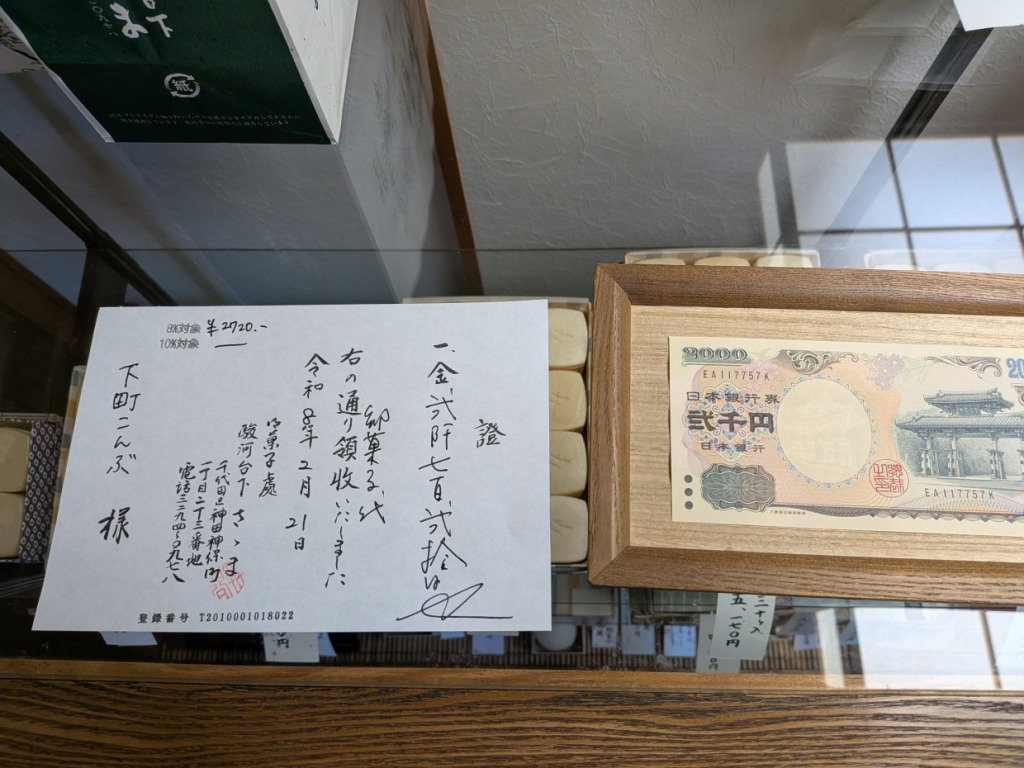
Sasama operates under a somewhat unusual system for an independent wagashi shop: the roles of confectioners and shop management are clearly divided. “Since we are not the ones making the sweets ourselves, we want to value the taste from the customer’s perspective,” says the current owner.
The previous proprietor, now retired, is also said to have been especially fond of the shop’s yōkan—suggesting that the owner is not only running the business but is also a devoted fan of its wagashi. Incidentally, unopened yōkan keeps for about six months, which might make it a good souvenir for visitors from overseas.
Finally, I ask the owner—an Edokko herself—what she finds most appealing about the Kanda area.
“I know many people here, and it’s a place where you can spend time naturally without feeling tense,” she says. It’s a sentiment that feels fitting for a long-established shop so firmly rooted in the neighborhood.
As the third-generation proprietor, she hopes to keep the traditions she inherited alive. For first-time visitors, the shop’s appearance might feel a little intimidating, but she encourages people to simply open the door and come in. She’s also happy to answer any questions about wagashi.
If you find yourself visiting Kanda, why not pick up some wagashi that you can only encounter here as a souvenir?
Shrines and the Seido: A Plum Blossom Season Circuit
Yushima Tenjin
The sky is clear, and it happens to be plum blossom season. That makes it the perfect time to visit Yushima Tenjin (Yushima Tenmangū).
This shrine enshrines Sugawara no Michizane, a Heian-period statesman celebrated for his talent in poetry, who is worshipped as Tenjin, the deity of learning. It is also famous for its plum blossoms—flowers that Michizane himself was said to have loved.
Technically, the shrine is located in the neighboring district of Yushima rather than Kanda, but as I mentioned before, Edokko don’t worry too much about such details (again).
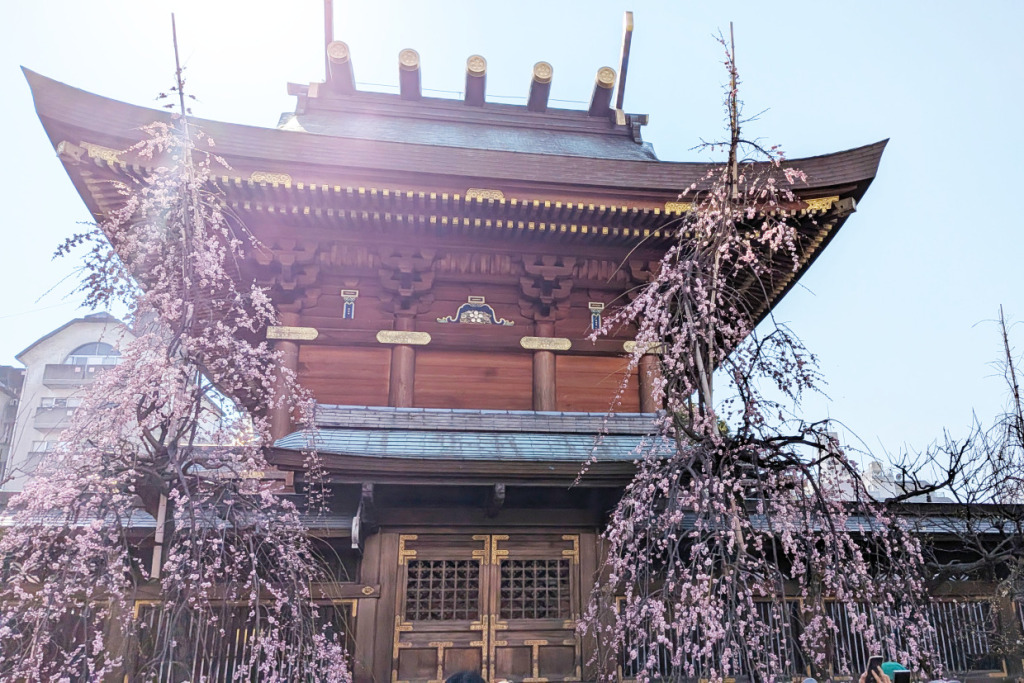
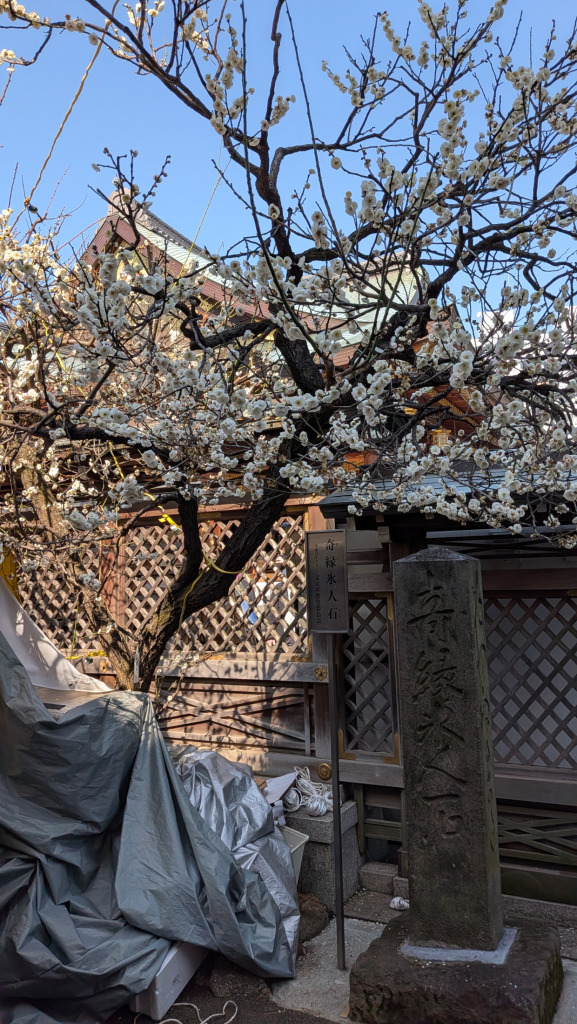
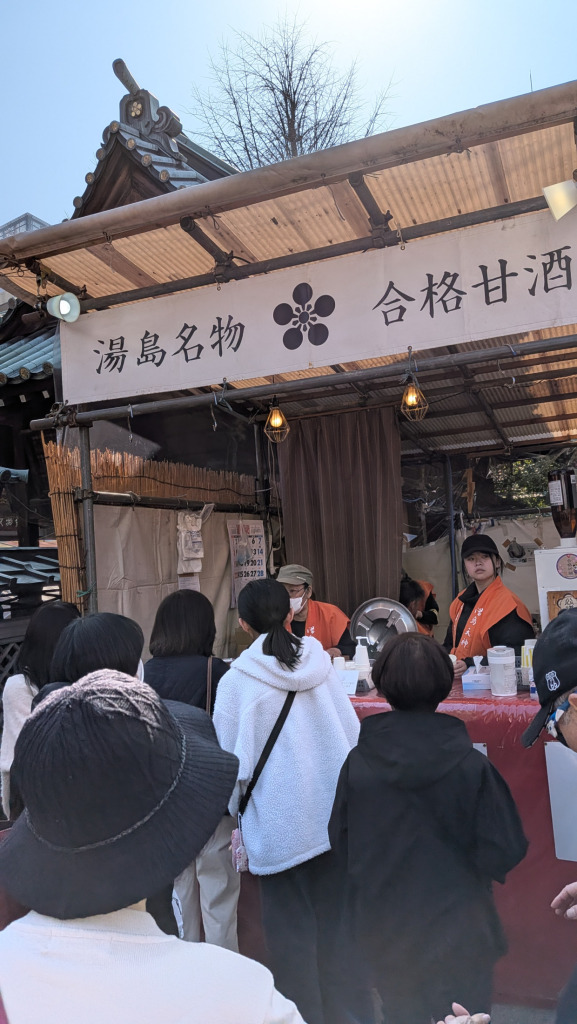
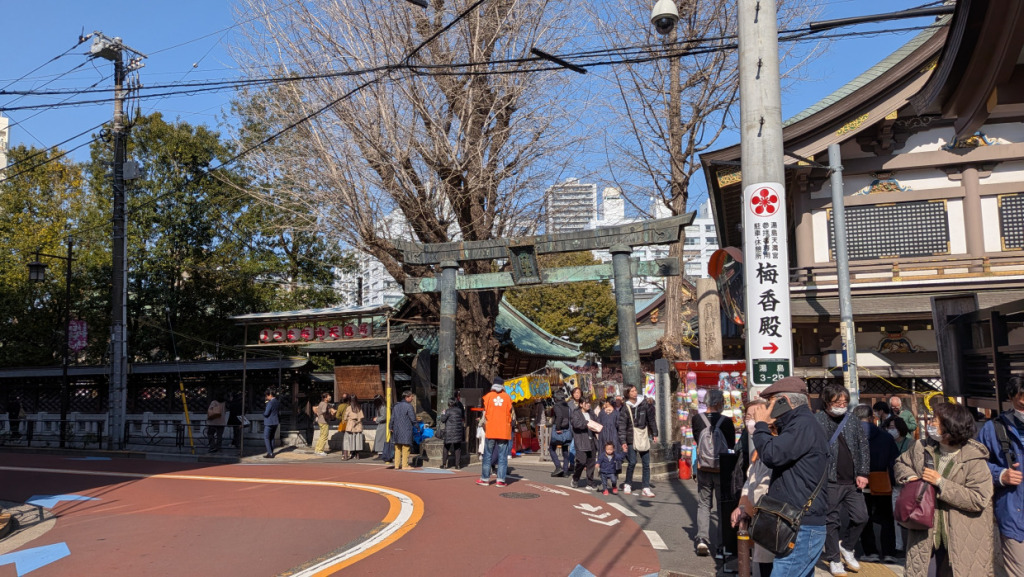
Tenjin, also known as the deity of learning, draws many students and their families praying for success in their exams.
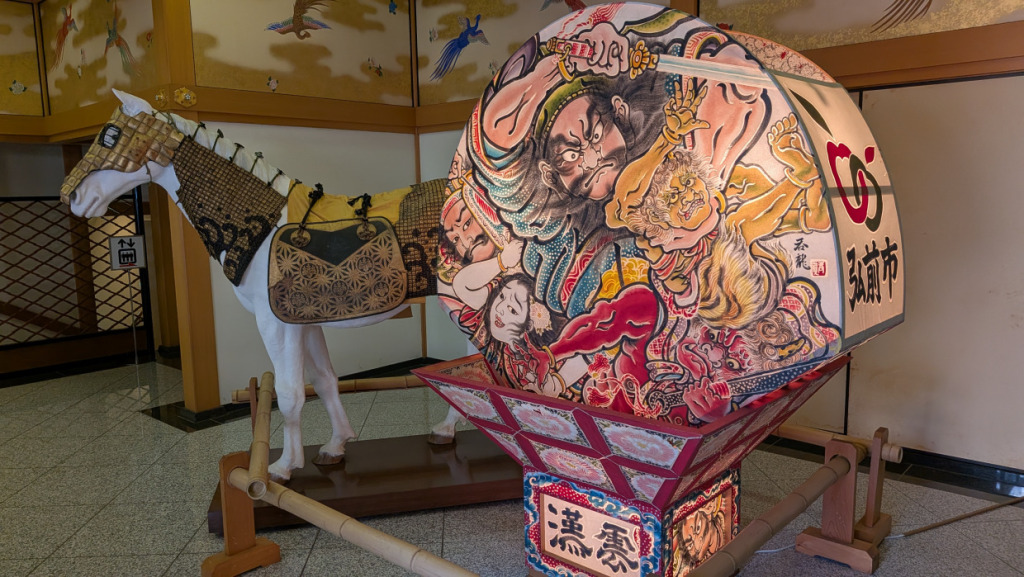
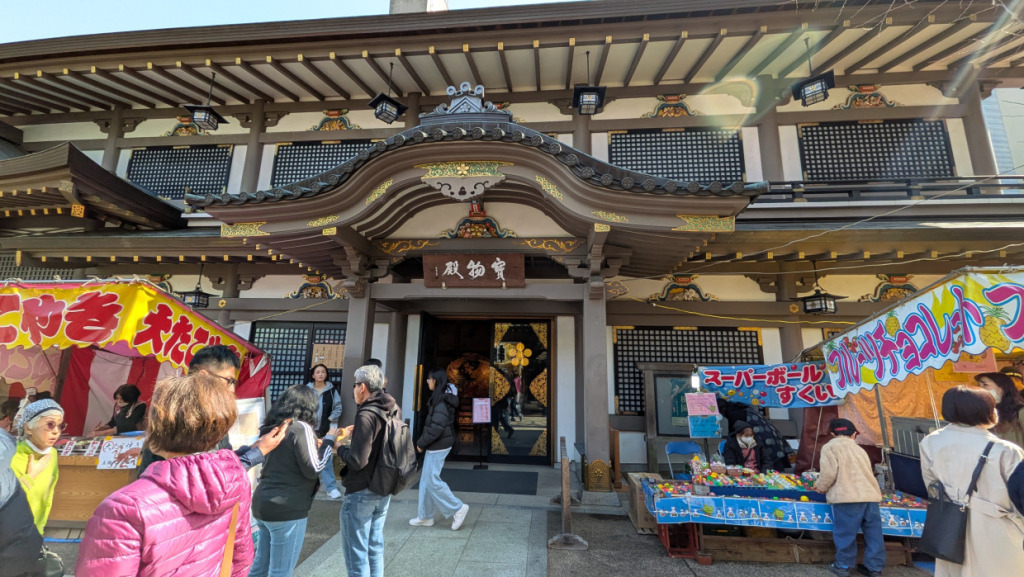
In the shrine’s treasure hall, visitors can view portable shrines (mikoshi) as well as special exhibitions. On the day of my visit, a Japanese painting exhibition featuring plum blossoms was being held.
Today, when people think of a flower that represents Japan, cherry blossoms usually come to mind. However, in the Manyōshū, the famous poetry anthology from the Nara period, poems about plum blossoms actually far outnumber those about cherry blossoms. It’s a reminder that plum blossoms have long been cherished by the Japanese.
Yushima Seido
Next, continuing with the Yushima theme, I head over to Yushima Seido.
Strictly speaking, this is not a shrine or temple but the historic site of the Shoheizaka Academy, a school established by the Edo shogunate. Here, Confucius and other great figures of Chinese Confucian scholarship are enshrined.
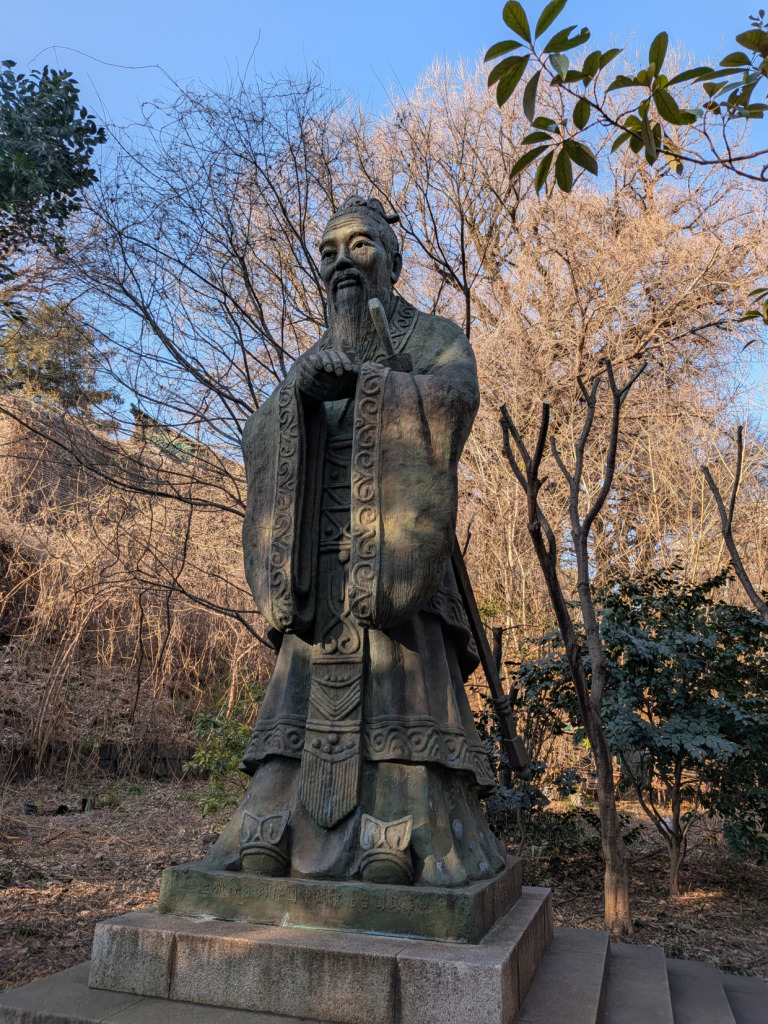
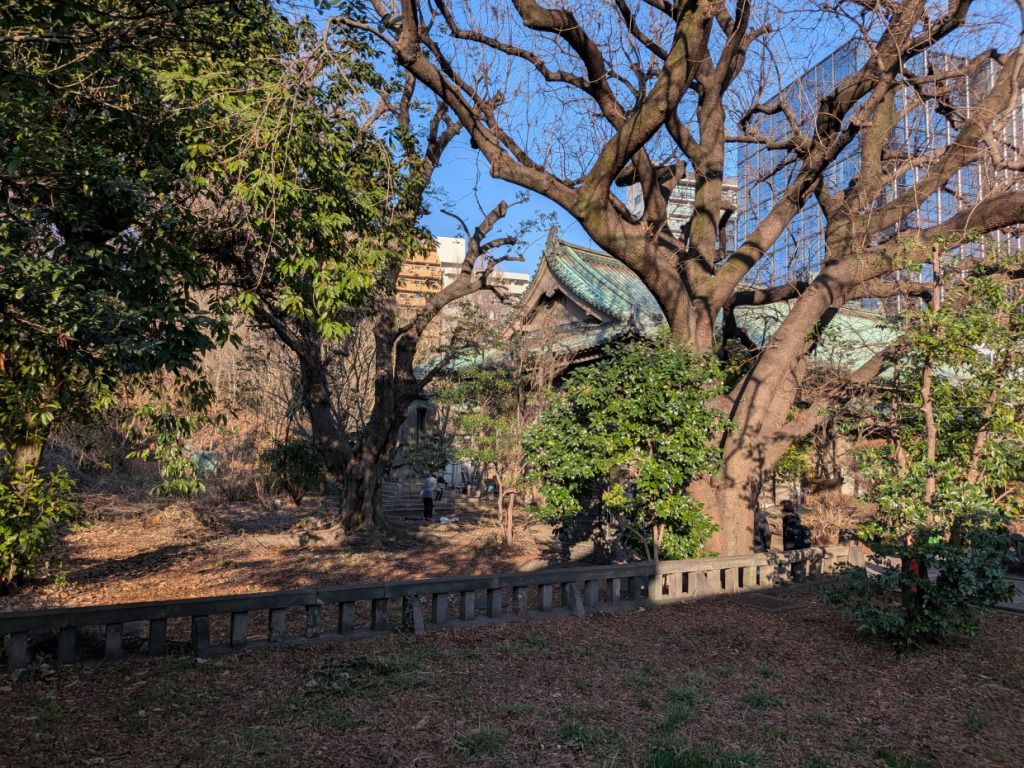
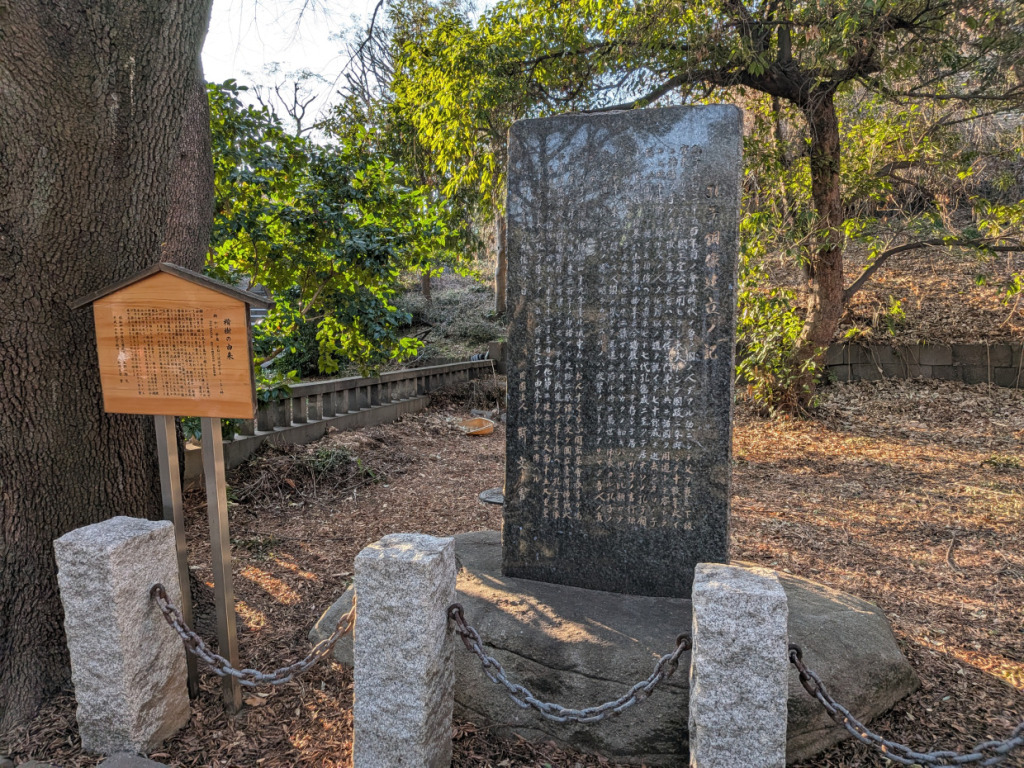
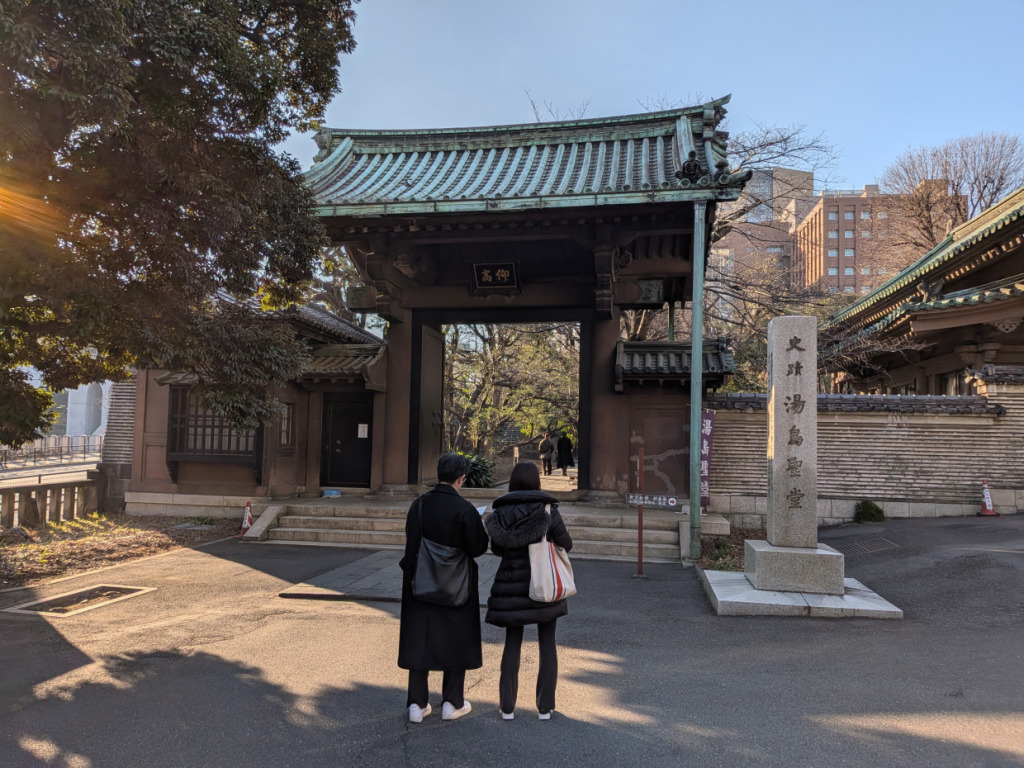
Usually, Yushima Seido has a calm atmosphere that hardly feels like the middle of a big city. But during exam season, many visitors come here—along with nearby Yushima Tenjin—to pray for success.
With the blessings of sages from both Japan and China, good luck with your studies!
Kanda Myojin
Finally, I make my way to Kanda Myojin, the guardian shrine of the 108 neighborhood associations of Kanda.
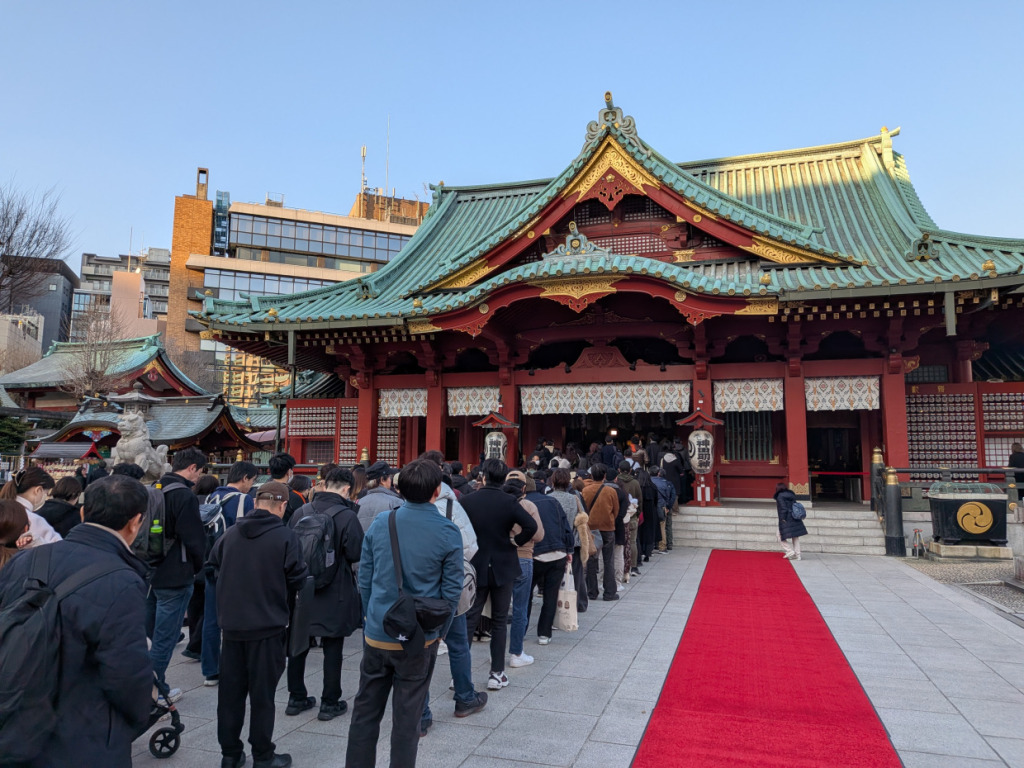
Even though the New Year’s shrine visit season had already passed, the grounds were still bustling with visitors.
The shrine is also known for having a sacred horse (shinme), which is quite rare. Since this year happens to be the Year of the Horse—one of the twelve animals of the traditional Japanese zodiac (eto)—it may have been busier than usual.
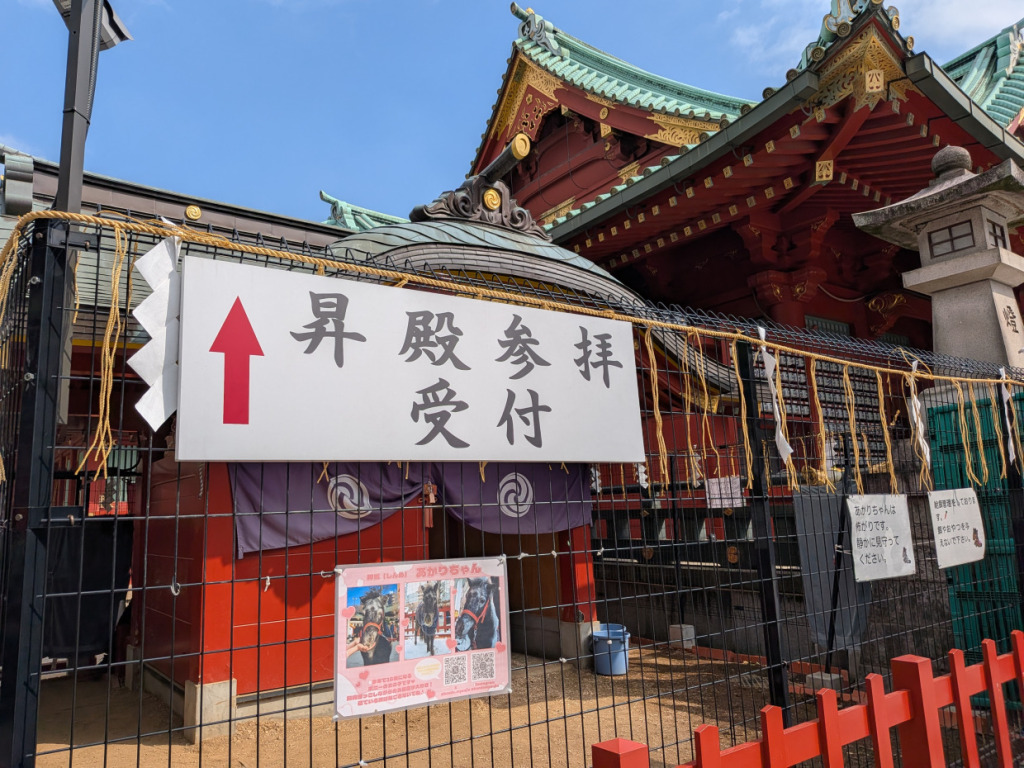
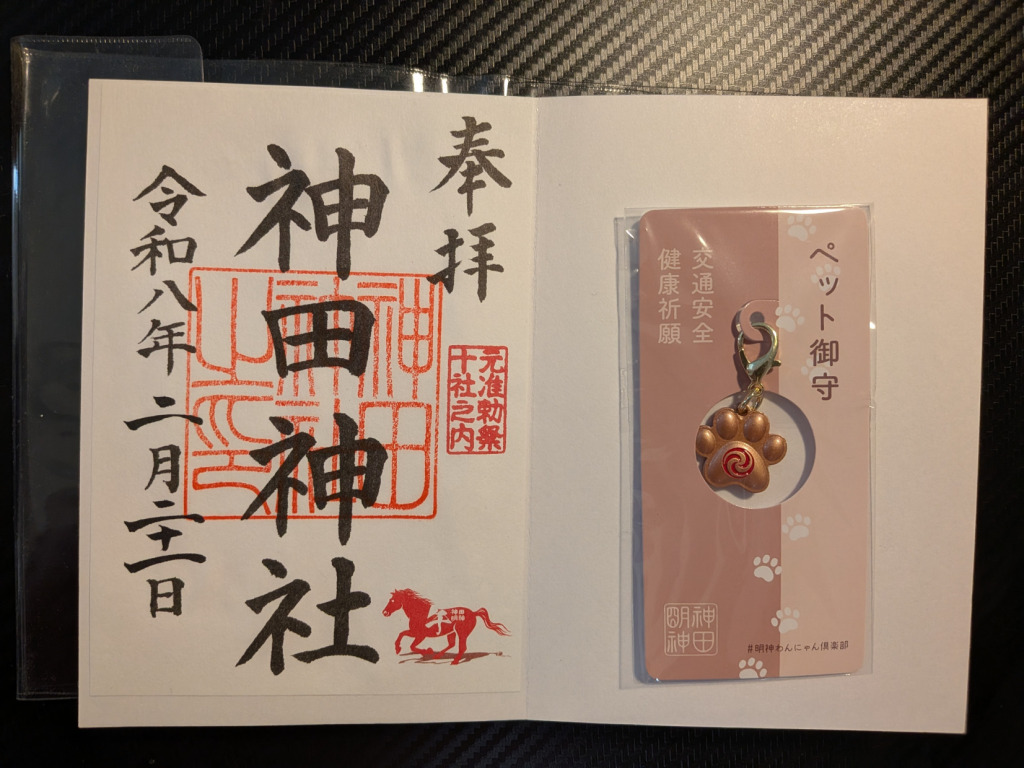
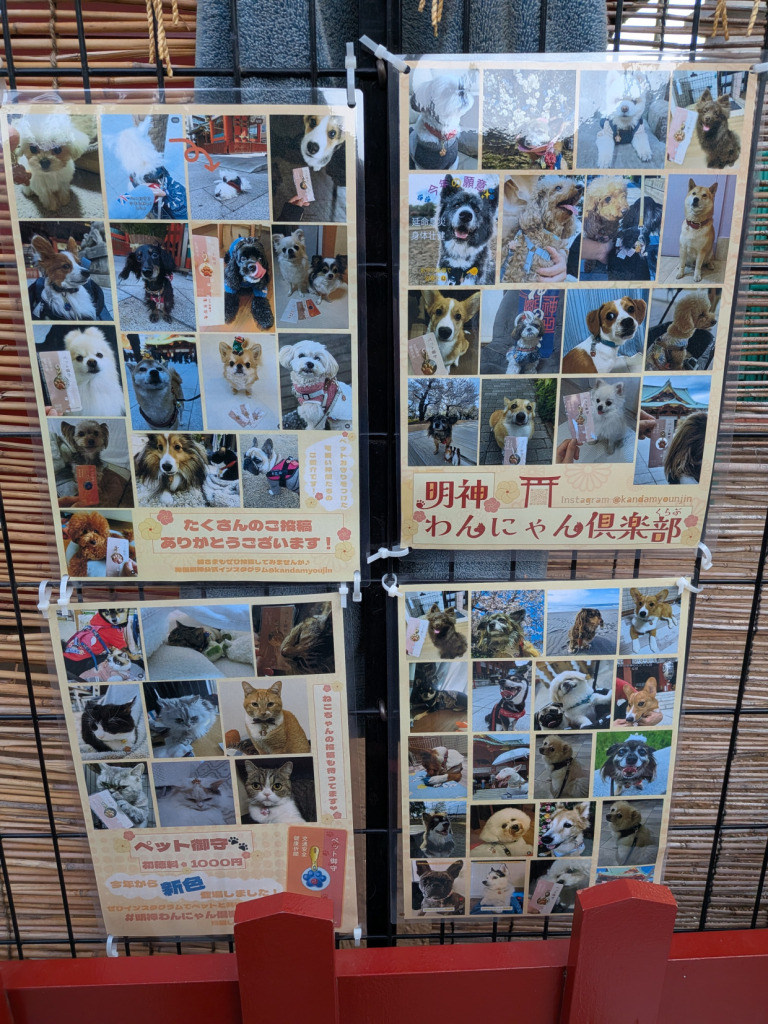
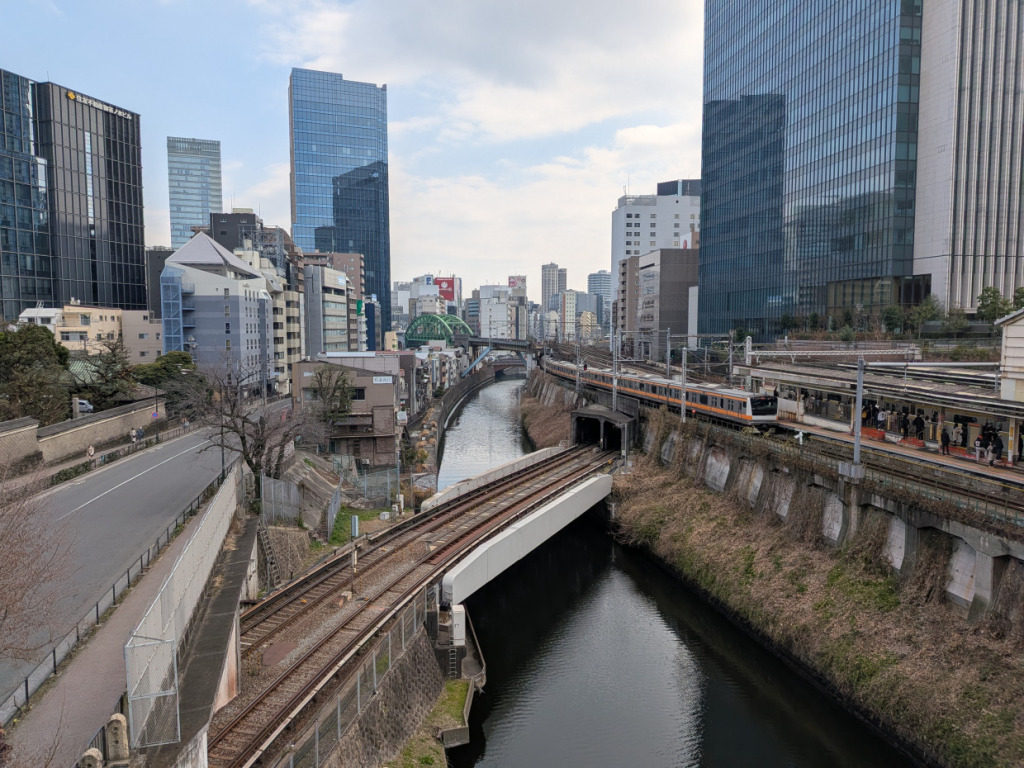
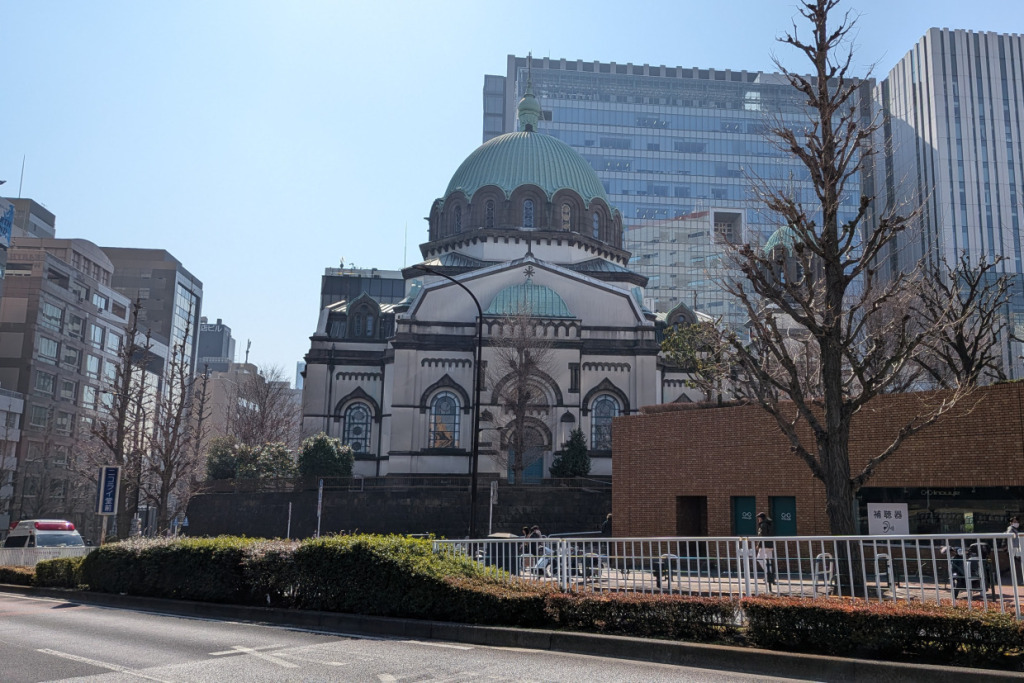
From Hijiri Bridge, which connects Yushima Seido and Nikolai Cathedral (Tokyo Resurrection Cathedral), I take in the view of the Kanda River flowing toward Akihabara, bringing my bicycle stroll to an end.
Though I no longer live in Kanda, it was a rewarding day to hear stories from Ms. Sasama, a true Kanda resident. In the future, I hope to continue exploring the charms of old-town Tokyo through conversations with long-established shops—and real Edokko!
If any shop owners are happy to appear in print, please send a message to [email protected]
Until next time, I look forward to seeing you again!
🚴♂️Today’s Route🚴♂️
🚴♂️Articles by Shitamachi Kombu🚴♂️
Tokyo old town bicycle stroll 01
Collecting “Goshuin” (temple or shrine stamps) in the Yanesen area
Tokyo old town bicycle stroll 02
Hokusai bicycle stroll
#01 Birth to Teens
#02 20s to 40s
#03 50s and Beyond
Tokyo old town bicycle stroll 03
Kanda Matsuri (Festival)
Tokyo old town bicycle stroll 04
Ota-Ward
Tokyo old town bicycle stroll 05
Kanda
Profile
Shitamachi Kombu
Weekend writer. Born in Kanda, Tokyo, and the third generation “Edokko” (Tokyoite). Interested in rediscovering the shitamachi (oldtown) area. Relies on an electric bicycle daily as a commuting companion. Suffers from a poor sense of direction. A fan of essayist Sadao Shouji. Writing under the pen name “Shitamachi Kombu,” inspired by the classic snack “Miyako (downtown) Kombu.”