CYCLE CINEMA #20
“Linda Linda Linda”
The Bicycle as a Symbol of Everyday Life
There are all kinds of genres in film: period dramas, science fiction, horror, anime. No matter how much of a movie lover you are, there are probably one or two genres you have gradually drifted away from, thinking, “That’s just not for me.” For me, that genre was the coming-of-age film.
I went to see Linda Linda Linda (2005) because I was curious about Bae Doona—or perhaps because I was drawn to the music of The Blue Hearts. I honestly don’t remember which. What I do remember clearly is walking into the cinema feeling a little self-conscious, wondering, “Is someone like me really supposed to be here?” But inside, I found a surprisingly diverse audience: middle-aged men from the Blue Hearts generation, fans of Korean cinema, and people who simply loved coming-of-age movies.
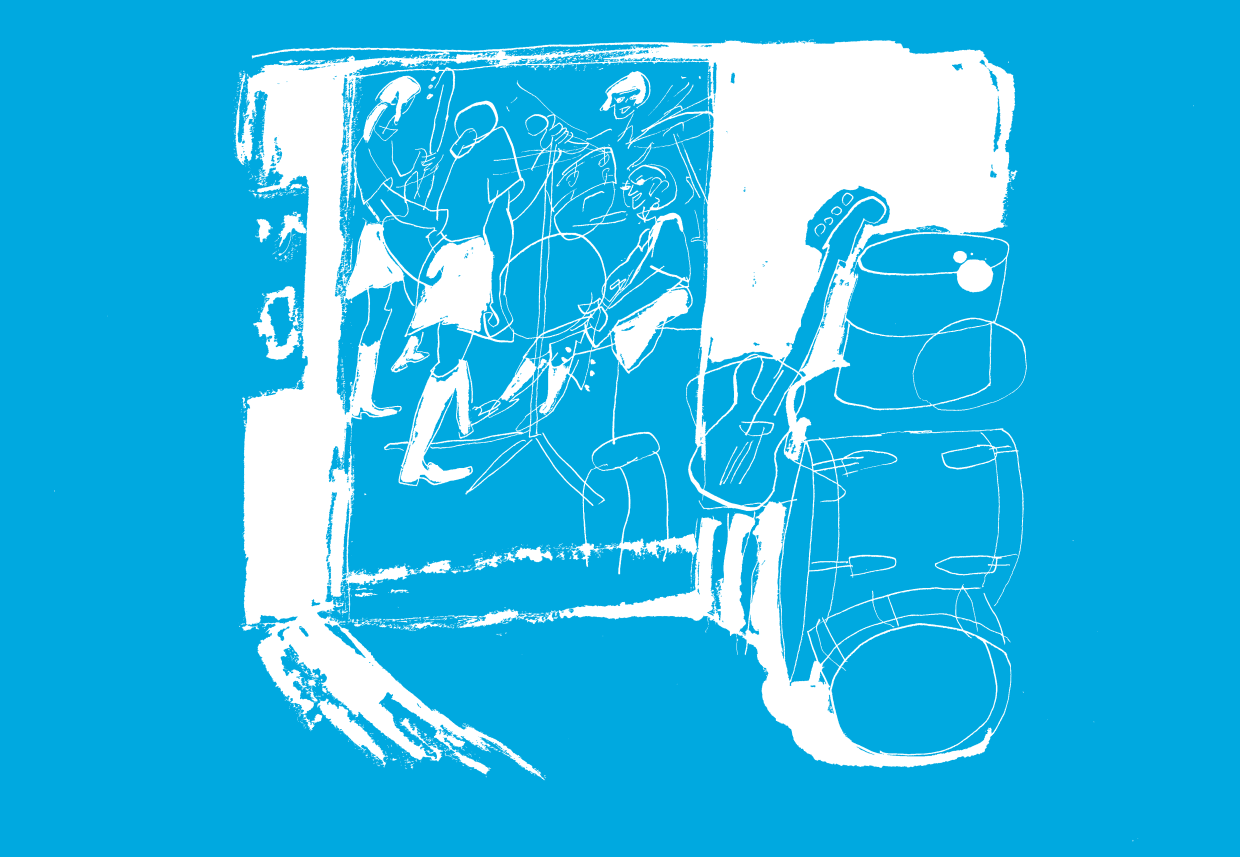
The film is set at a high school in a provincial Japanese city (filming took place in Maebashi and Takasaki, Gunma Prefecture). With the school festival just around the corner, a girls’ band from the light music club finds itself in trouble when its guitarist breaks her arm and its vocalist quits. By chance, the remaining members recruit Song, a Korean exchange student, as their new vocalist and set their sights on performing on the final day of the festival. Their songs? Those of The Blue Hearts, including the one that gives the film its title.
If you simply follow the plot, there aren’t many surprises. You can pretty much predict that “The Blue Hearts will bring the house down, followed by a happy coming-of-age ending!” And, more or less, that’s exactly how the story unfolds. Yet Bae Doona’s performance as Song, the Korean exchange student, keeps the film from being just another coming-of-age movie.
Song doesn’t yet understand Japanese very well. She manages to communicate using just a handful of words and her intuition. Shortly after she appears, Kei, played by Yu Kashii, asks her, “Want to join our band?” Song instinctively answers, “Hai” (“Yes”). But that “hai” comes out almost automatically, without her really understanding what it means or what she’s agreeing to. Their conversations never quite line up, creating these odd little pauses and moments of silence. And those pauses are wonderful.
The girls in the high school light music club play simply because they love making music. Even if they master their instruments, there is no ultimate goal waiting for them, no equivalent of making it to the Koshien baseball tournament. They come together not for some particular purpose or reward, but simply because they love music. And somehow, Song’s “broken Japanese” fits perfectly into that wonderfully pure, aimless atmosphere.
The story quietly follows the girls over the few days leading up to the school festival as they immerse themselves in music. One night at school, one of the girls remarks, “A performance is over in an instant. Maybe the time we spend practicing and deciding on a band name is more important than the performance itself.” What this film captures is not the school festival itself, but the utterly ordinary days leading up to it. And the bicycle.
There is a scene in which Moe, played by Shione Yukawa, who has left the band after an injury, visits Kei’s house. Moe arrives first and waits outside. Kei eventually comes home by bicycle. She normally takes the bus to school, so perhaps she had simply been out to the local convenience store. Dressed in slightly sloppy gym clothes, she looks completely real. Her mamachari, the everyday Japanese city bicycle, perfectly captures the world in which a high school student in a provincial city lives.
There are no scenes of bicycles racing through the wind in this film. The bicycle is simply there as an ordinary part of everyday life. Bicycles casually lined up in the school bike parking lot in the morning—the kind of bikes that once stood alongside our own. This atmosphere could not be created with a motorcycle or a skateboard. The festival is still ahead; for now, there is only the everyday life stretching out before it. And bicycles belong naturally in that landscape.
When you’re living through those moments, time can seem as though it will last forever. Yet once they are gone, they turn out to have passed in an instant. The wheels of a bicycle keep turning in the same circular motion, yet somehow carry us slowly forward. In that sense, they resemble the passage of time back then.
The bicycle that symbolizes this film isn’t anything special. It’s an ordinary mamachari, the kind that could have been found anywhere. And that is precisely why it quietly captures those irreplaceable everyday moments that existed before the festival—the ordinary days that, only in retrospect, we realize were anything but ordinary.
Text_Hideki Inoue
🎬CYCLE CINEMA STORAGE🎬
#01 “The Bicycle Thief”
#02 “Project A”
#03 “Shoot for tomorrow!”(origin title “Butch Cassidy and the Sundance Kid”)
#04 “The Kid With a Bike (Le gamin au vélo)”
#05 “Izakaya Choji”
#06 “Cinema Paradiso”
#07 “Kids Return”
#08 “PERFECT DAYS”
#09 “Kramer vs. Kramer”
#10 “E.T.”
#11 “Gachi-Boshi”
#12 “Yesterday”
#13 “Wadjda”
#14 “The Zone of Interest”
#15 “Anselm”
#16 “Otoko wa Turai yo”
#17 “Kokuho”
#18 “Red Rocket”
#19 “il Postino”
#20 “Linda Linda Linda”
Profile
Text_Hideki Inoue
I am from Amagasaki City, Hyogo Prefecture, Japan. I work as a writer and editor. My hobbies include hot baths, skiing, and fishing. Although I have no personal connection, I am independently conducting research on Shiga Prefecture. I prefer an active fishing style called “RUN & GUN,” which involves moving around actively instead of staying in one place. Purchasing a car to transport bicycles for this style of cycling seems like putting the cart before the horse.
Illusutration_Michiharu Saotome