There are times in life when you have to return to a place you never wanted to go back to. For Mikey, home was exactly that kind of place. He ends up returning to the house in Texas where he once lived with his wife. But that relationship is long over. When Mikey asks, “Can I stay for a while?”, his wife Lexi is completely unwilling. Still, Mikey manages to secure the living room sofa as his bed—on the condition that he pays Lexi and her mother Lil, who are struggling to make ends meet, $200 a week in rent. There was a time when he was known in Hollywood as a porn star, but that glory is nothing more than a shadow now. Having lost his place in Hollywood as well, he has returned with almost nothing to his name.
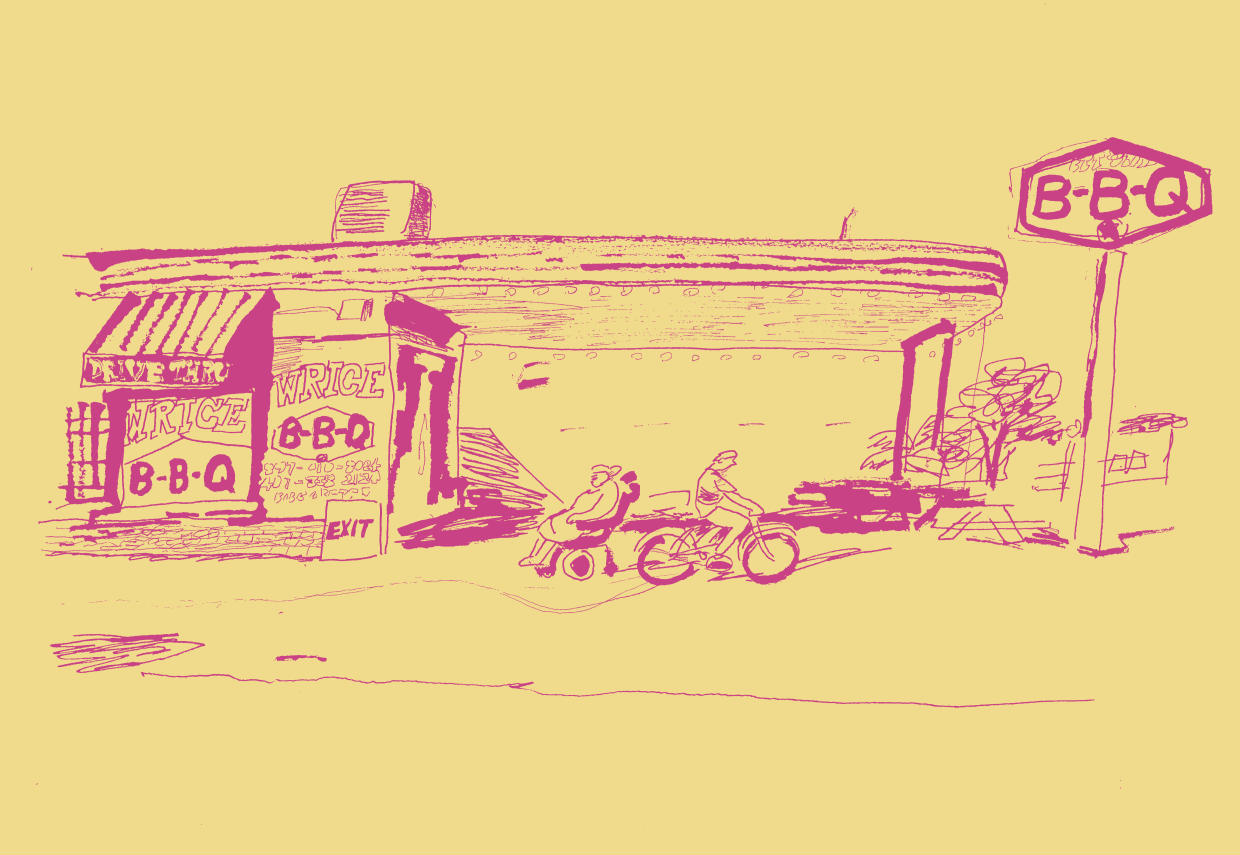
If he can’t pay $200 a week, he’ll be kicked out of this place too. He has nowhere else to go. Climbing onto an old, abandoned bicycle left in the yard, he pedals off to job interviews. In a town where driving is the norm, a bicycle hardly counts as an adult’s mode of transportation. It’s as if time has rewound, returning him to where he started years ago. He sweats as he pedals along the rough edges of the road. The bicycle embodies his life itself: he appears to be moving forward, yet nothing changes. It won’t take him far. It’s the bare minimum speed required just to “keep things from falling apart.” If he slows down even a little, he’ll topple over. The bicycle is a pure metaphor for the posture of his entire existence.
Even so, somewhere inside him, there is a flicker of kindness. He slows down when passing someone in a wheelchair. It’s not the kind of kindness worth praising; more like a reflex his body remembers. He’s not completely hardened. But this small decency isn’t powerful enough to correct the course of his life.
He fails several interviews. His résumé lists only “former porn actor,” but the issue isn’t even that. Interviewers can sense the “void” behind his words. It’s immediately obvious that nothing solid backs them up. He starts hanging around the home of an old acquaintance who deals marijuana, eventually selling weed to students and workers. In American society, where marijuana carries a casual presence, his emptiness strangely aligns with the product, and the business goes surprisingly well. If that were all, perhaps he wouldn’t have dug himself too deep. But while he is empty, he is also hungry for something. Not success, not money—something more formless and troublesome. He needs someone’s gaze, someone’s reaction. Once he has some money to spare, he becomes fascinated by Strawberry, a high schooler working at a donut shop (he’s way too old for this!). It’s not exactly romance, nor purely exploitation—something painfully desperate in between. Soon, Mikey starts planning to use Strawberry to get back into the industry.
Director Sean Baker consistently depicts ordinary people living on society’s margins. He captures this story on 16mm, using its grainy light to imprint Mikey’s world onto film. The director neither condemns nor praises Mikey—he simply presents his “now” with quiet clarity. The lie about owning a luxury car, and the truth of riding an old bicycle—this contrast sharply outlines who Mikey is. He seems to be heading somewhere, but he’s really just looping around the same place. He appears to be moving forward, yet nothing changes. The film offers no explanations of his past or future. What will happen to him? The audience can only imagine Mikey’s future. Yet few—if any—will foresee success.