Accompanying Report: Ehime Prefecture’s Cycling FAM Tour 2025 for Overseas Media
#02
#02
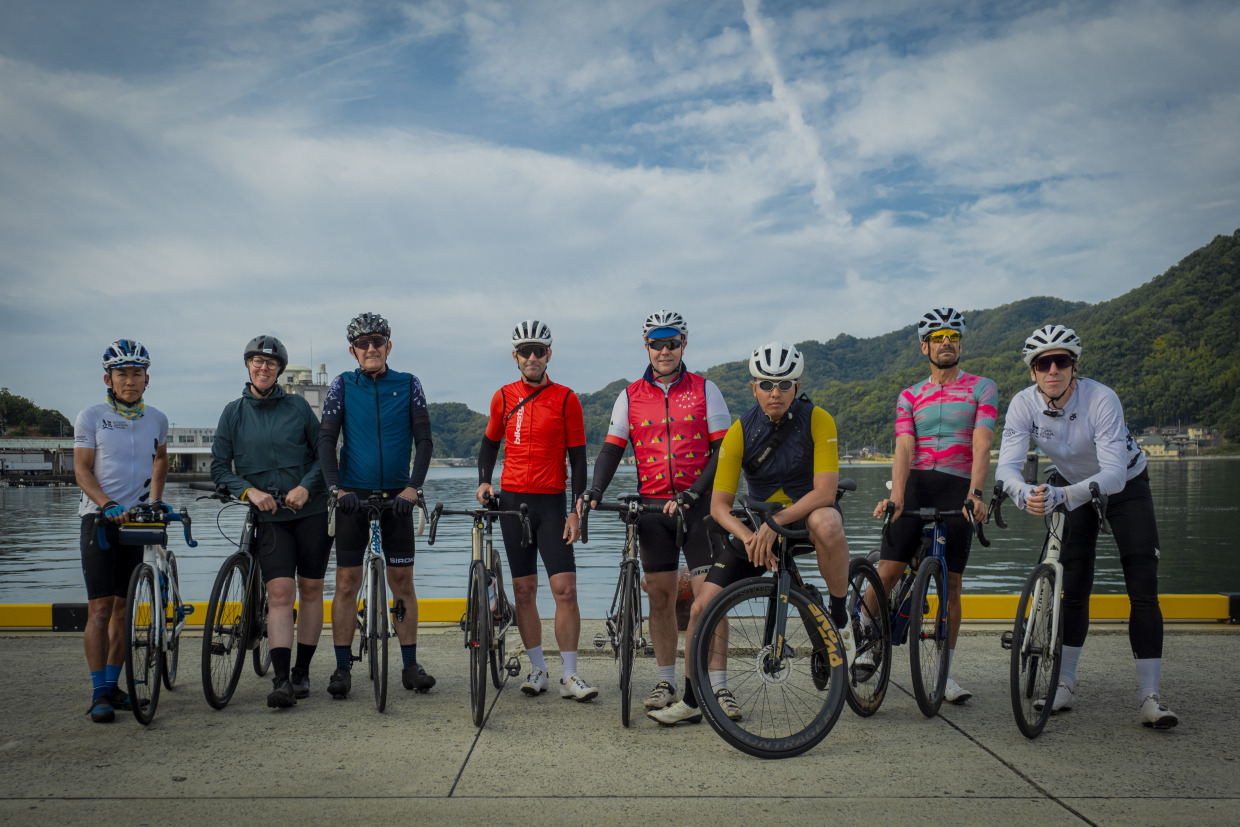
On a crisp autumn day, a group of foreign cyclists arrived at Matsuyama Airport, each carrying a bike bag over their shoulder. They had come from Australia’s major cities—Sydney, Melbourne, Brisbane—representing a diverse mix of media professionals, travel agency staff, and influencers. All had been invited to take part in Ehime’s now-annual press tour circling the prefecture.
A glance at the itinerary revealed just how ambitious this year’s program would be. Alongside classics such as the Shimanami Kaido and the legendary UFO Line, the route included a major climb through the dramatic landscapes of the Shikoku Karst, a coastal ride along the rias shoreline of Nanyo, a tour of Cape Sada, and visits to sections of the historic Shikoku pilgrimage trails—before ultimately rolling into the finish at Matsuyama’s famed Dogo Onsen. It was nothing less than a grand tour of Ehime.
This year, daily stages of more than 100 kilometers were scheduled throughout, making it a truly demanding challenge. Even in its second year, Ehime Prefecture’s commitment is anything but modest. And judging by appearances, the Australian contingent arrived equally fired up and ready. It was a full-on face-off—both sides bringing serious intent.
For this rare, full-scale press ride tour—still a rarity within Japan—our magazine photographer once again joined the group for the entire journey. Fresh as Iyokan citrus and squeezed straight from the source, here’s a vivid, on-the-road report—served up at full flavor.
Let’s roll.
Text & Photos by Eigo Shimojo
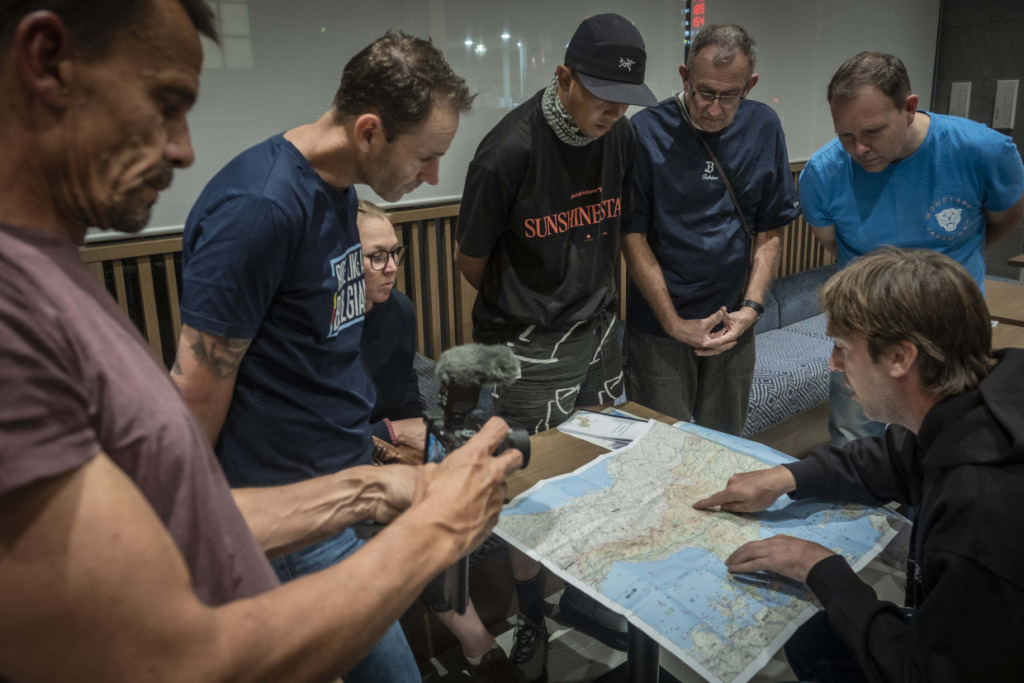


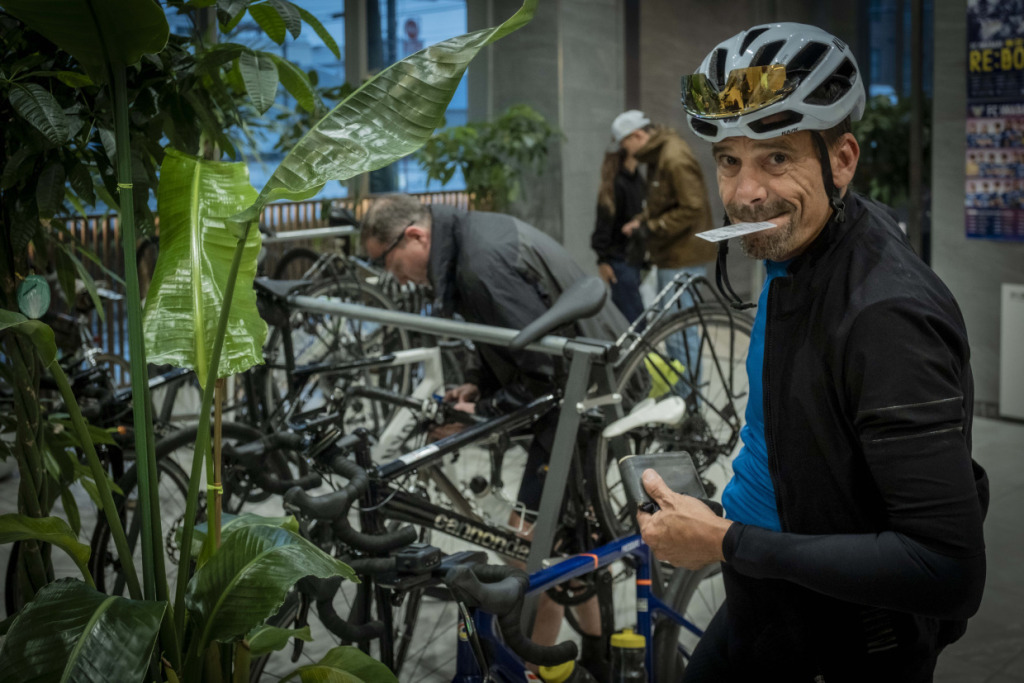
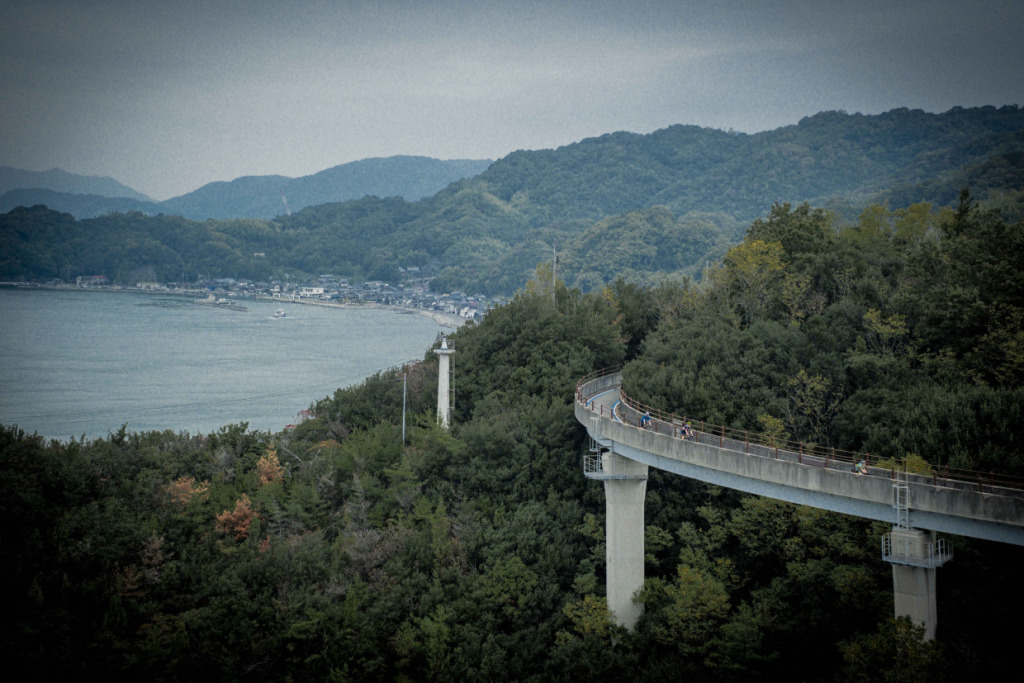
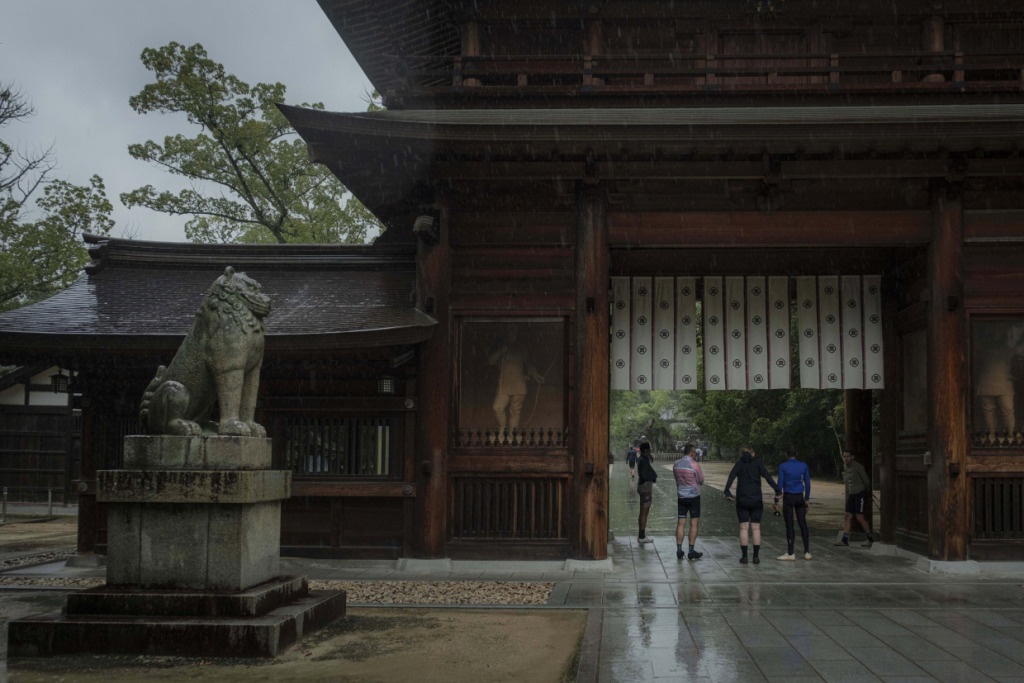
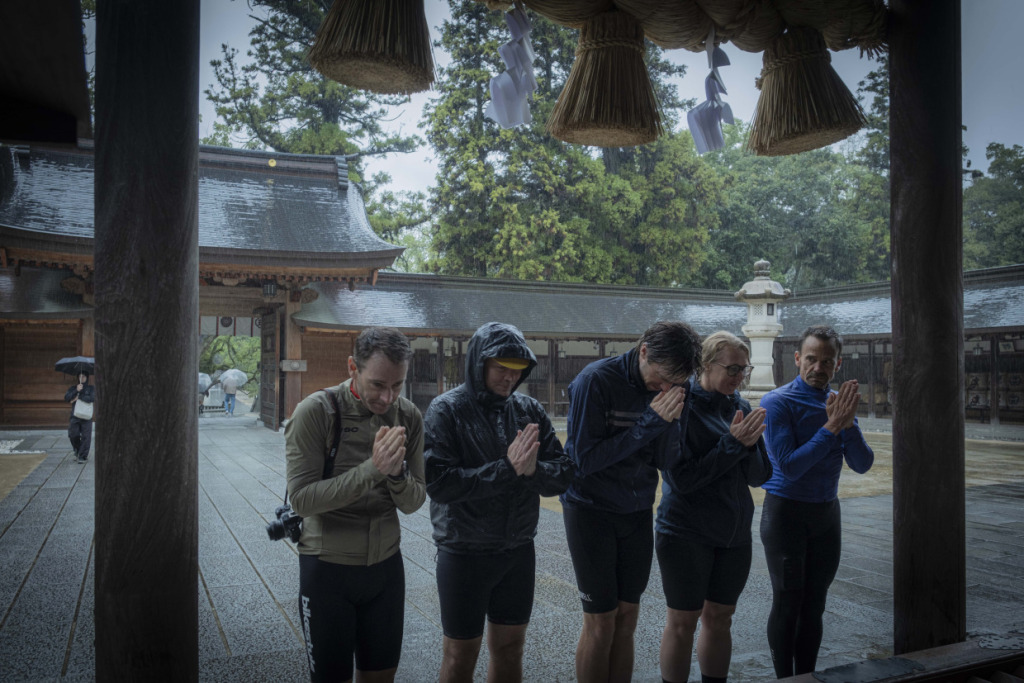
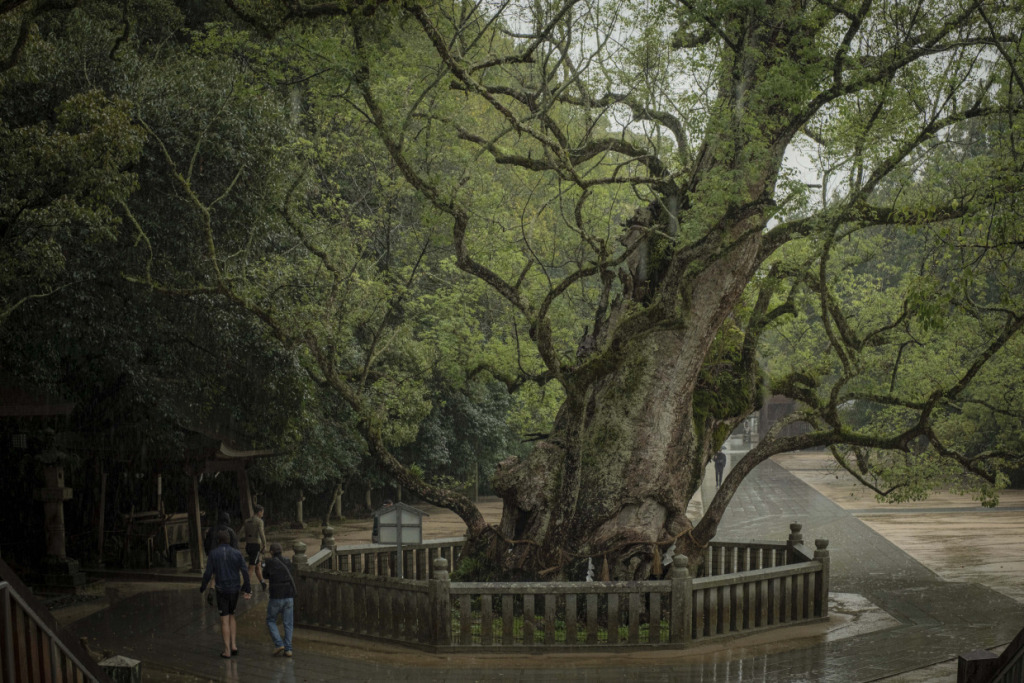
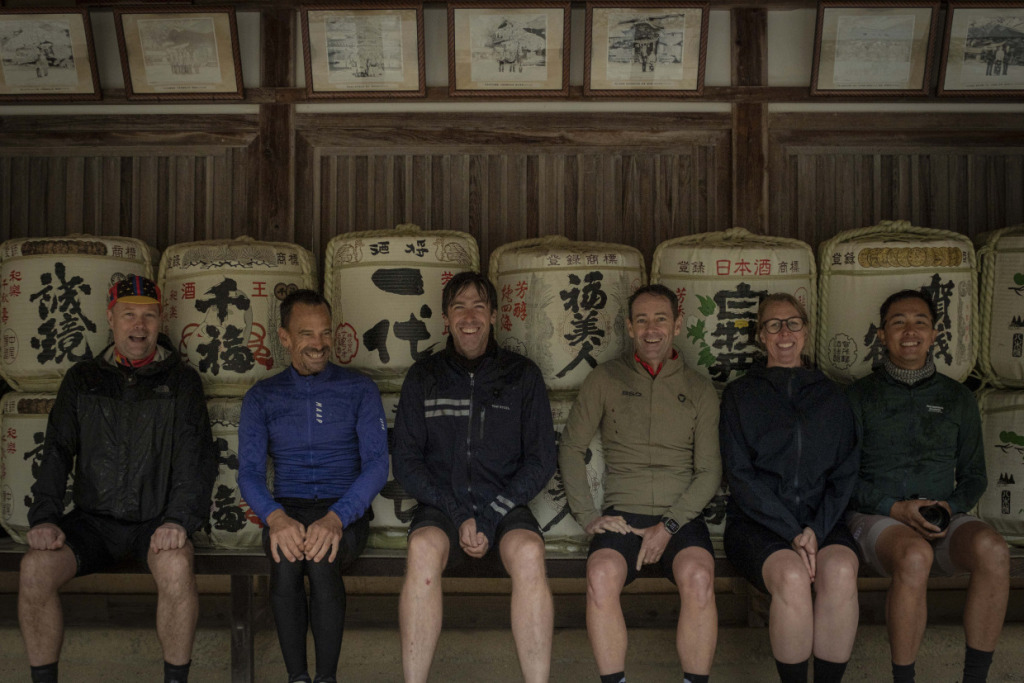
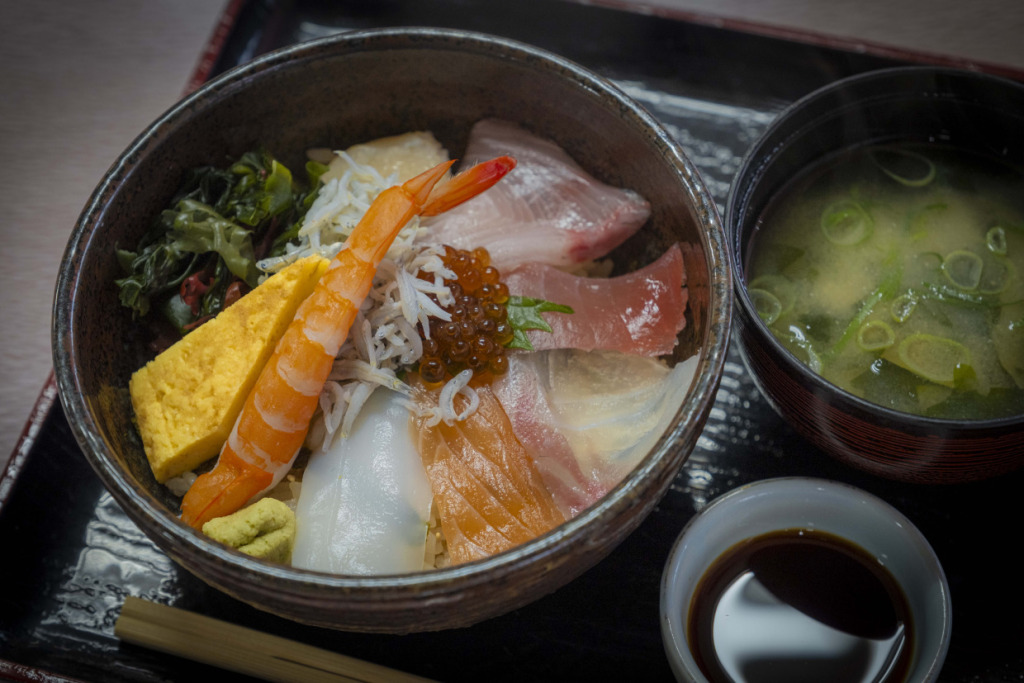
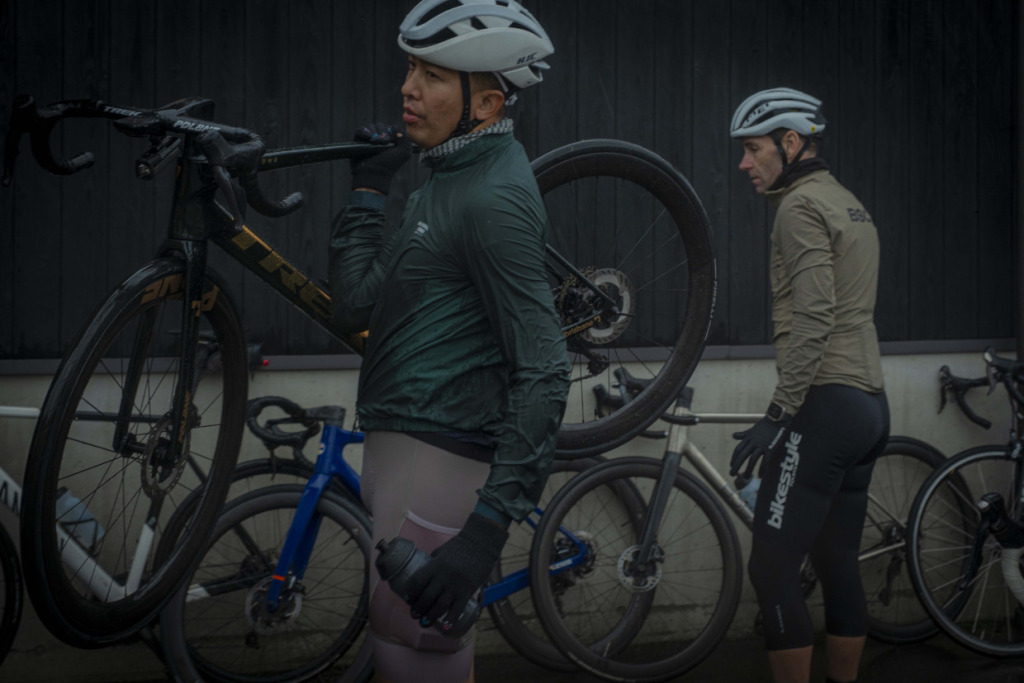
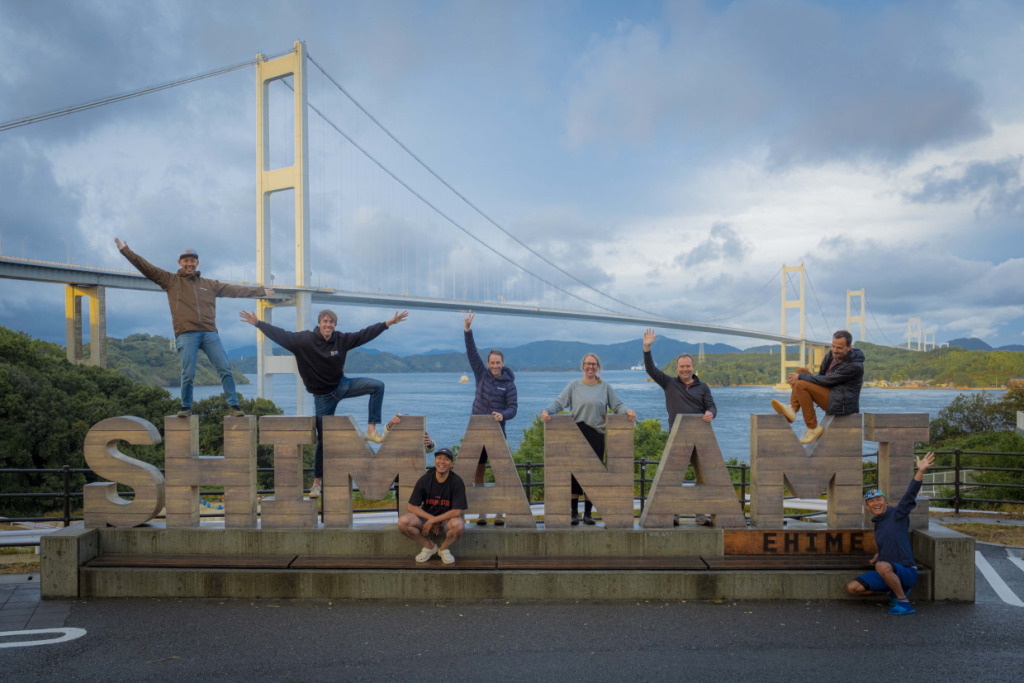
It’s almost a rule that any journey through Ehime begins with the Shimanami Kaido—but on this occasion, the first day brought unwelcome rain. Even so, well before the scheduled time, every rider had assembled in full cycling kit. The Aussies’ morale was unmistakably high.
With the forecast still unsettled, safety came first. The decision was made to follow the route by car for the time being. Yet even from inside the vehicle, the group studied the roads intently, listening closely to the guide’s explanations and visualizing the ride ahead. Despite the less-than-ideal start, the mood in the van remained upbeat and unmistakably Australian.
In search of a panoramic view, we drove up the classic hill climb route to the summit of Kirosan on Shimanami Kaido. The observatory there—designed in his younger years by internationally acclaimed architect Kengo Kuma, known for his philosophy of harmony with nature—offers what many consider the finest view along the entire route. Even the Seto Inland Sea islands, veiled in drifting rain clouds, had a certain quiet elegance.
From there we crossed to Omishima and paid a visit to Oyamazumi Shrine, revered since ancient times. Passing beneath a 2,600-year-old camphor tree of astonishing scale, we approached the main hall and strolled the shrine grounds. “Hopefully we can ride this afternoon,” someone said half-jokingly. Perhaps the skies were listening—by around noon, the rain began to ease.
Lunch was a generous seafood bowl showcasing the freshest catch from the Seto Inland Sea. Refueled in both body and spirit, the group stood ready. With the forecast trending toward improvement—and prepared to accept a little drizzle if necessary—the call was made: we ride.
And with that, there was no time to waste. We set our sights on the day’s highlight route—the Yumesima Kaido.
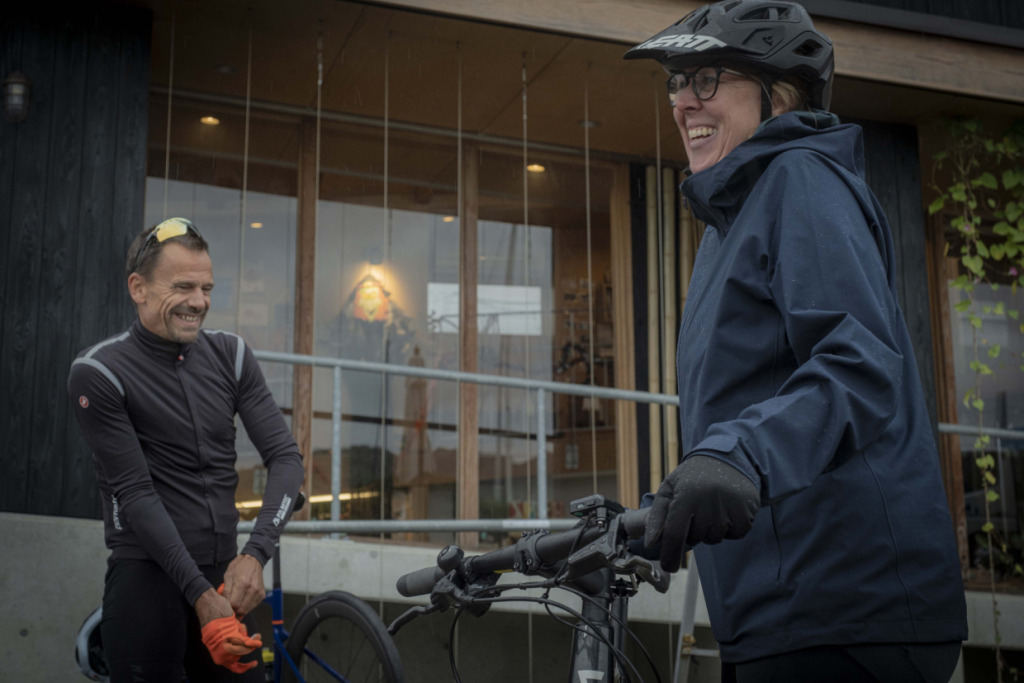
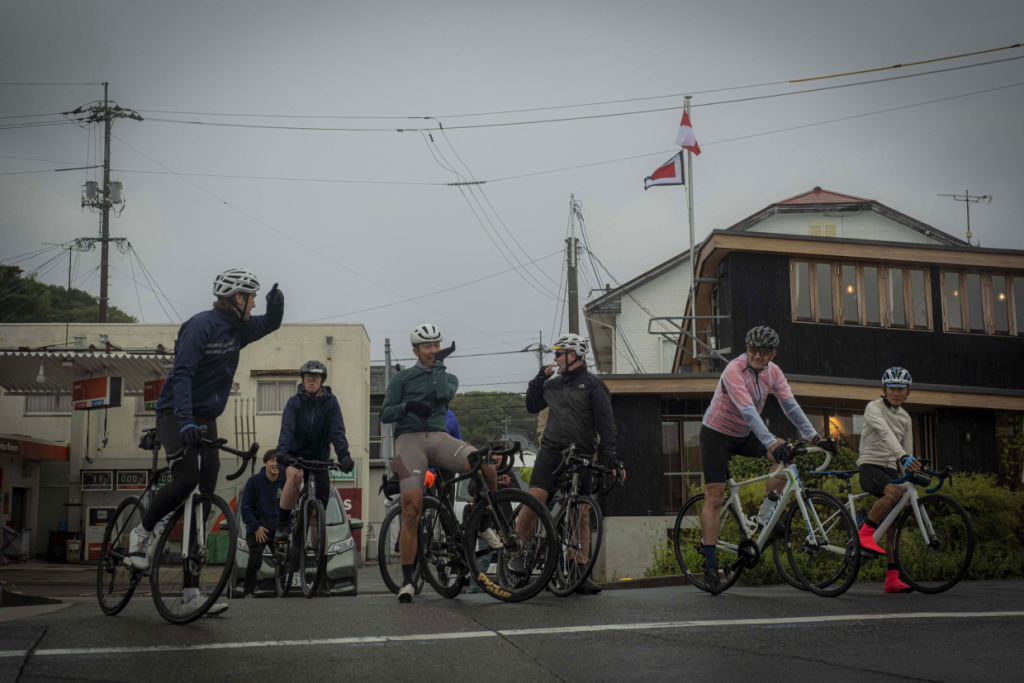
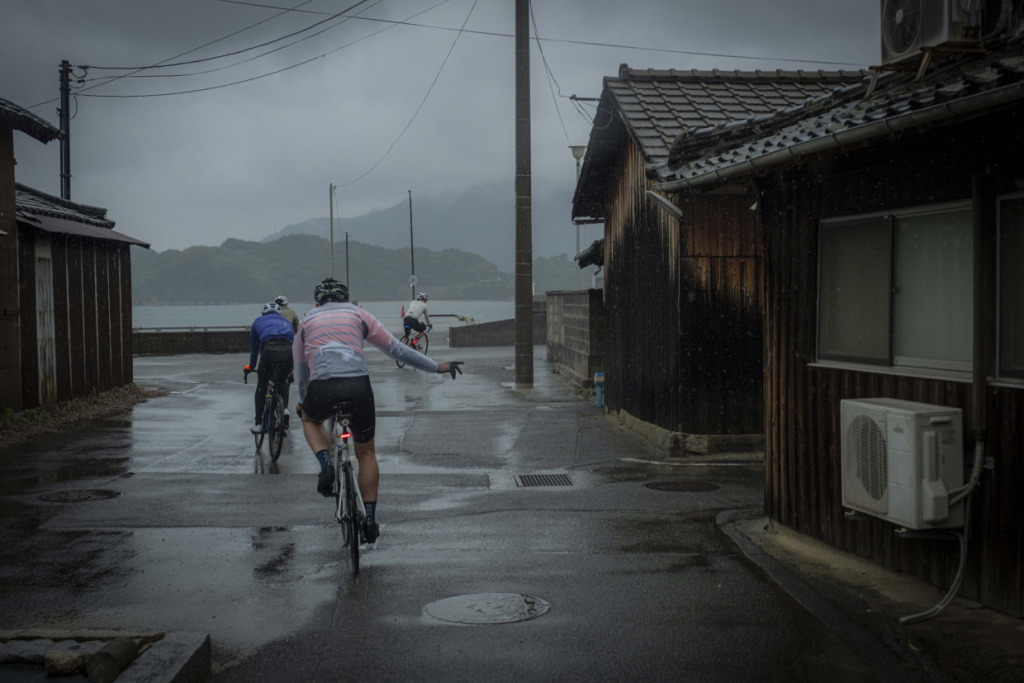
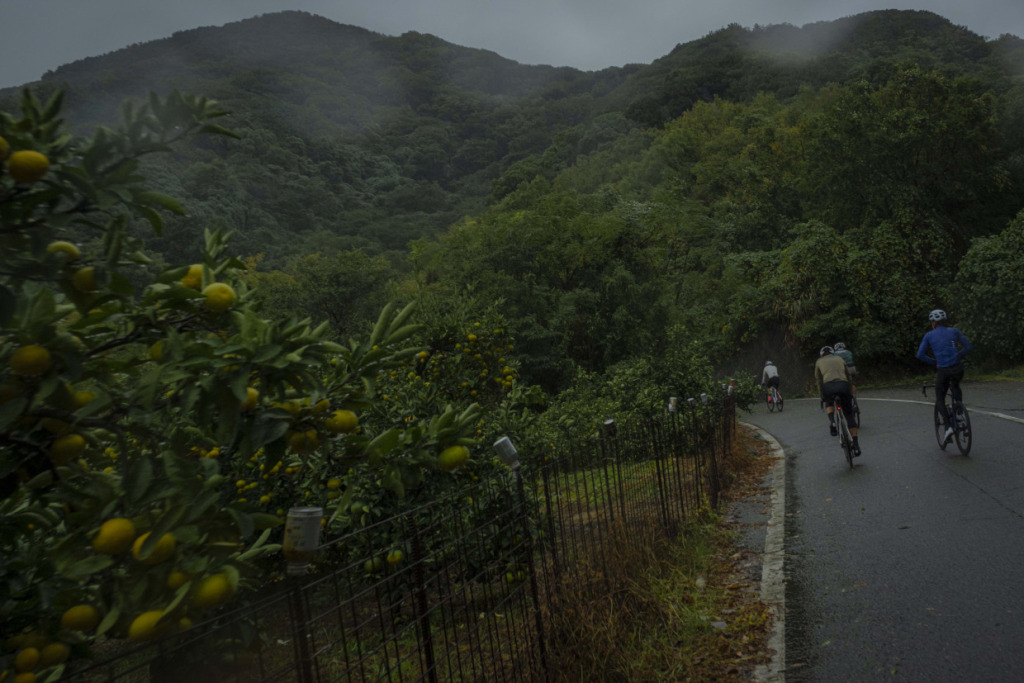
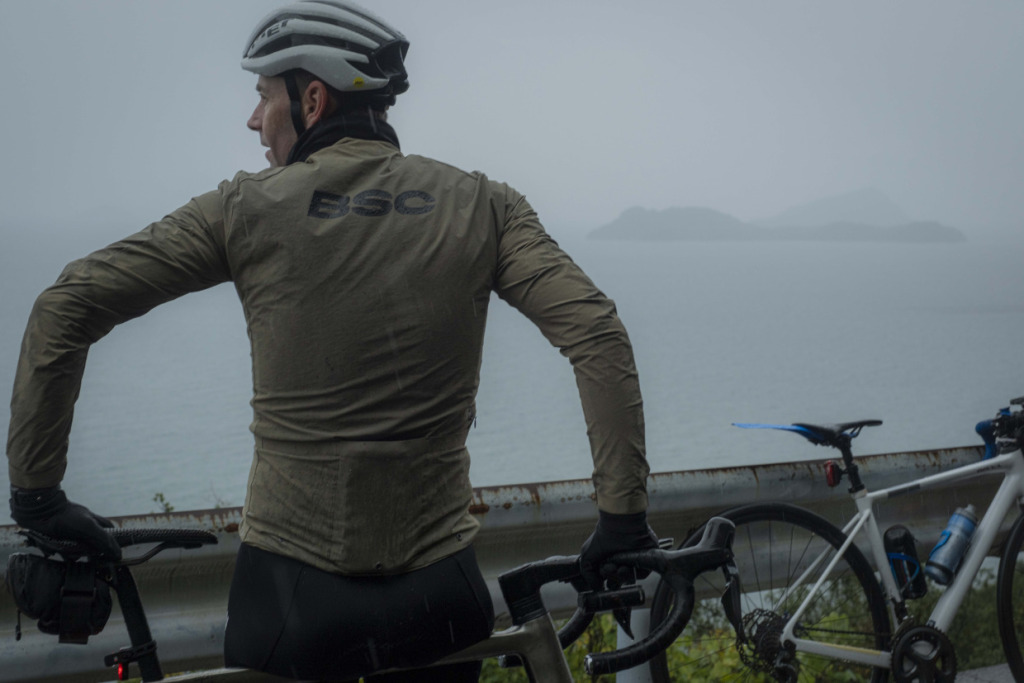
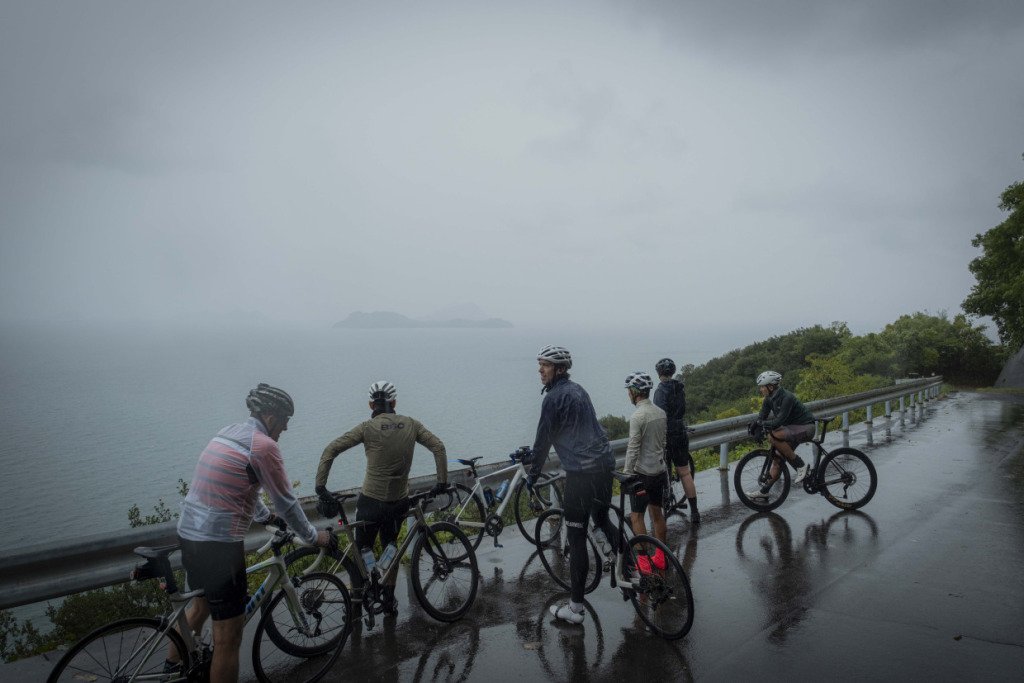
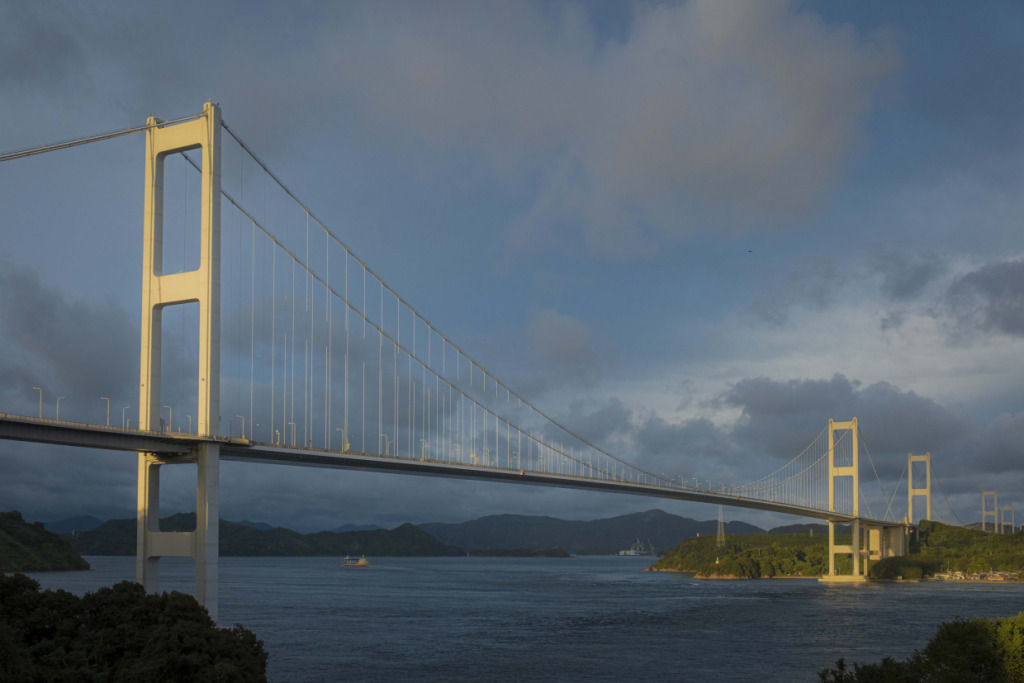
The Yumesima Kaido is a newly established cycling route linking four islands east of the Shimanami Kaido. Connecting Yuge, Iwagi, Sashima, and Ikina—four islands that together form Kamijima Town—via newly built bridges, this fresh addition stretches 63.1 kilometers in total. Access requires a short ferry ride from Innoshima, but that small extra step only deepens the sense of travel. There’s something evocative about the name, too: beyond “Shimanami” lies “Yumesima”—the Islands of Dreams.
For many participants, the internationally renowned Shimanami Kaido ride was the main course of their journey, and you could see it in their eyes. The excitement was unmistakable.
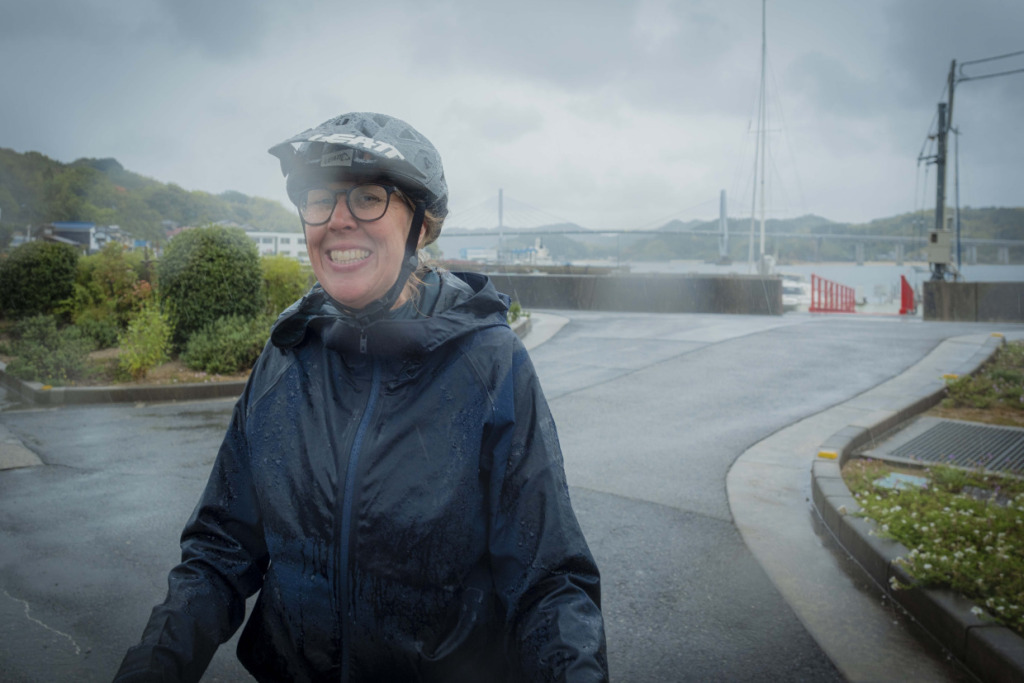
At Kamijima’s cycling hub, Cycle Oasis, the group geared up in light rainwear and rolled out onto the Yumesima Kaido at last. The anticipation that had been building all morning now poured into their pedals. Along the coastline, wheels sprayed arcs of water as the Australian train gathered speed.
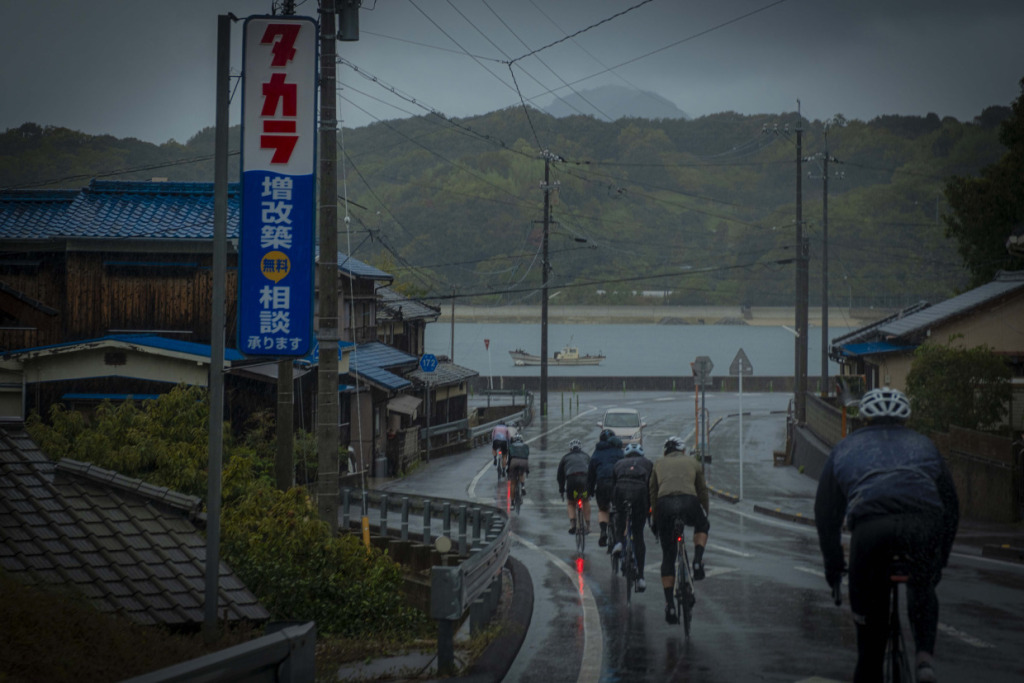
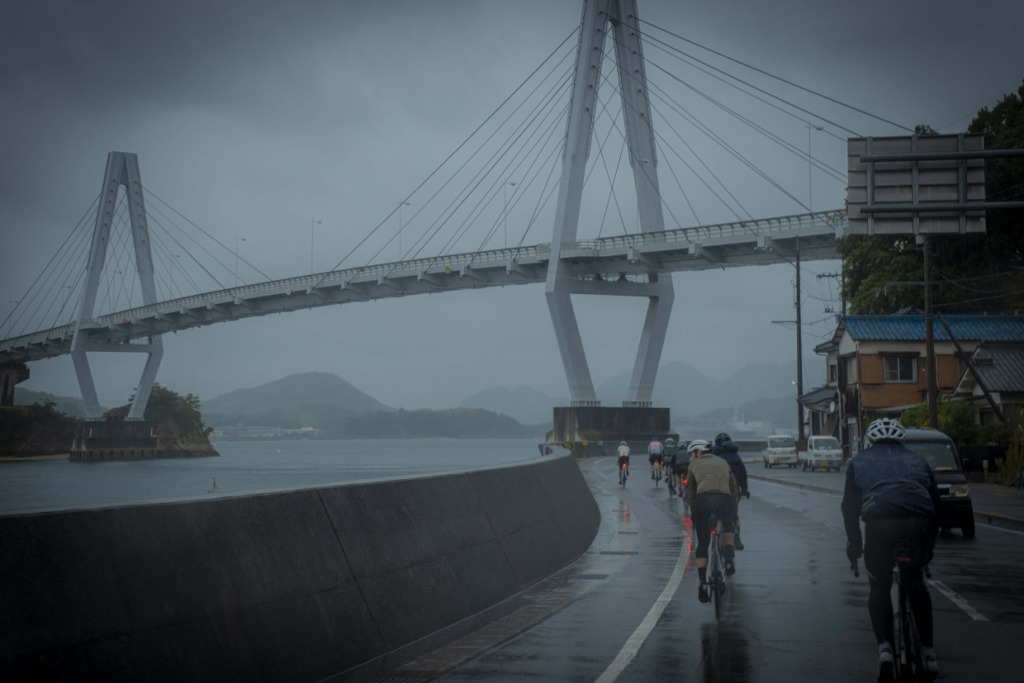
Japanese riders know that the beauty of the Seto Inland Sea loses nothing in the rain—and the visitors were beginning to realize it too. In overcast skies, in air heavy with moisture, a distinctly Japanese aesthetic quietly intensifies. Wabi and sabi. Along Yuge Island’s shoreline, island silhouettes drifted across a soft, milky horizon. The group slipped through the narrow lanes of a hushed afternoon fishing village before powering up onto one of the new bridges linking the “dream islands.”
The area may be compact, but the depth of scenery and character is anything but small. At just over 60 kilometers—comfortably rideable in a day—the route delivers punchy climbs and rolling terrain that keep monotony at bay. Rain has its charm, of course—but under blue skies, it would be something else entirely. That hardly needs saying.
More telling than anything were the soaked, beaming smiles. The ride made one thing clear: the Yumesima Kaido has every potential to become the new face of Shimanami.
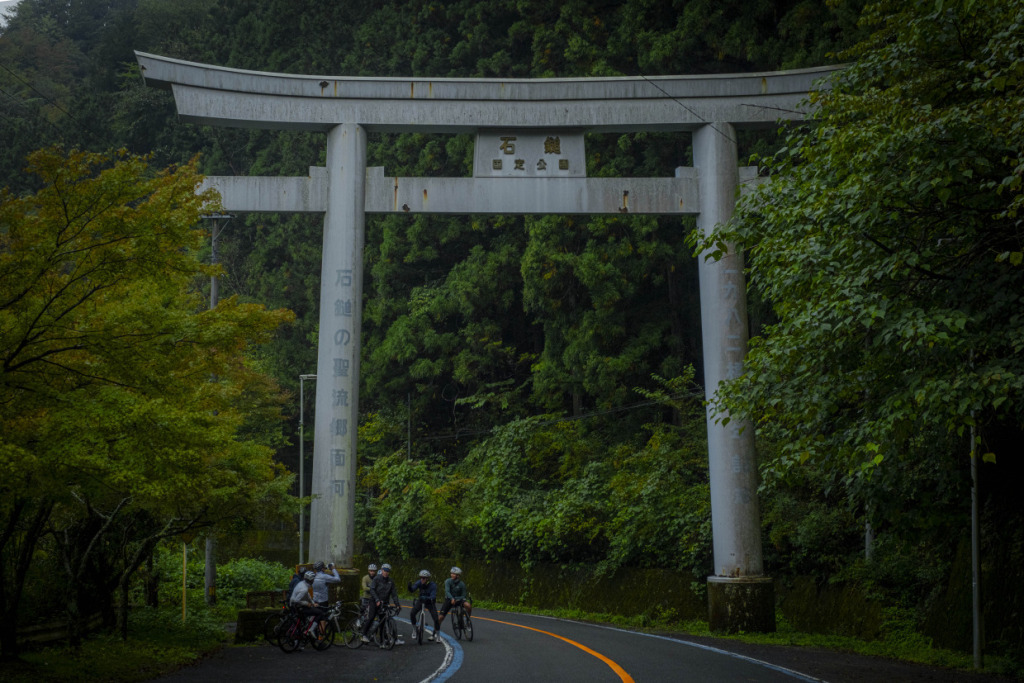
Day two turned inland, toward Ehime’s mountains. Our destination: the legendary UFO Line, one of Japan’s most celebrated alpine cycling routes. Tracing the ridgeline of the Ishizuchi mountain range—home to western Japan’s highest peak—it promises grand-scale scenery at every turn.
But there’s no easy way up. From nearly sea level in Saijo City along the coast, the route climbs in one sustained push toward elevations approaching 1,700 meters. It’s the kind of ascent that commands respect.
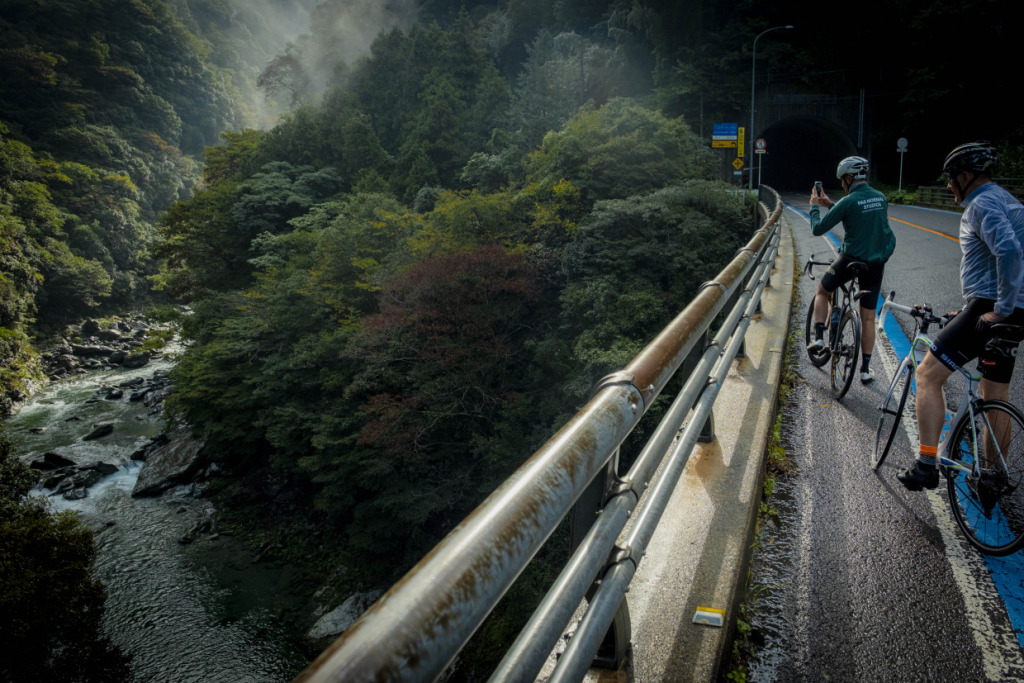
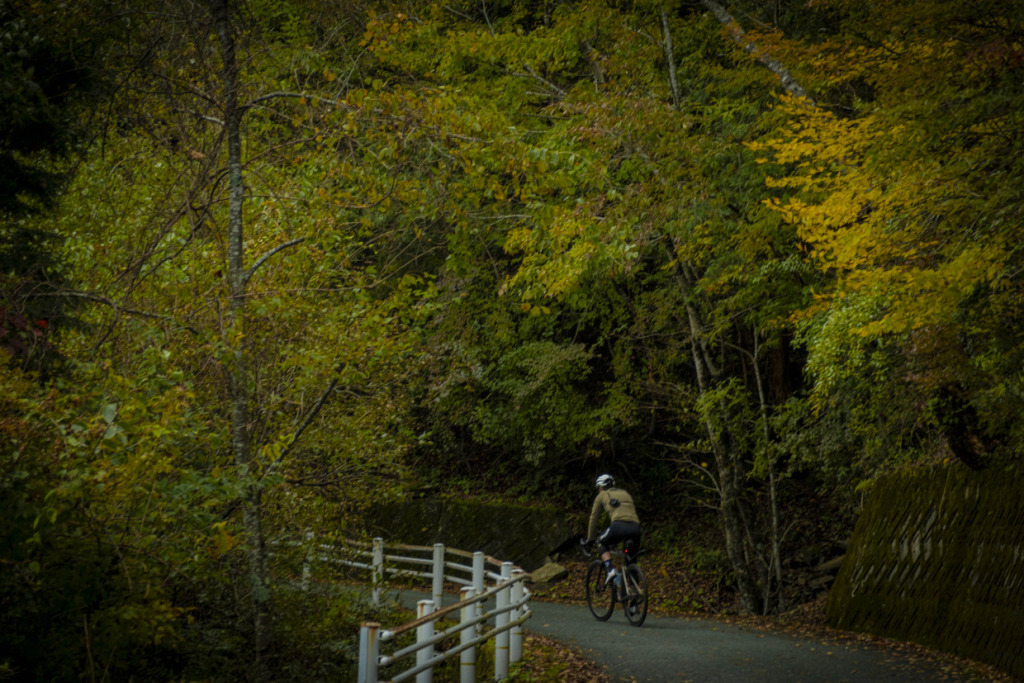
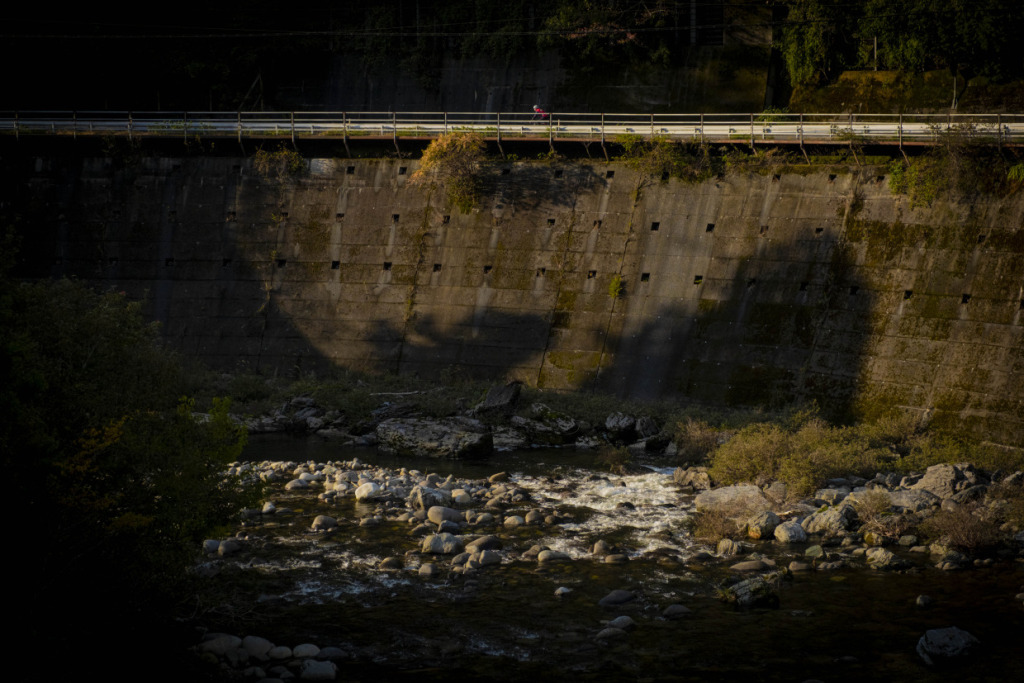
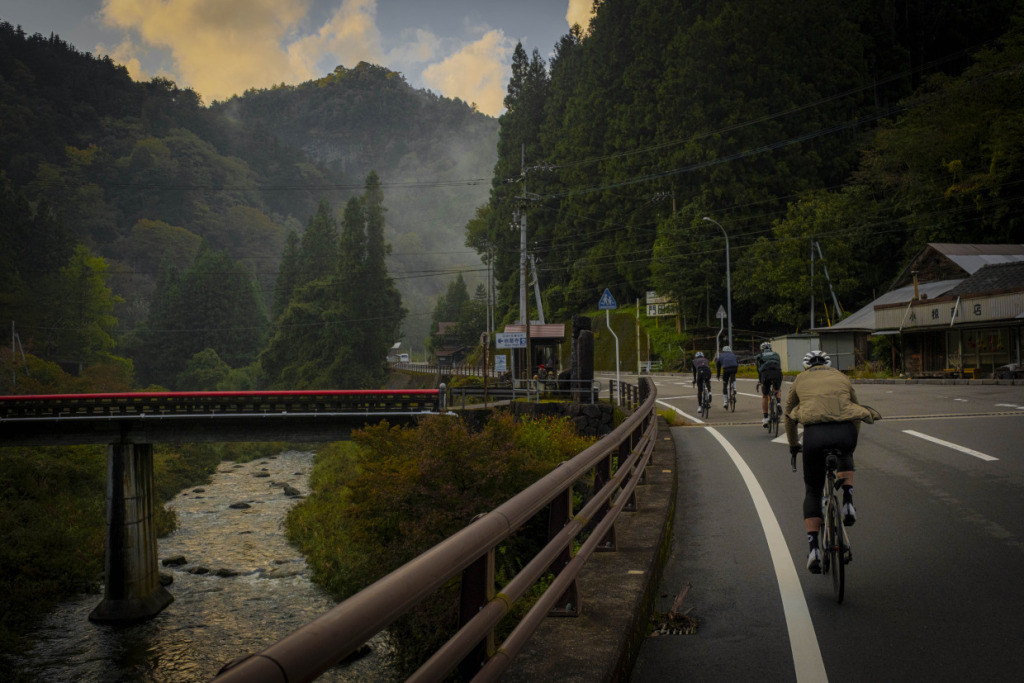
The rain that had fallen through the night cleared by morning, and shafts of sunlight began to pierce the clouds. In the crisp air, we rolled out along a river valley, the road gradually narrowing as it tilted upward. Riders found their rhythm in small packs, climbing alongside those whose cadence matched their own. Through the switchbacks in the forest, the gradient remained pleasantly steady. Sunlight filtered between tall, straight cedar trunks, flickering and dancing across the pavement. Above, glimpses of the ridgeline flashed in and out of view, glowing in the morning light.
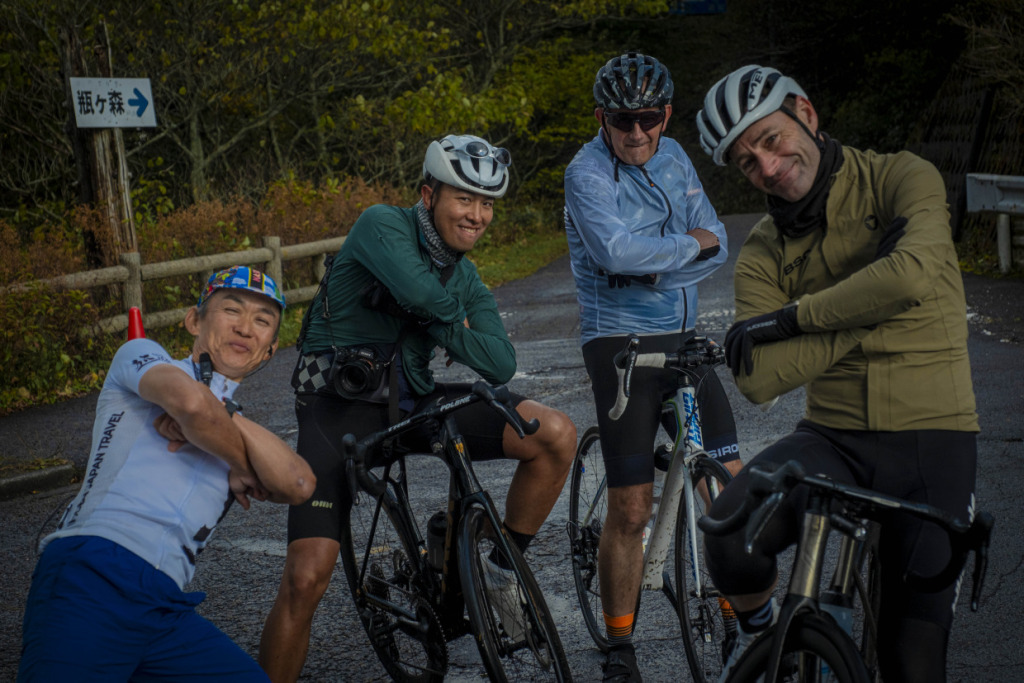
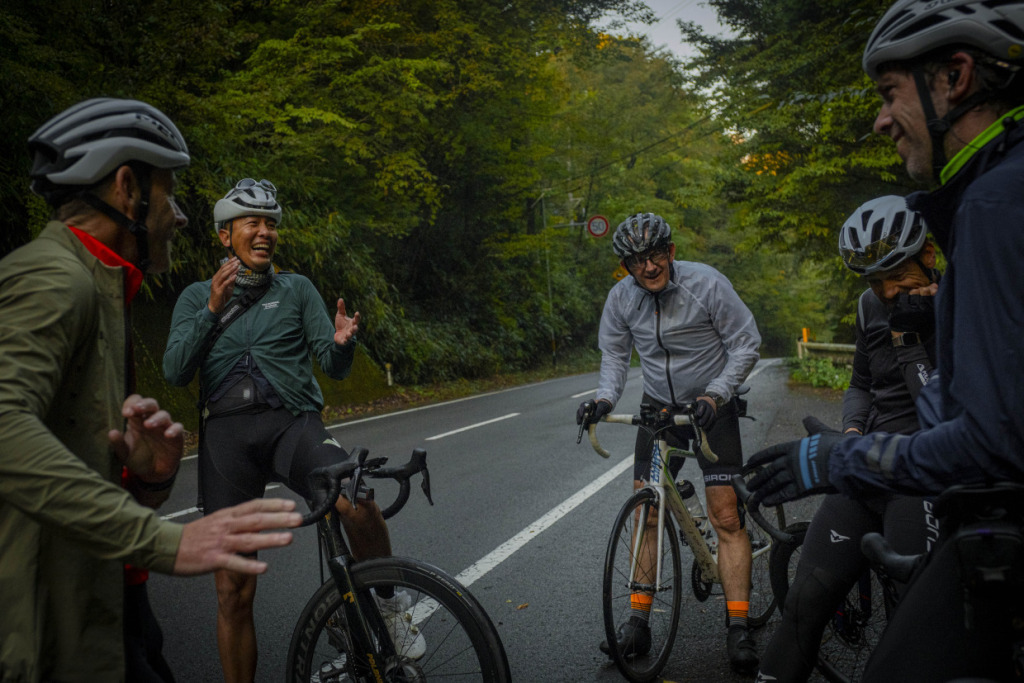
Riding with Rob, Adam, Peeter, and Mark, conversation drifted easily—classic saddle talk—until camaraderie came naturally. On slopes brushed with autumn color, clear streams gathered from yesterday’s rain spilled downward in slender waterfalls, plunging into the valley below. Sudden photo opportunities made it hard to maintain momentum. Smartphones came out, riders surged ahead, then doubled back. It was a restless, stop-and-go kind of climbing.
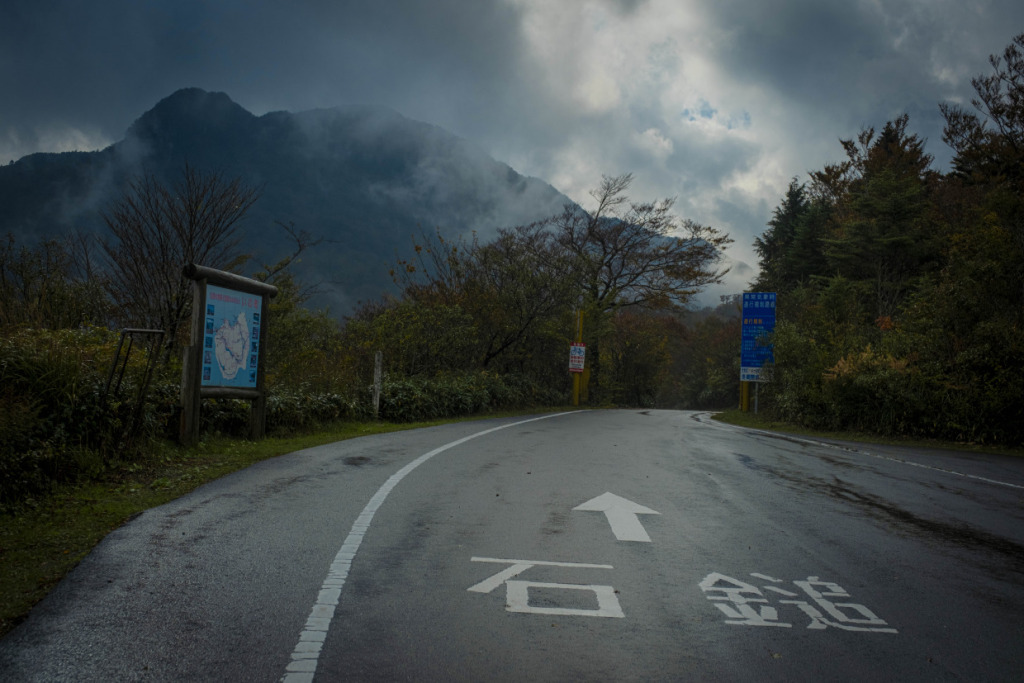
At last, we reached the gateway to the UFO Line. Almost without noticing, we had climbed past 1,000 meters above sea level.
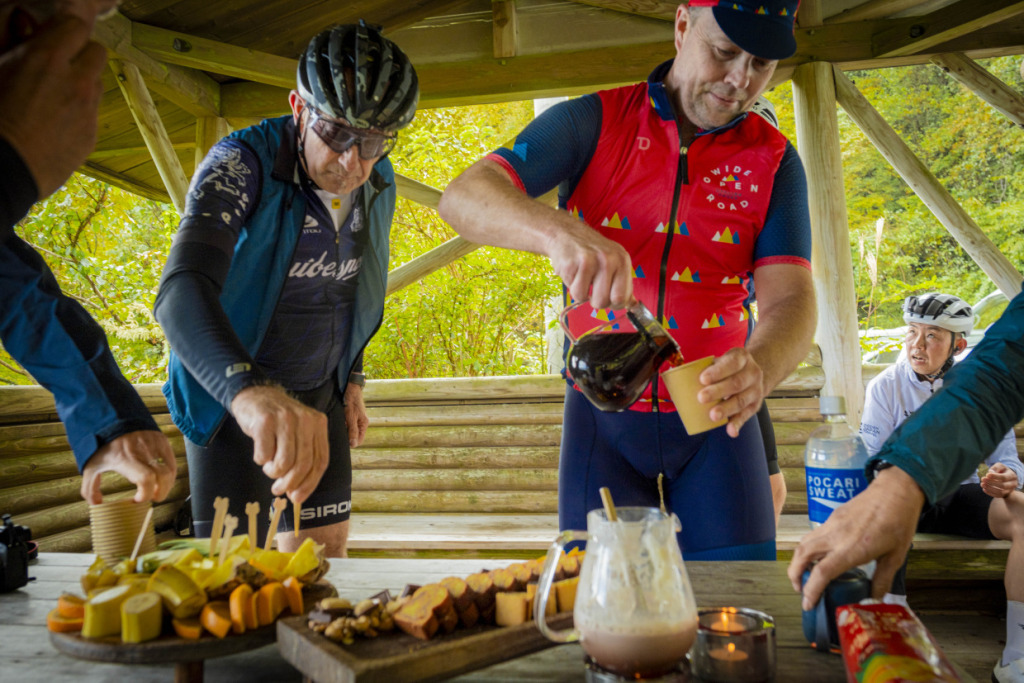
For the coffee-loving Aussies, there was a welcome surprise. Our guides, Sam and Miho, had prepared fresh-brewed coffee and sweets. Cradled in the embrace of the Shikoku Mountains, we paused for a blissful coffee break—one of those simple, perfect moments that only a mountain ride can deliver.
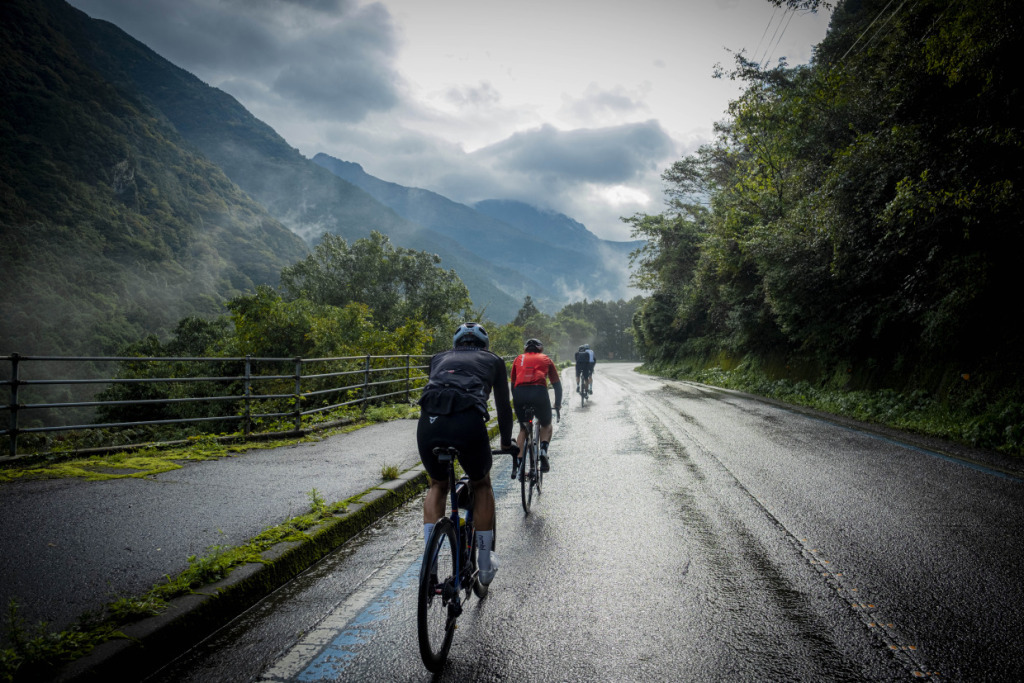
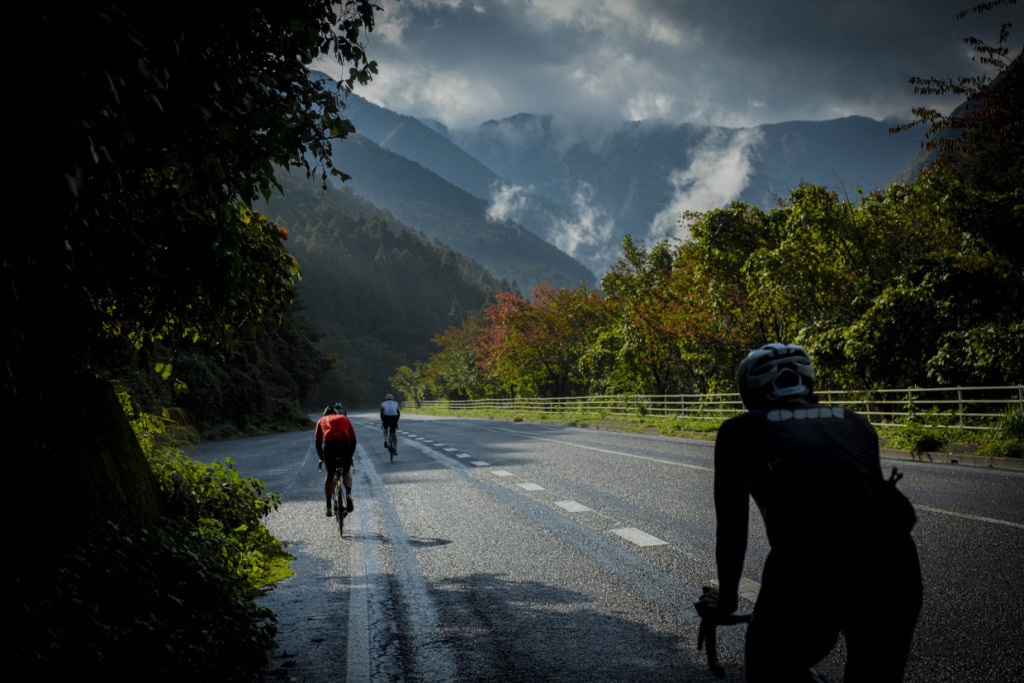
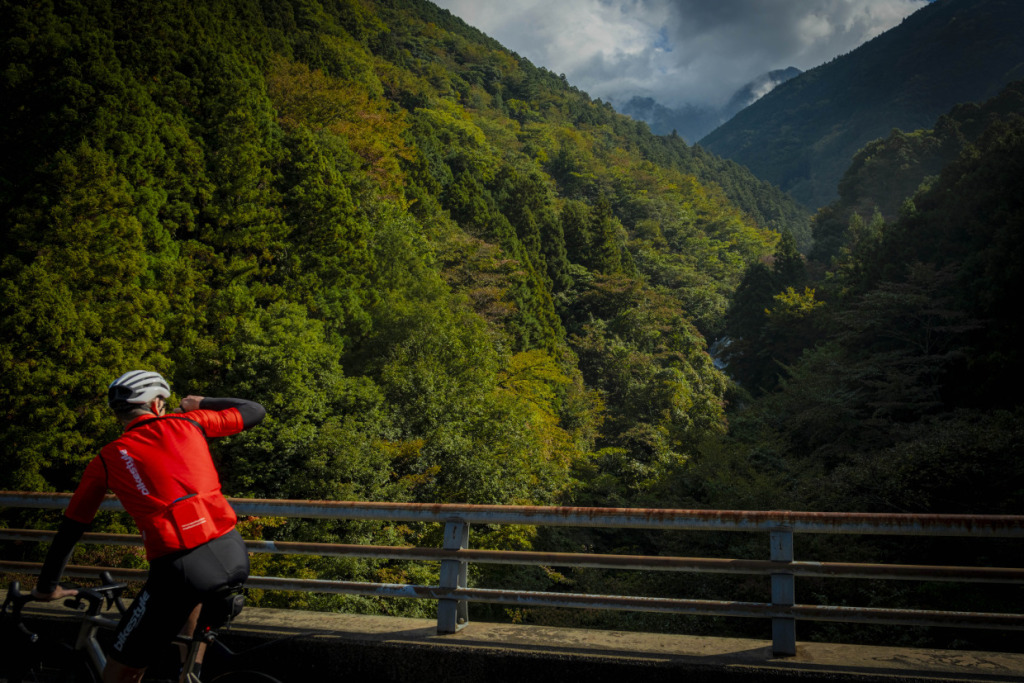
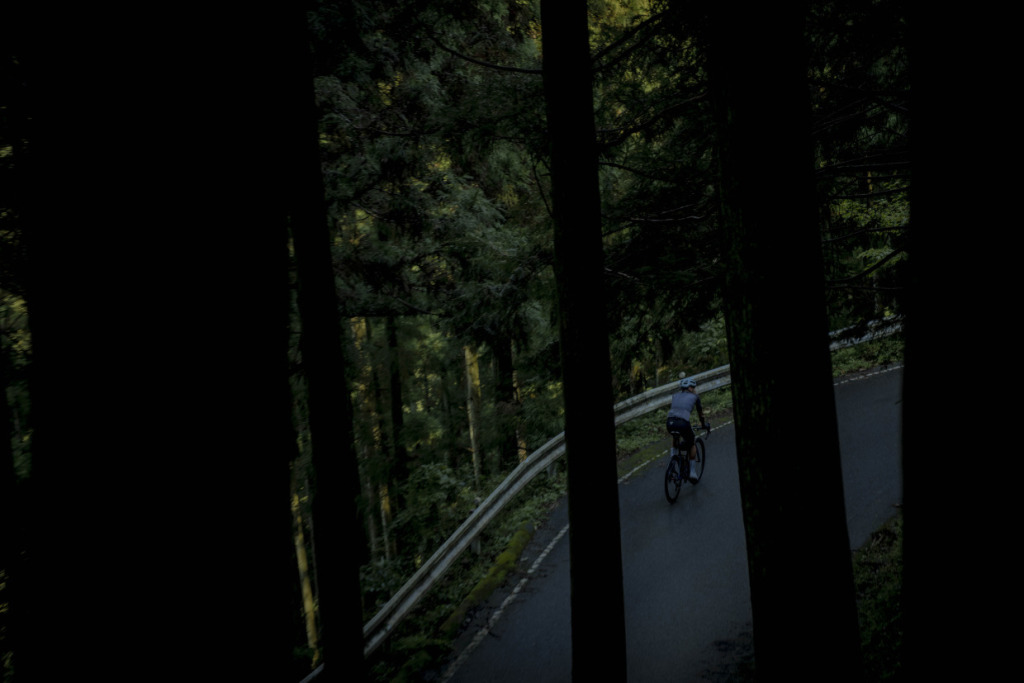
Caffeine on board, we rolled forward at last onto the UFO Line proper. From here, another 700 meters of elevation still awaited. The route traverses the great peaks of the Ishizuchi range—crossing beneath the slopes of Kanpuzan, Iyo Fuji, and Kamegamori—gaining height through a rhythm of steady ups and downs.
The late autumn colors were finally reaching their peak. We passed through a series of rugged tunnels and dramatic rock cuttings carved boldly into the cliffs. Gradually, the trees thinned, their height diminishing as we climbed. To cross the treeline under your own power brings a special kind of satisfaction—earned, not given.
Then the view opened.
Before us stretched the vast ridges of the Shikoku Mountains, flawless and immense. As we drew closer to the crest, the gradient softened, and the road became a single ribbon threading through grasslands thick with dwarf bamboo. Ahead, Jinenko-no-Atama rose skyward, its 1,701-meter summit standing proud.
Here lies the most iconic ridgeline of the UFO Line.
Quite simply—spectacular beyond words.
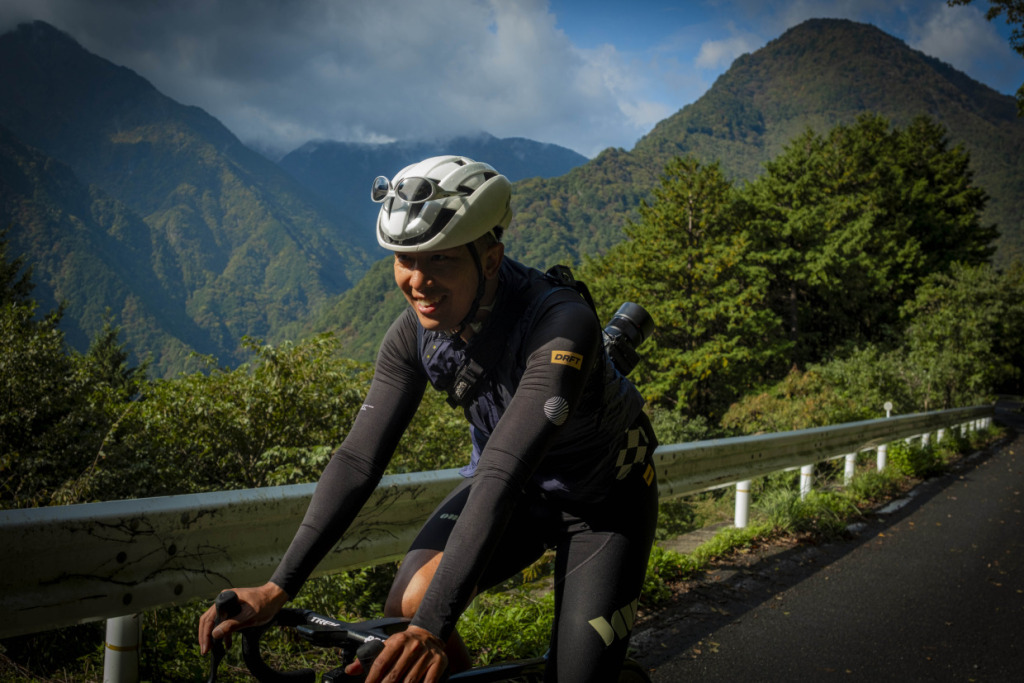
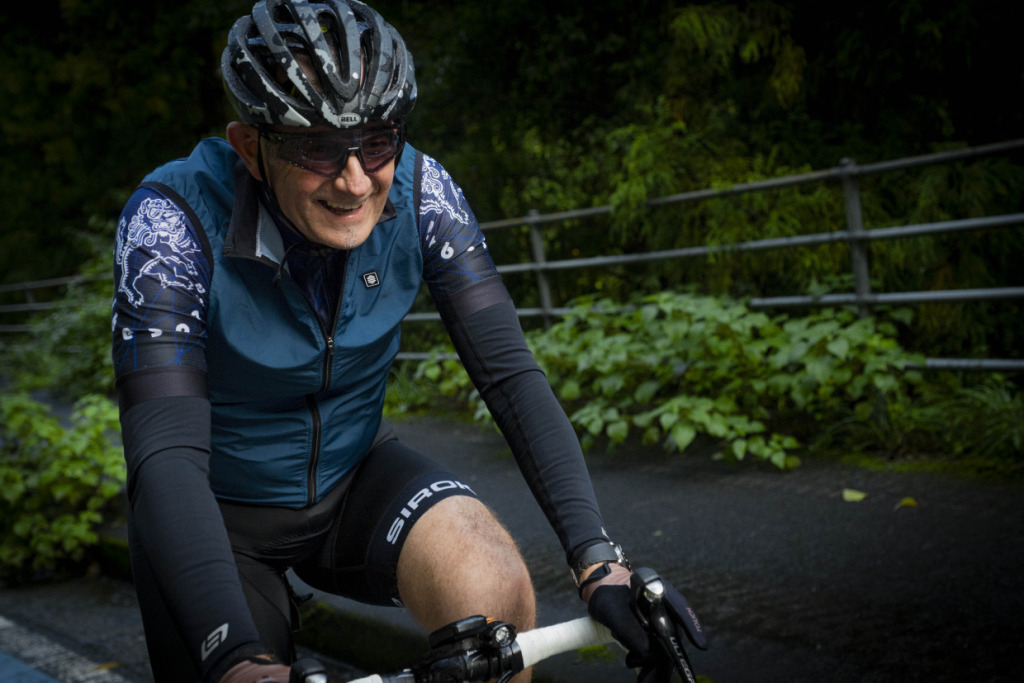
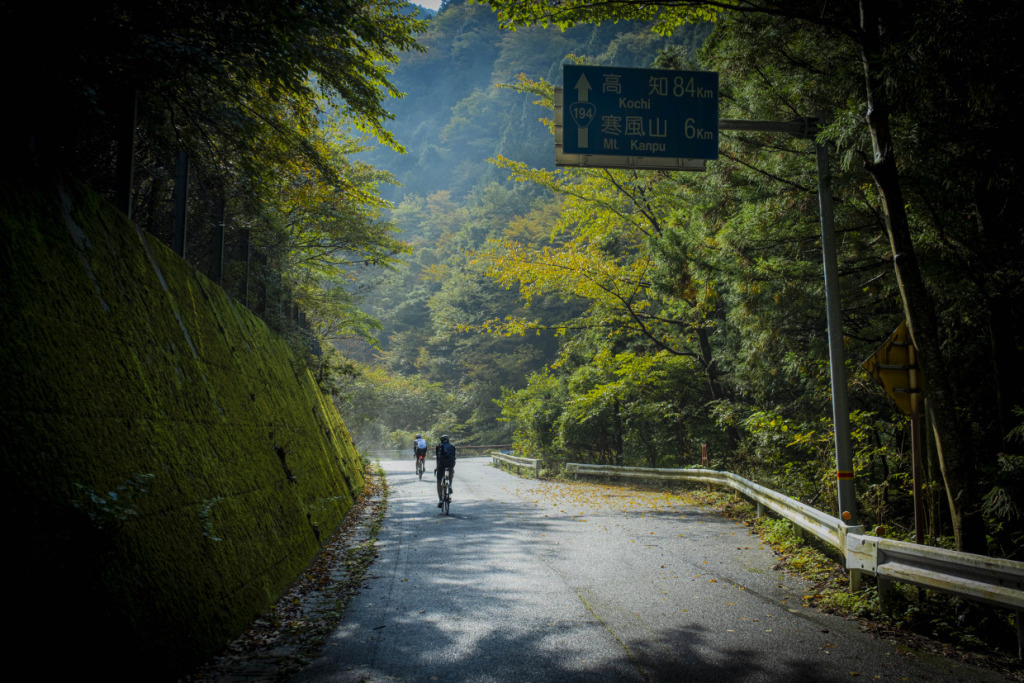
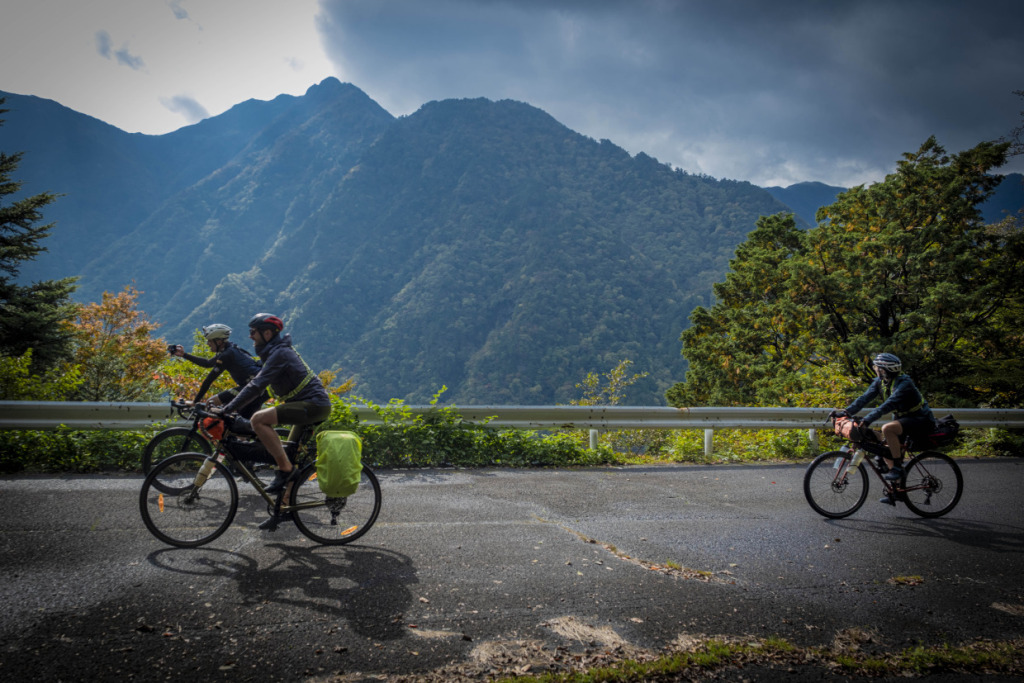
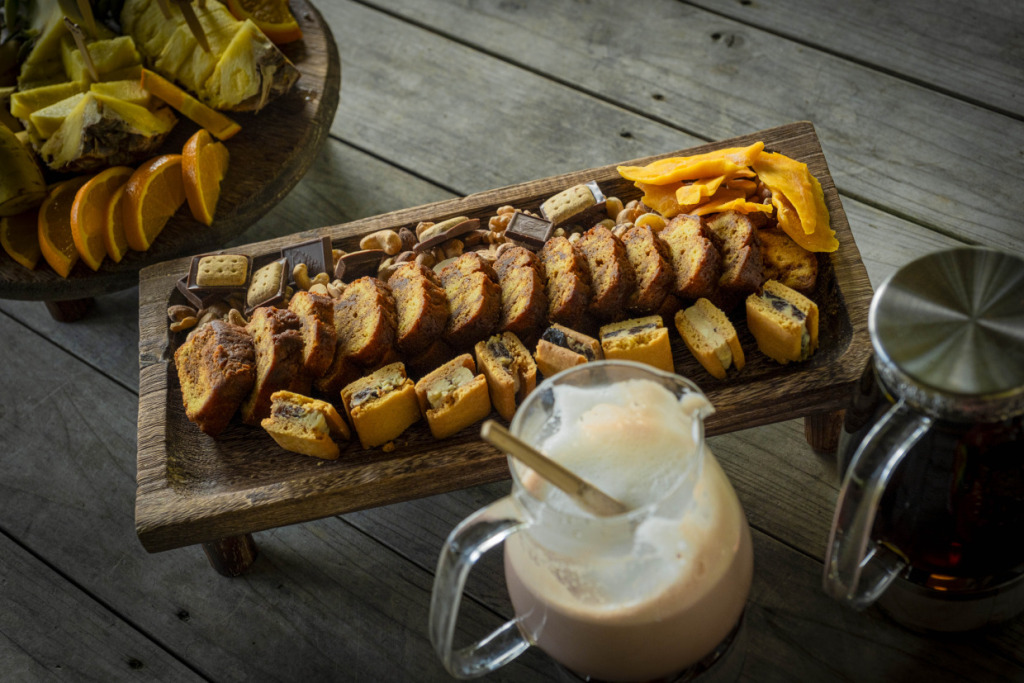
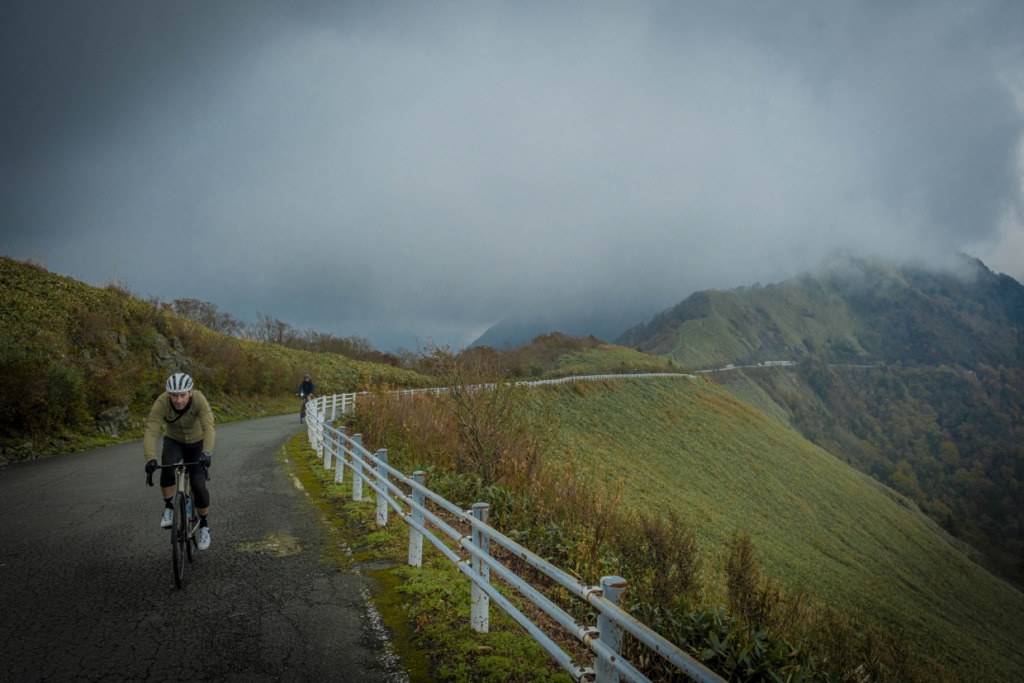
Suddenly, a cold wind swept across the ridgeline. In an instant, the world turned white—we had ridden straight into the clouds. A dense fog swallowed everything around us, until even the backs of the riders just ahead disappeared from view. Above and below dissolved into the same blank canvas. It was a scene worthy of the name UFO Line—otherworldly, suspended between sky and earth.
Wrapped in cloud, pelted by cold rain, breathing hard as we wandered through the mountains, our small group of cyclists might have looked utterly miserable to an outside observer. And yet, in truth, everyone was at the height of exhilaration. That contradiction itself felt like a kind of mystery.
Perhaps it was the lingering spell of En no Gyoja—the legendary ascetic said to have trained on Mount Ishizuchi—or maybe even the esoteric powers of Kobo Daishi at work. Whatever the reason, these visitors from afar had clearly fallen captive to the mountain.
Joy and hardship intertwined in their expressions—faces only cyclists can truly understand. I chased those fleeting profiles through the mist, finger working the shutter, determined not to miss a single frame.
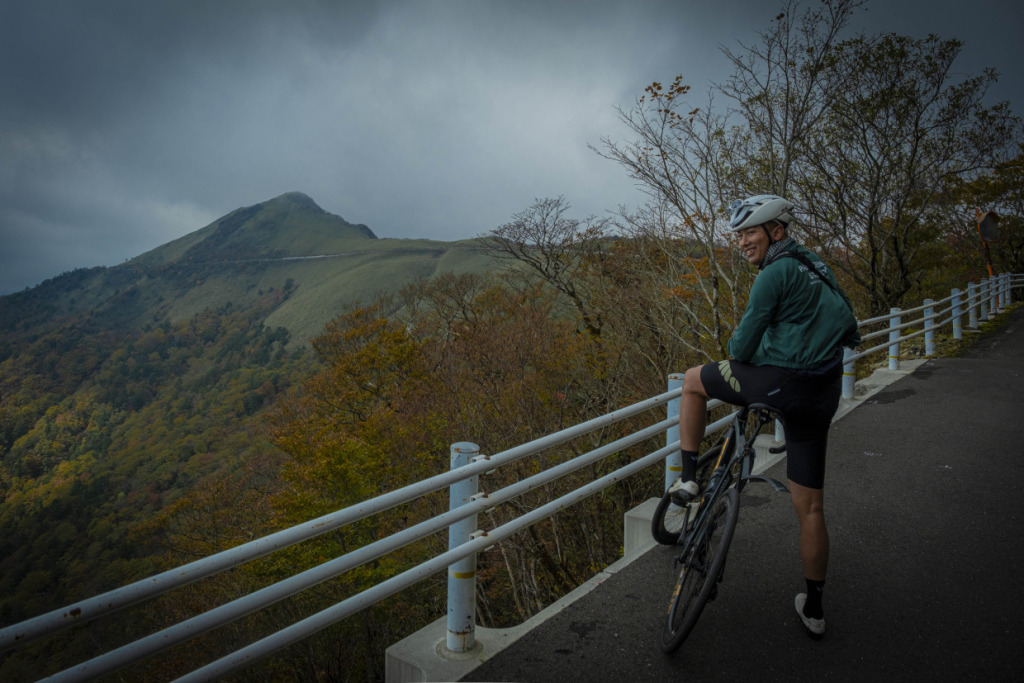
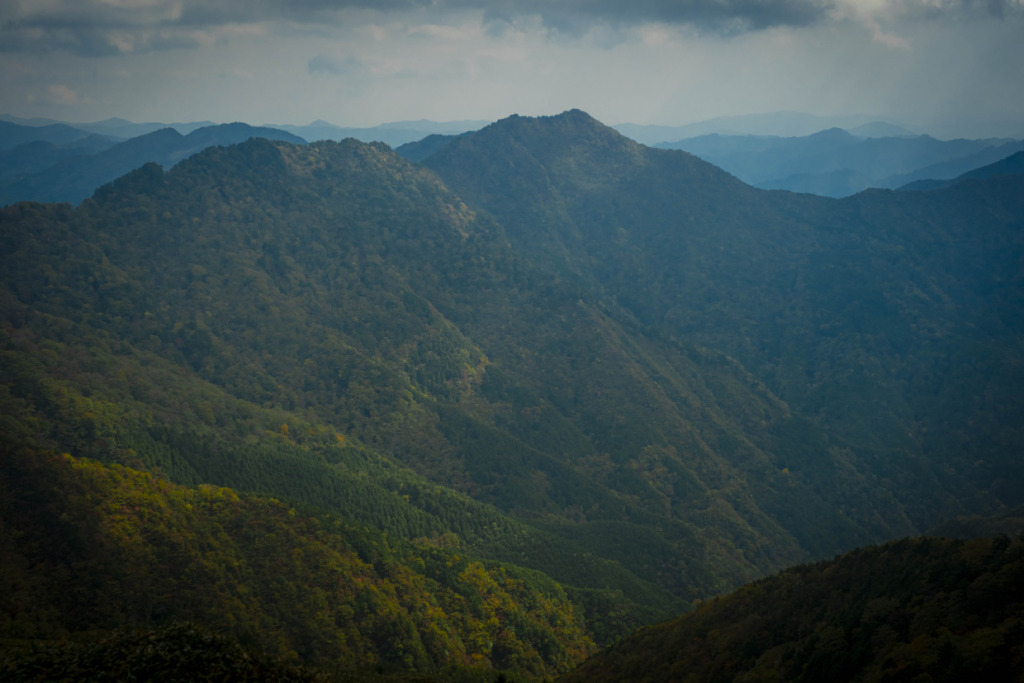
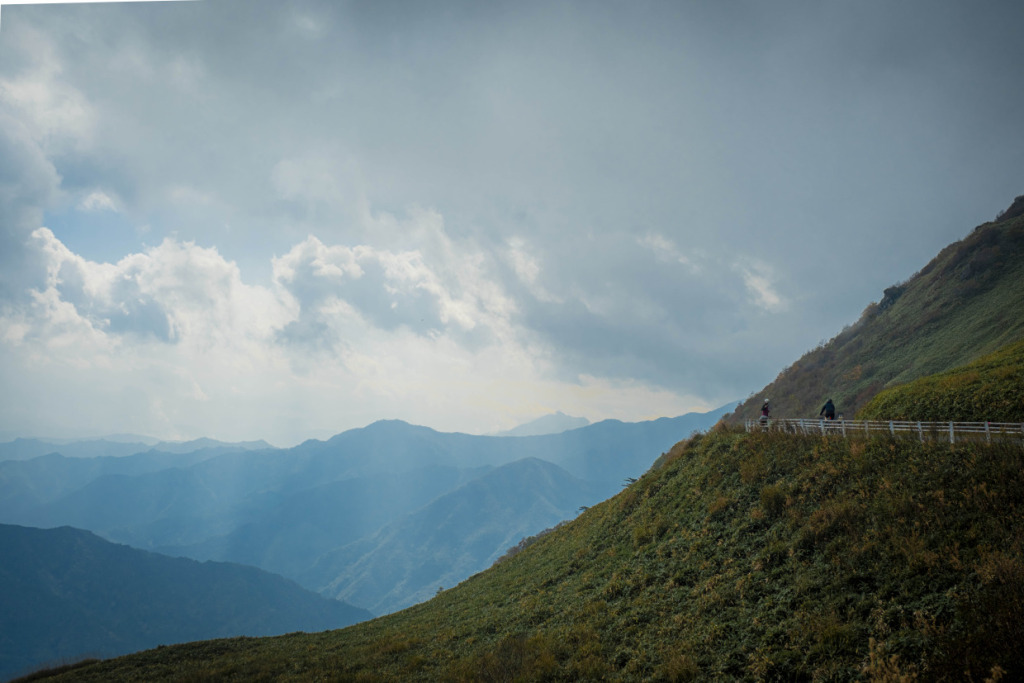
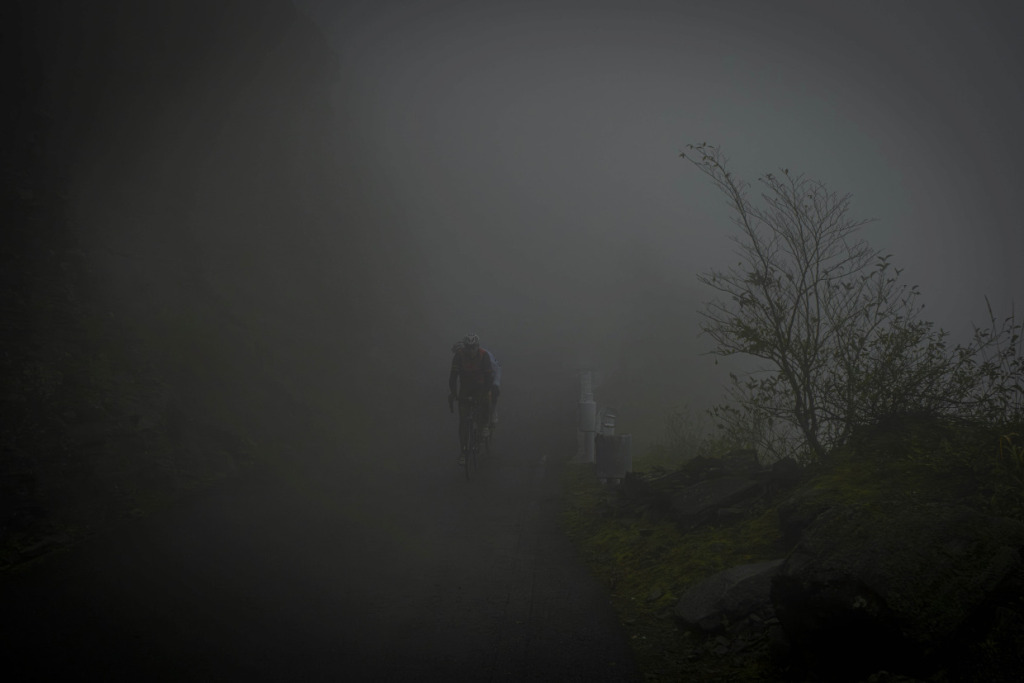
Having safely crossed the UFO Line—in a swirl of rain, mist, and sudden bursts of sunlight—the group cast a final glance back at that spellbinding world above the clouds before beginning the descent.
Perhaps it was the shared triumph of conquering the formidable “UFO,” but the re-formed train rode with a new sense of cohesion. The stability was palpable. Eye contact was enough; intentions were understood without words. This, surely, is one of cycling’s quiet powers—the ability to build communication beyond language.
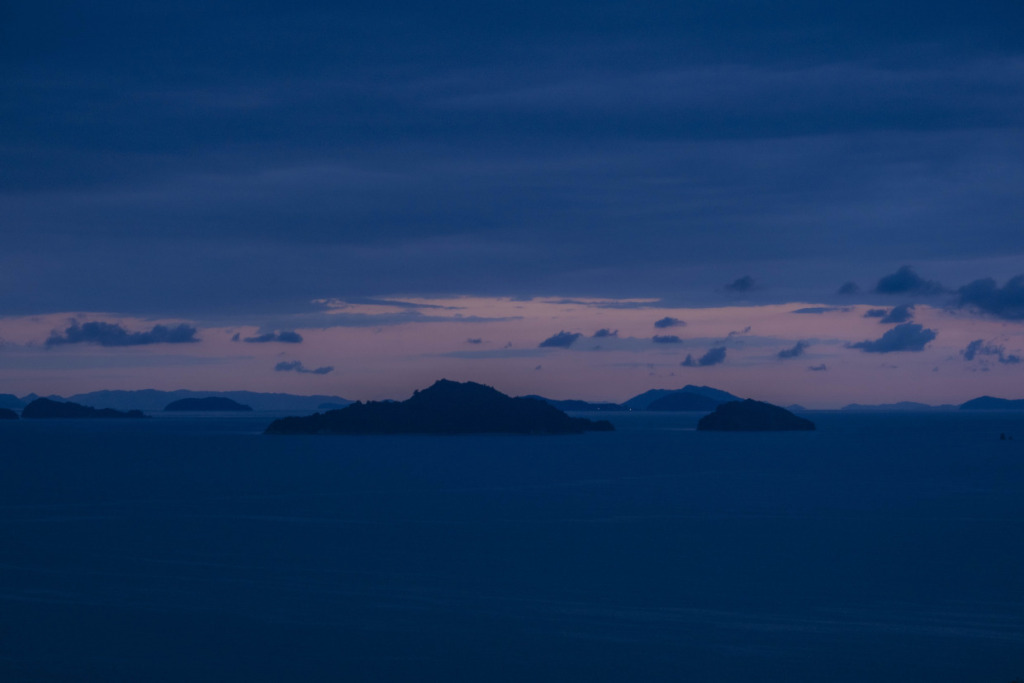
We carved our way down through the scenic valleys spreading along the southern foothills of Mount Ishizuchi, passing the crystal-clear Omogo Gorge and other lush ravines. The long, flowing downhill delivered pure exhilaration. By the time we rolled into our destination for the day, Kuma Kogen, we had completed a demanding 100-kilometer ride that included Shikoku’s biggest climb.
The expressions on everyone’s faces were a mixture of exhaustion and deep satisfaction. But the price of such achievement? Even fully grown adults were ravenous.
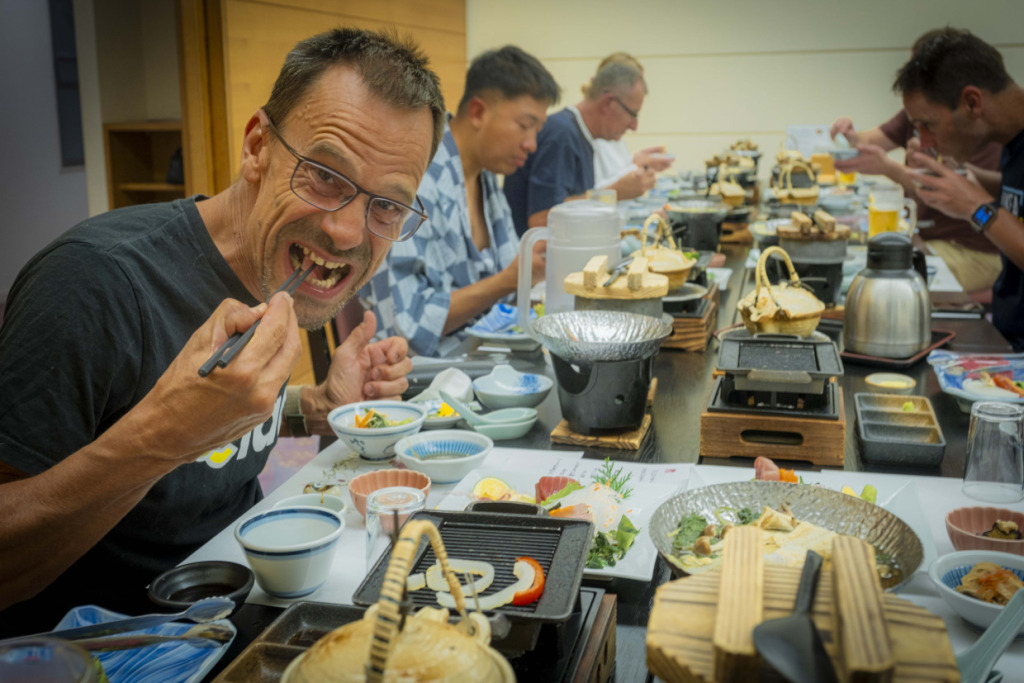
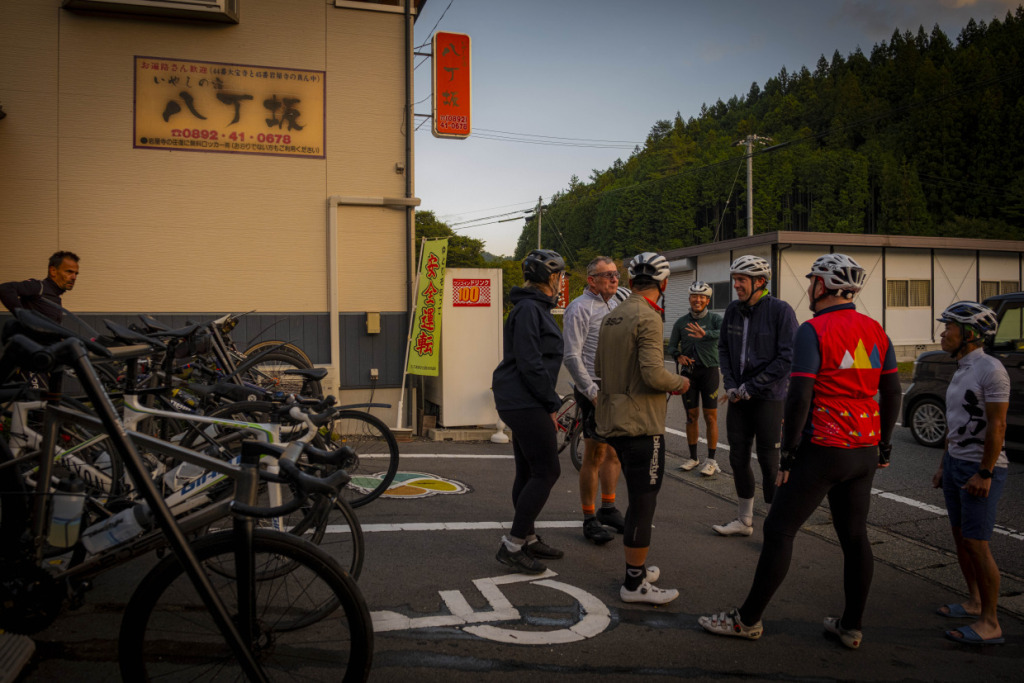
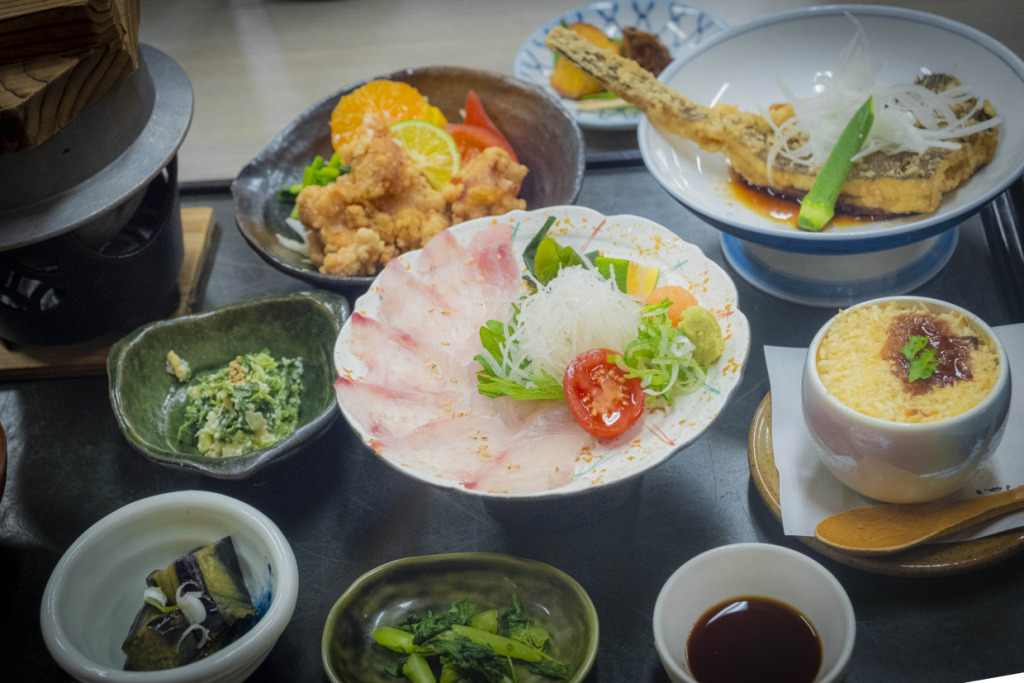
That evening, at the warmly welcoming, traditional Japanese inn Hatchozaka, we gathered in a tatami-floored banquet room. Surrounded by an array of local mountain and sea delicacies, conversation flowed as freely as the food. Stories from the ride were relived, debated, and celebrated late into the night.
(Next →)
🚴♂️Ehime Prefecture Presents Cycling FAM Tour 2025 Report for International Media
#Day1 ~ Day2
#Day3 ~ Day4
#Day5 ~ Day6
🚴♂️Ehime Prefecture Presents Cycling Monitor Tour 2024 Report for International Media
#01 Imabari City Area
#02 Saijo City ~ Mount Ishizuchi ~ Uchiko
#03 Uwajima City ~ Matsuyama City
Profile
Eigo Shimojo
Born in Nagano Prefecture in 1974
Belongs to IPU Japan Photographers Union
He became independent in 2000 as a freelancer and established Greenhouse Studio, which handles a wide range of photography and video production.
His life’s work is pursuing underground HIPHOP and bicycle culture around the world.
Post Date:2026.02.27