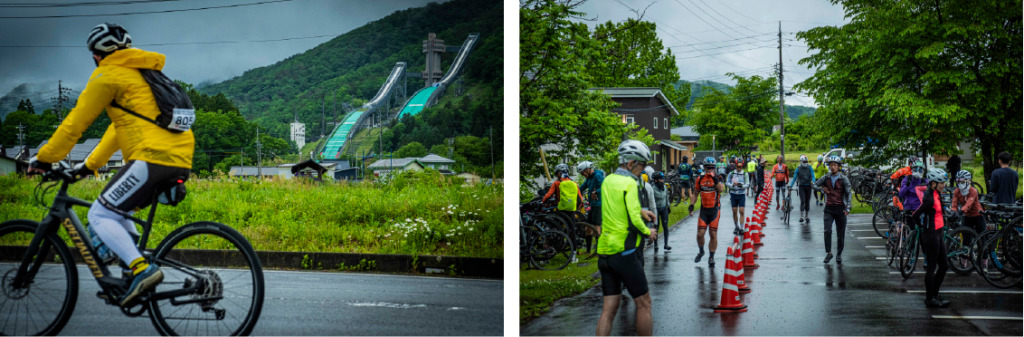
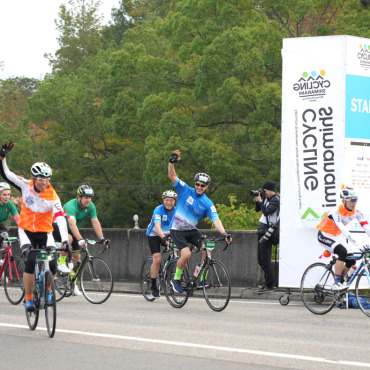
On May 23, I took part in the Alps Azumino Century Ride (AACR), one of Japan’s most popular cycling events. Among the several course options, I chose the Cycle Train Route—a 120 km course that includes approximately 65 km of riding, with the remainder covered by train.
As its name suggests, the AACR was inspired by the Honolulu Century Ride. After experiencing the event firsthand, Executive Committee Chair Raita Suzuki—a former Japanese Olympic mountain biker who represented Japan at the Sydney Olympics—returned home determined to create a similar event in his native Nagano. Since 2009, that vision has continued to grow into one of Japan’s premier fun rides.
In addition to the classic century (100-mile / approximately 160 km) distance, the event also offers a 120 km course and shorter options of around half that distance, making it accessible to riders of all experience levels.
And the Cycle Train Route offers something especially memorable: the chance to board a train with your own bicycle. It’s an experience I’d recommend to every cyclist—from first-time riders to seasoned veterans.
1. 0 km – National Alps Azumino Park (Horigane–Hotaka Area)
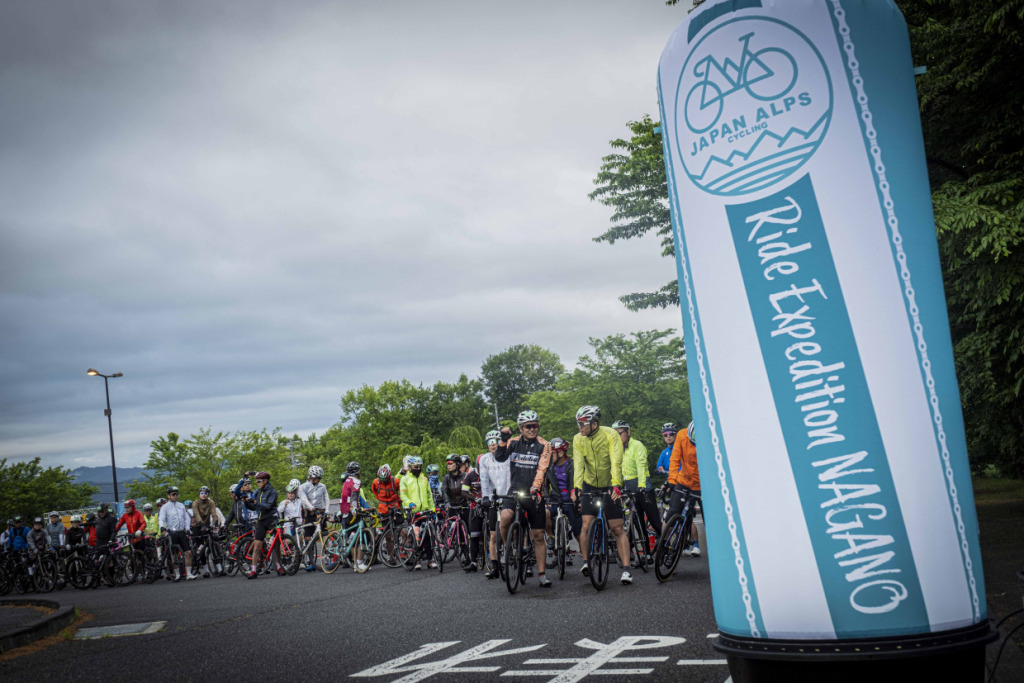
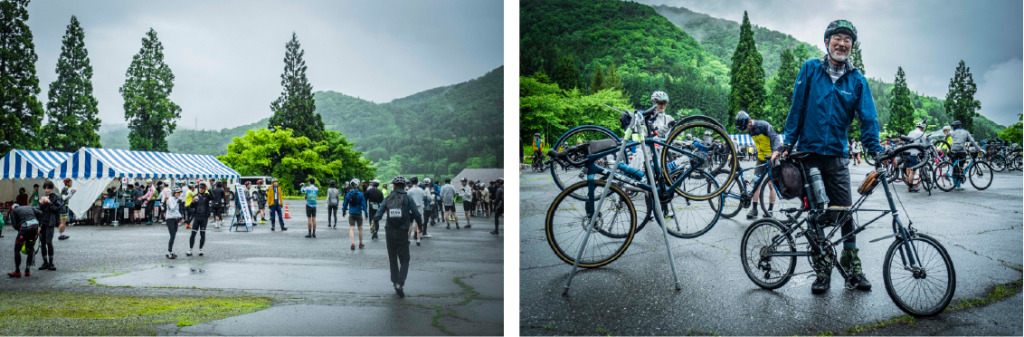
It is 5:00 a.m., and dawn has only just begun to break. One of the event’s start venues, National Alps Azumino Park (Horigane–Hotaka Area), sits at the foot of Mt. Jonen, one of the iconic peaks overlooking Azumino.
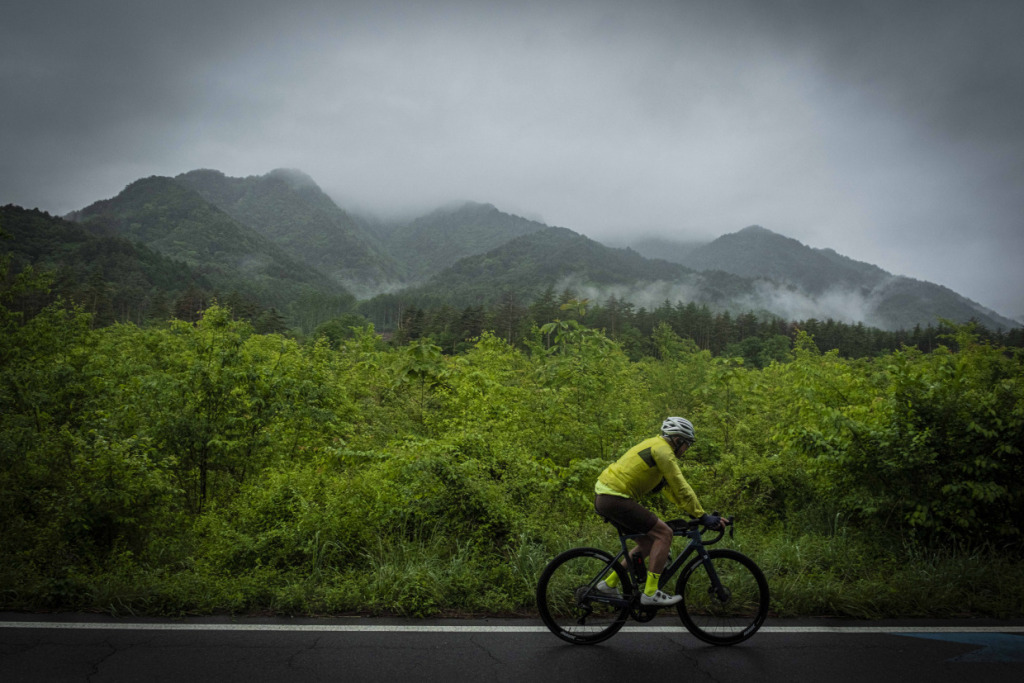
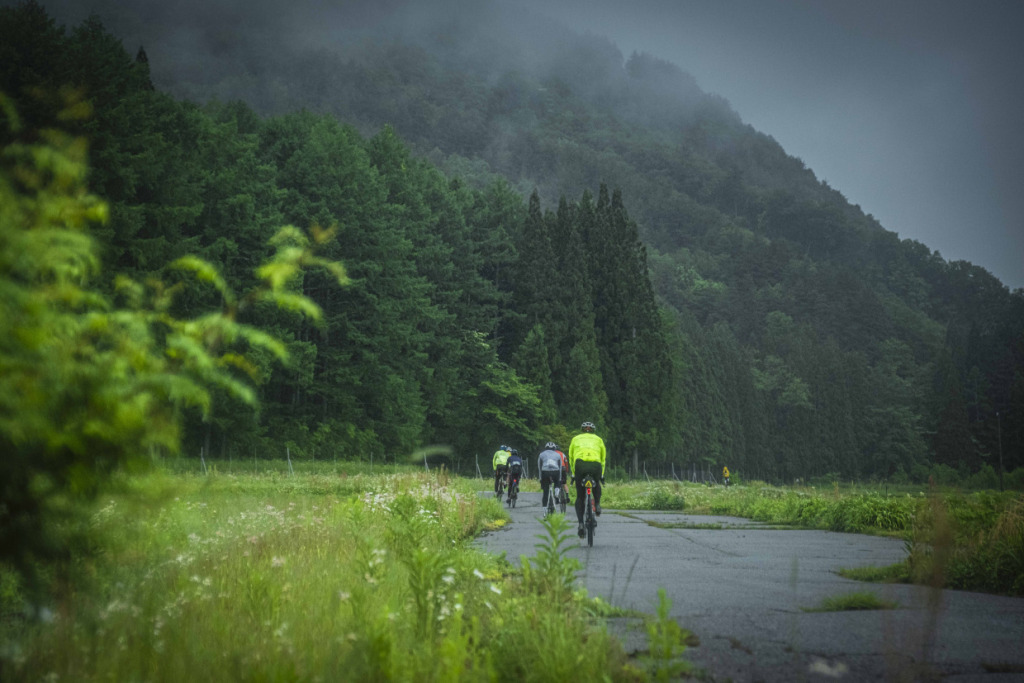
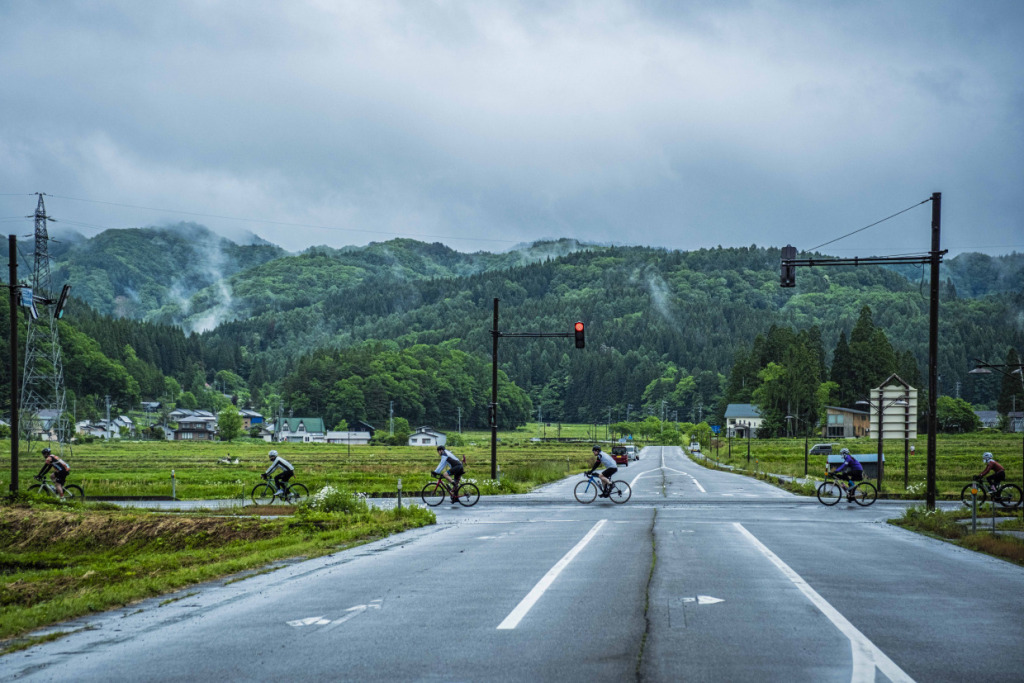
The weather, unfortunately, is less than ideal. Mt. Jonen remains hidden behind the clouds, but the surrounding mountains, draped in fresh spring greenery and fluffy, cotton candy-like clouds, offer a beauty all their own. It’s a very different landscape from one bathed in sunshine, yet no less inviting.
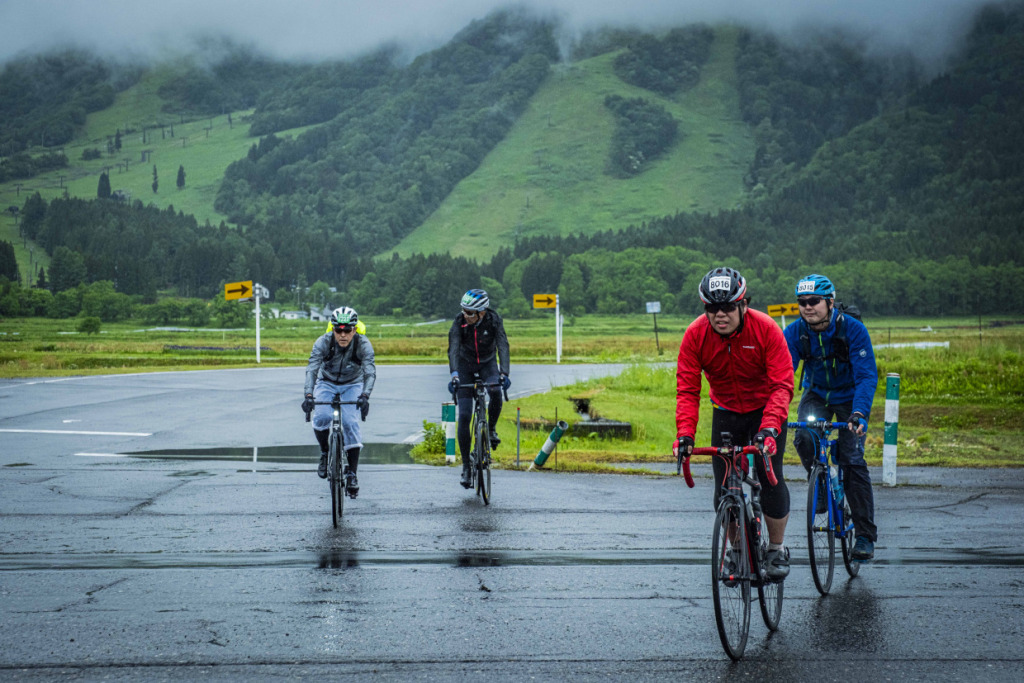
More striking than the gray sky are the hundreds of cyclists gathered at the start, their colorful jerseys forming a vibrant procession that seems to chase away the gloomy weather. Cyclists may grumble about the forecast, but somehow they always end up enjoying the ride anyway. Besides, today’s forecast promises improving conditions.
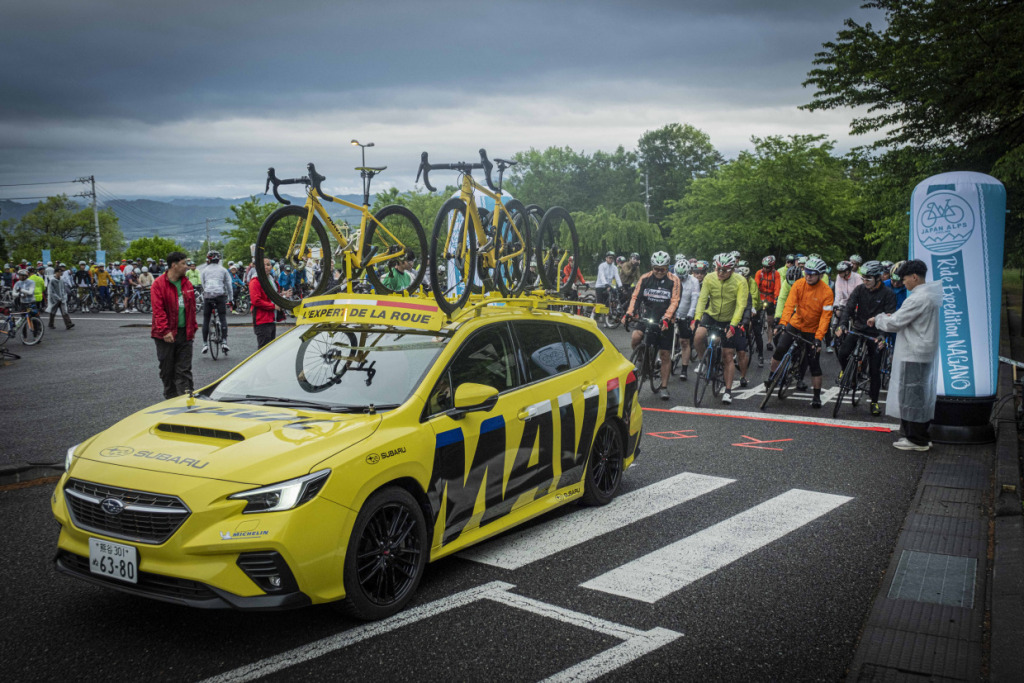
Right on schedule at 5:30 a.m., the ride gets underway, led by the bright yellow Mavic support car—the same iconic neutral service vehicle seen at the Tour de France.
Leaving the Matsumoto Basin—surrounded by some of Japan’s most celebrated peaks—the route heads north toward Azumino along the mountain foothills, rolling gently over a series of climbs and descents.
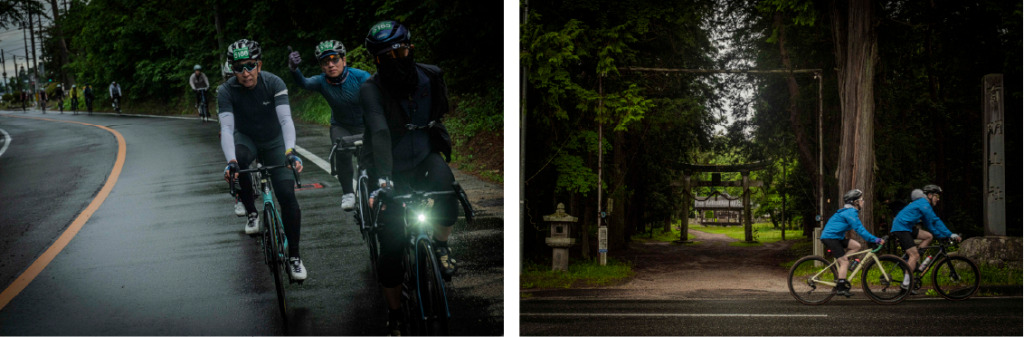
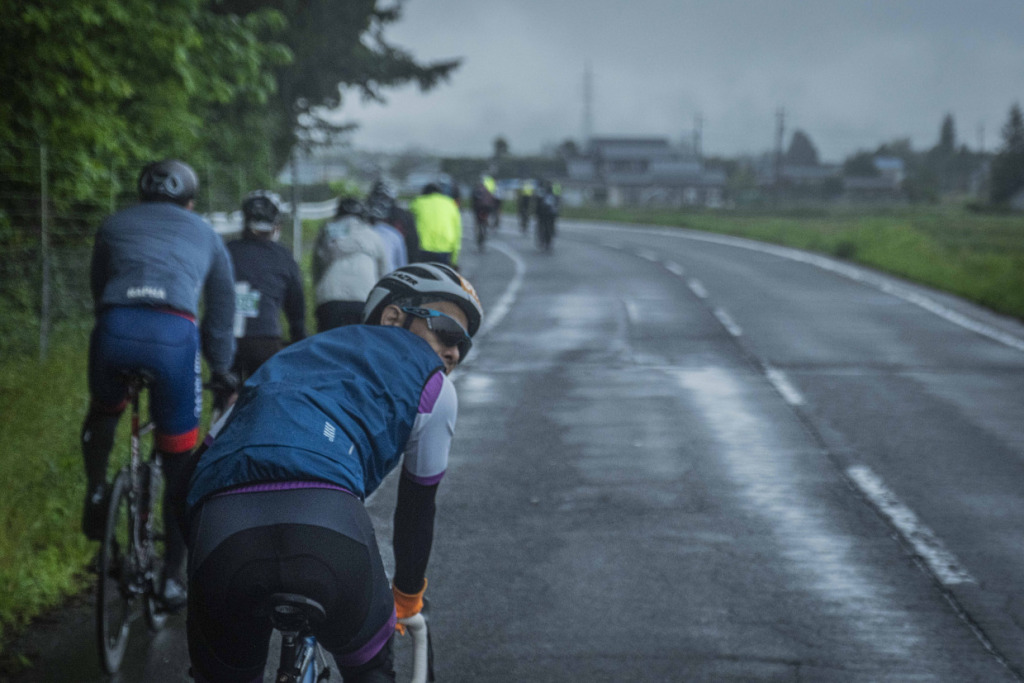
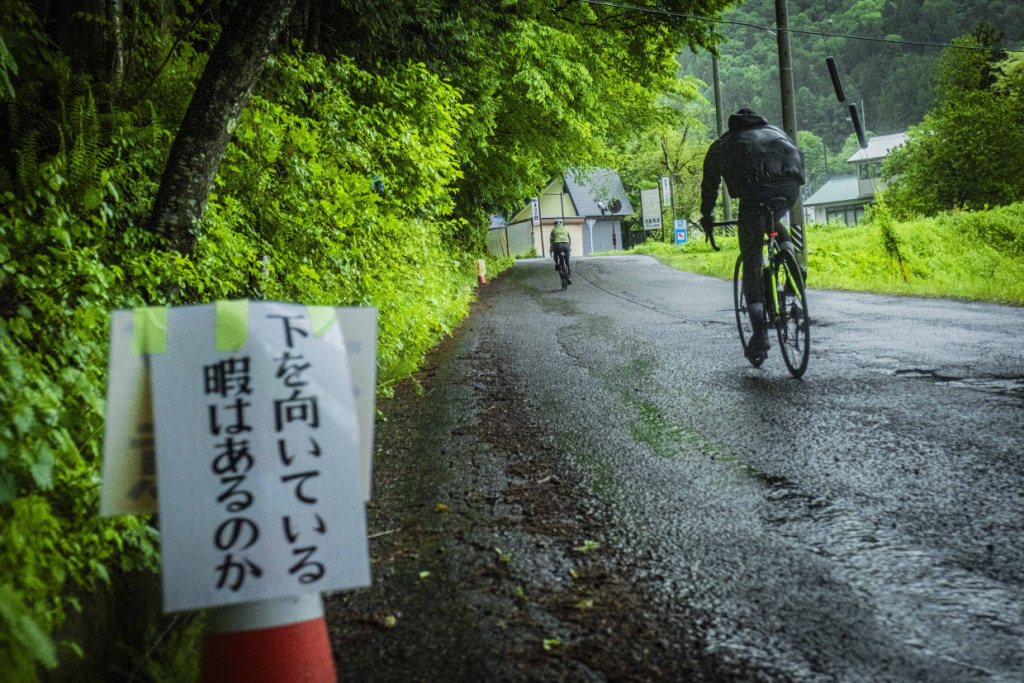
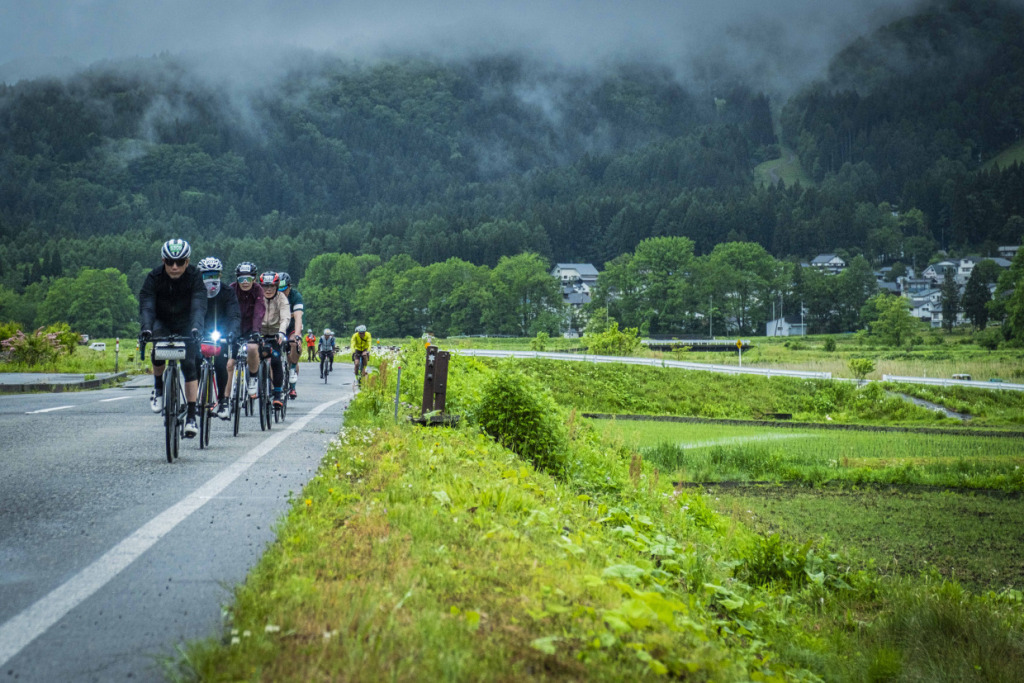
The roads are wide, traffic is light, and the pavement is wonderfully smooth, making for a comfortable ride. Before long, a light rain begins to fall, but once you’re pedaling, it hardly matters. Riders of all ages and abilities press on together, climbing the hills with smiles on their faces as a gentle shower of raindrops falls around them.
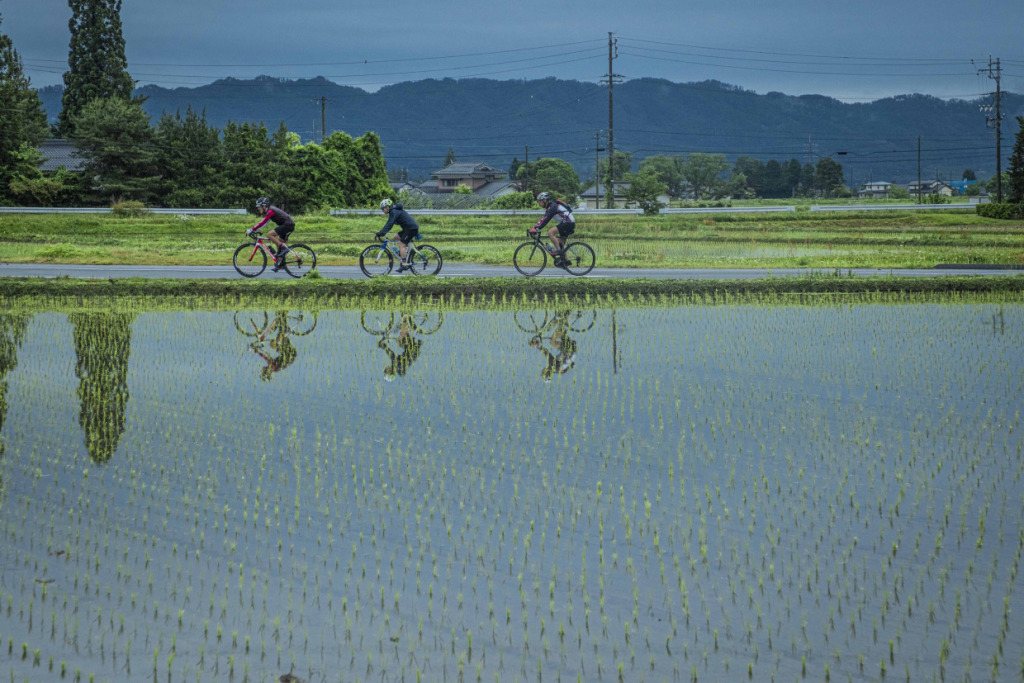
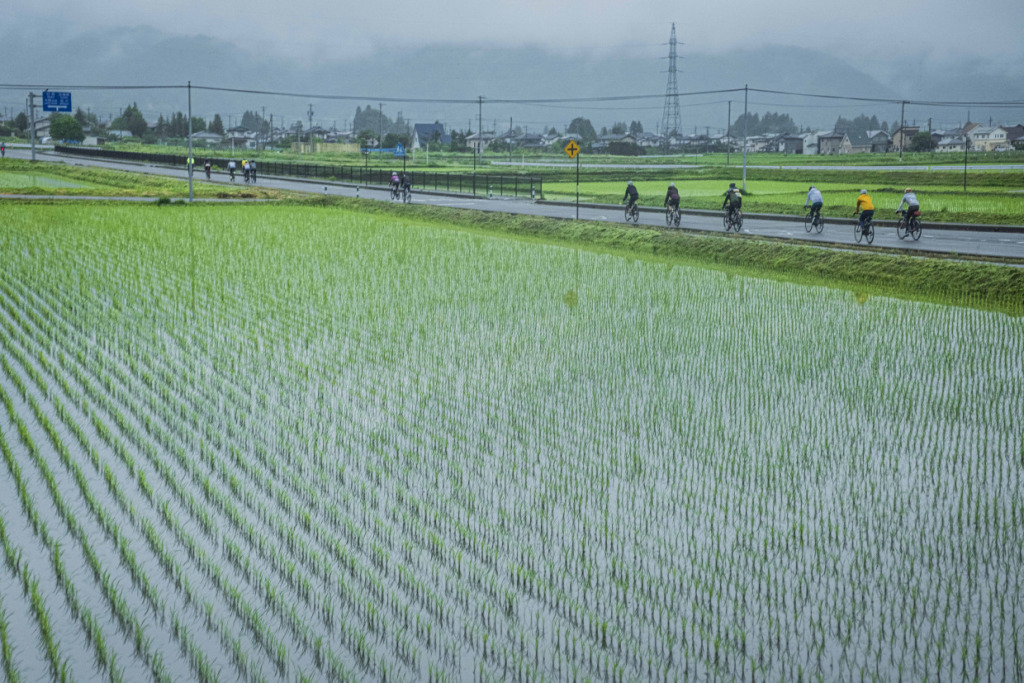
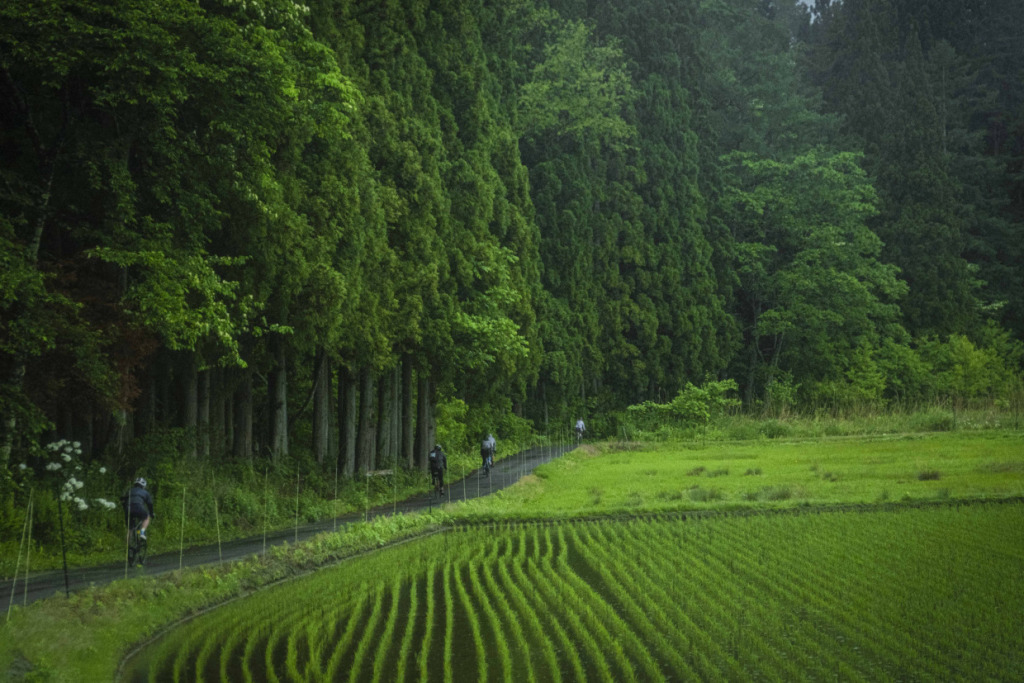
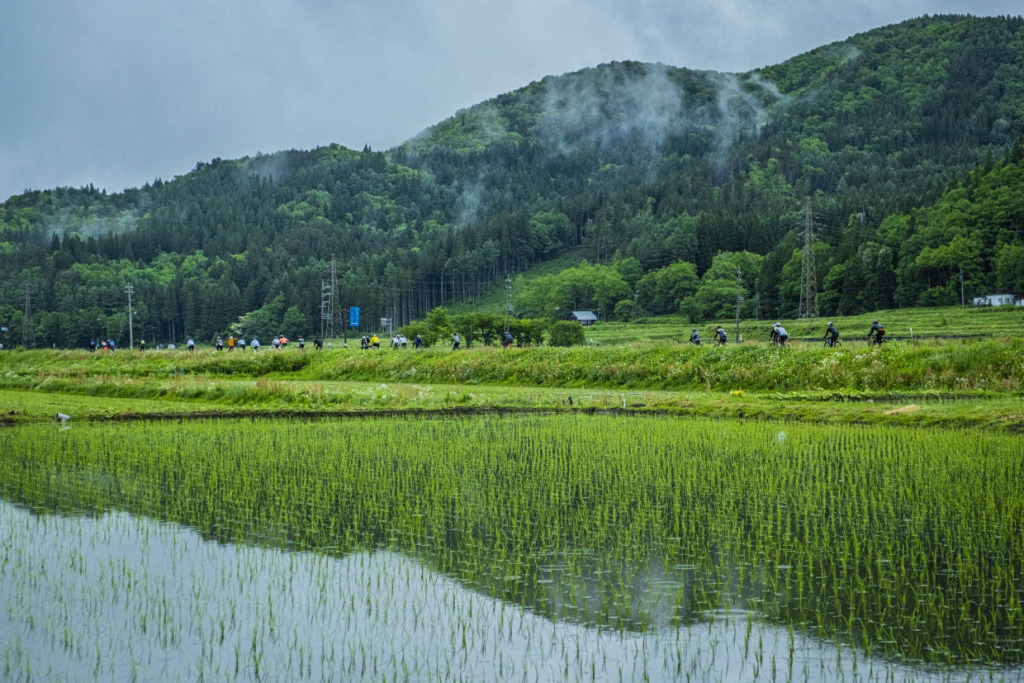
After weaving through a series of wooded climbs and descents, the landscape suddenly opens up, revealing the countryside of Azumino stretching out before you.
An expansive patchwork of rice fields extends toward the horizon, offering sweeping views in every direction. It is the height of the rice-planting season, and the neatly divided paddies are filled to the brim with water. Countless shimmering surfaces reflect the surrounding scenery like a vast mosaic of mirrors.
After about an hour of riding through the scenic Azumino countryside, the first aid station is just ahead.
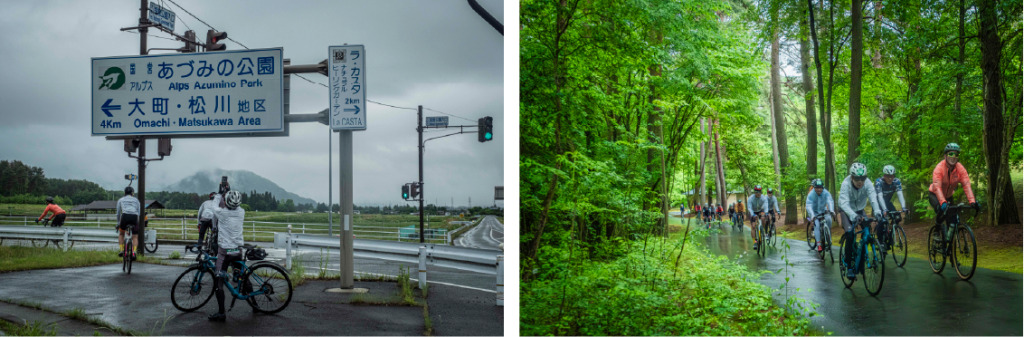
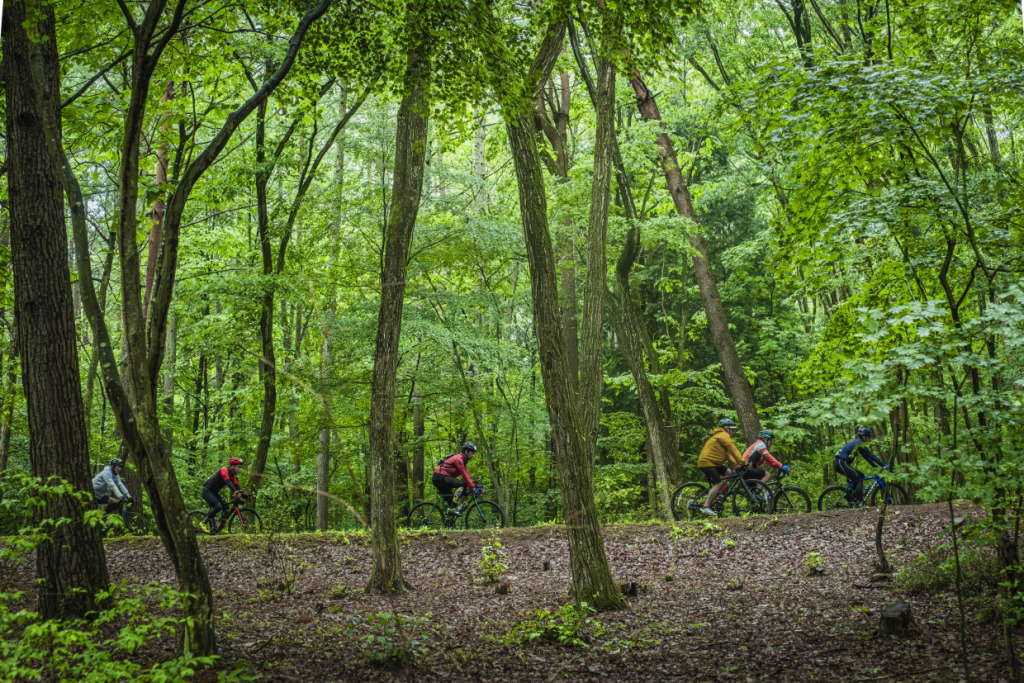
Turning off the main road, the course heads into the forest of National Alps Azumino Park. The park’s roads are normally closed to vehicles, but on this day they are opened exclusively for the event. Riding along the tree-lined paths through the lush forest feels like a refreshing forest-bathing experience, with the cool air and rich greenery providing a welcome boost.
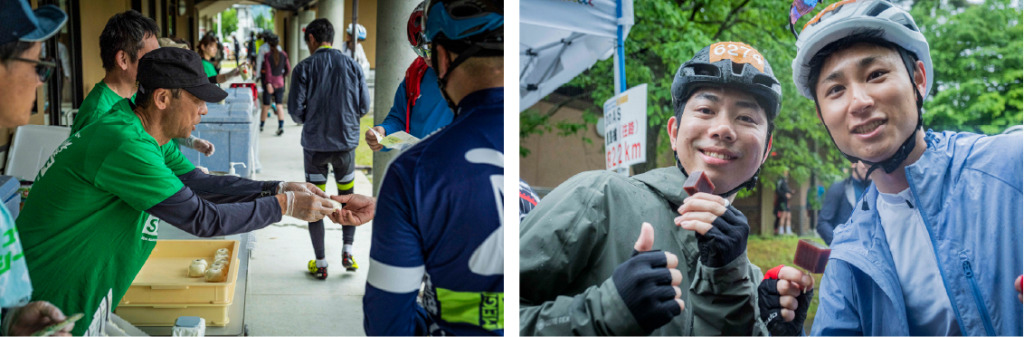
A short climb beneath the forest canopy works up just the right amount of sweat before the route arrives at the Omachi Aid Station inside the park. Drawn in by the irresistible aroma of freshly prepared local food, my stomach is already beginning to rumble.
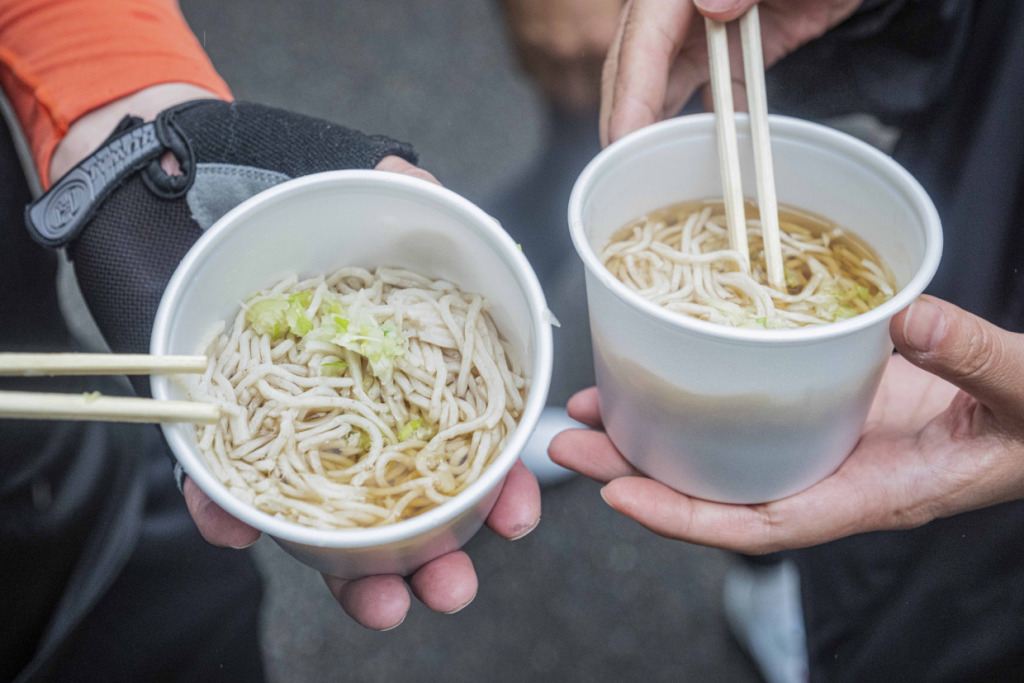
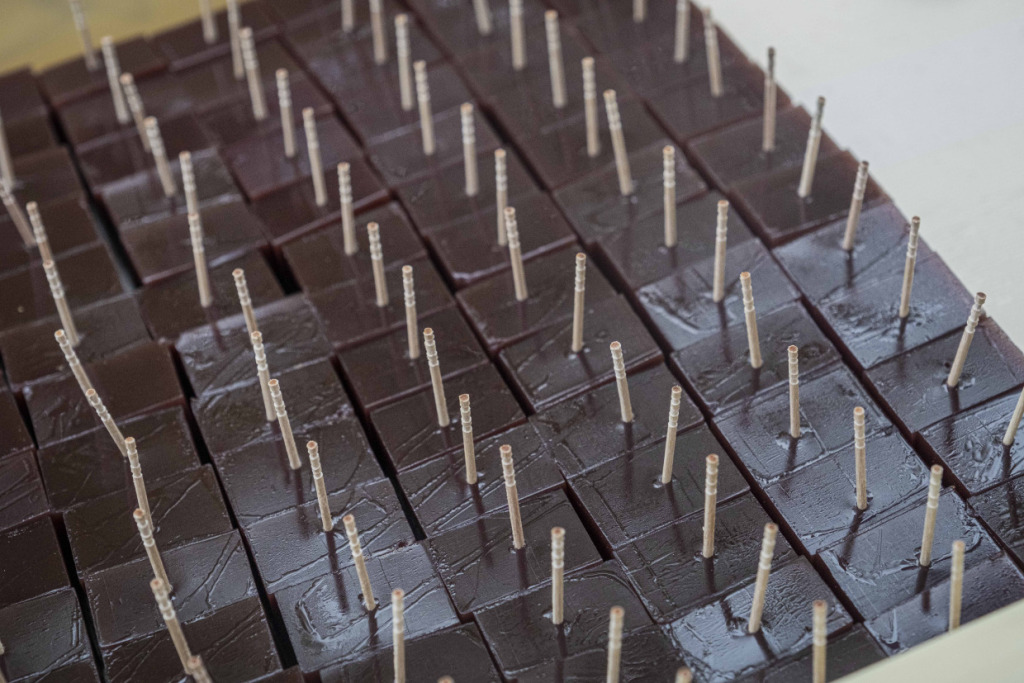
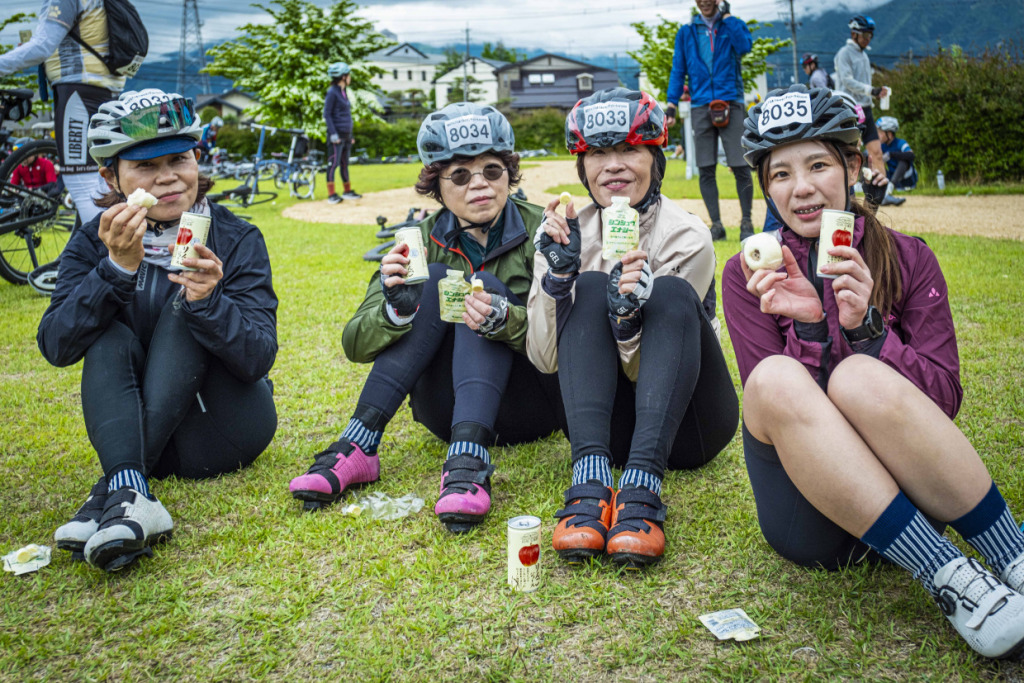
Whole Wheat Hiyamugi (served with chopped green onions) & Yokan As the first aid station comes early in the ride, the menu is intentionally light and gentle. The chilled whole wheat hiyamugi noodles are easy on the stomach and perfect for breakfast, while the chopped green onions add just the right touch of freshness and flavor. For dessert, a piece of smooth, refreshing yokan (sweet bean jelly) provides a satisfying energy boost. Looking back, it was the perfect opening course—thoughtfully designed to prepare riders for the generous spread of local specialties waiting at the aid stations further along the route.
2. 19 km – Omachi Aid Station / National Alps Azumino Park (Omachi–Matsukawa Area)
Tempted by the soba and yokan, I found it hard to leave the aid station—but this was only the beginning of the ride. With a little encouragement to myself, I got back on the bike and continued onward.
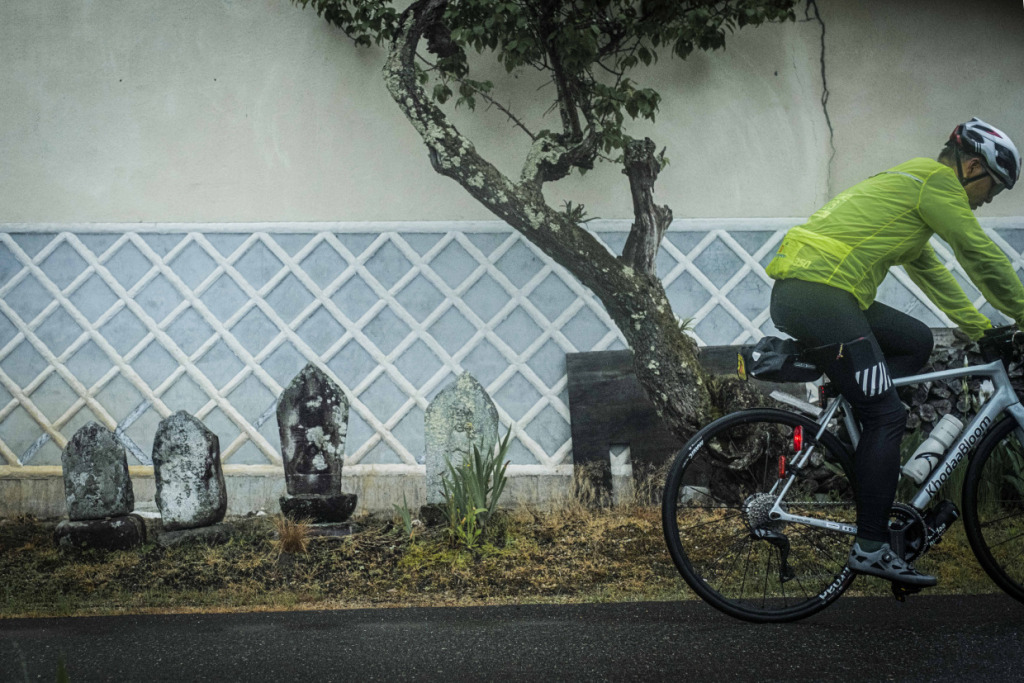
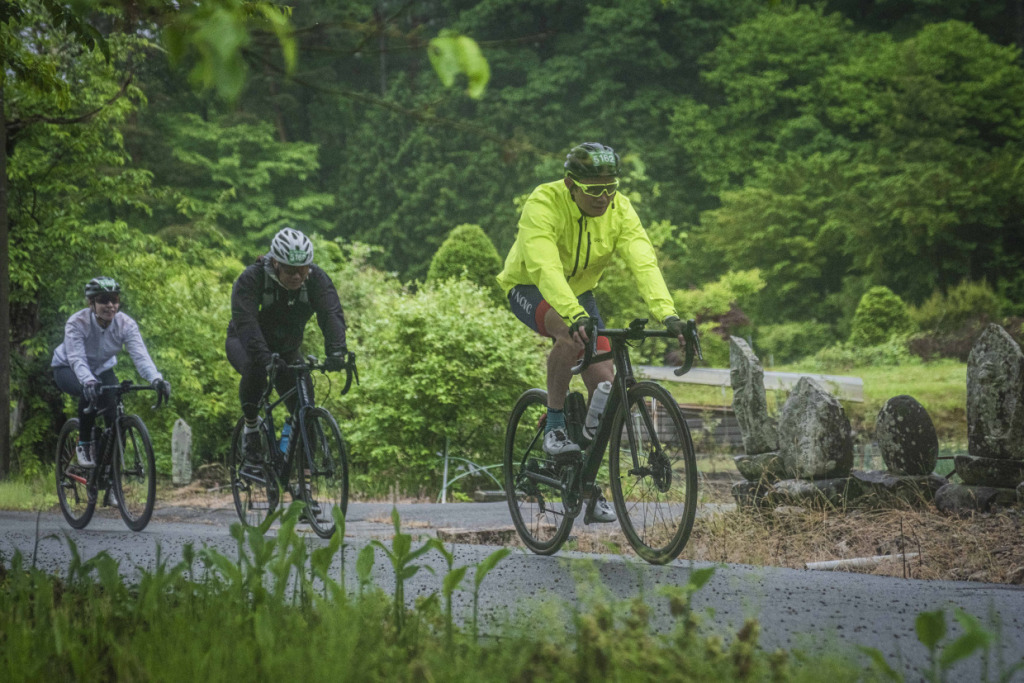
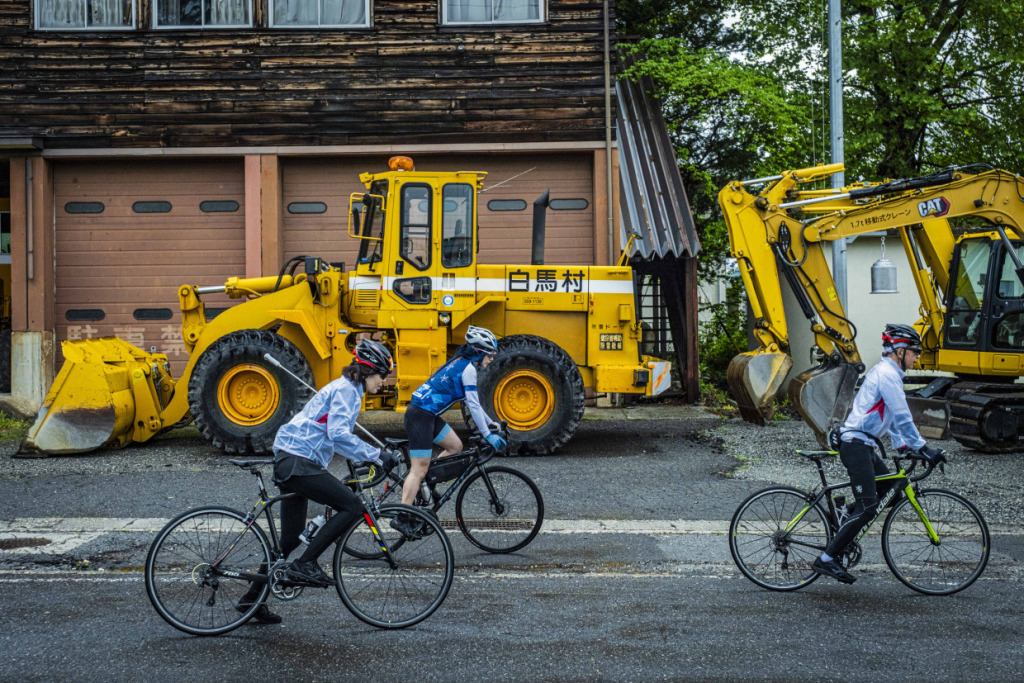
The peaceful rural landscape of Azumino unfolded around me. In this section, the course cleverly avoids the main roads, linking together farm roads and old routes to guide riders deep into the satoyama countryside.
Along the way, traditional Shinshu roadside guardian figures known as Dosojin and stone Buddhist statues quietly stood by the road. The route brushed past old houses with charming white plaster walls before leading into solemn sacred groves surrounding local shrines.
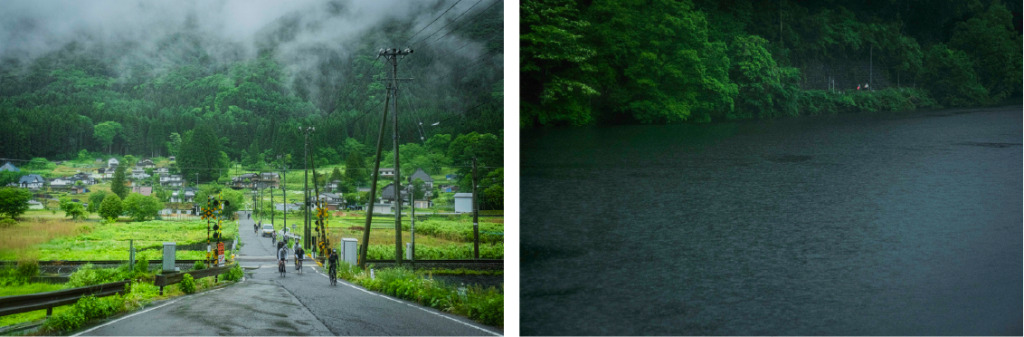
A nostalgic railway crossing along the JR Ōito Line was another moment that made me stop and take it all in. Perhaps trains rarely pass through here; the timeless rural scenery felt as though it had been frozen in place. Maybe this is what people mean when they talk about an “original landscape”—a scene deeply rooted in memory and place.
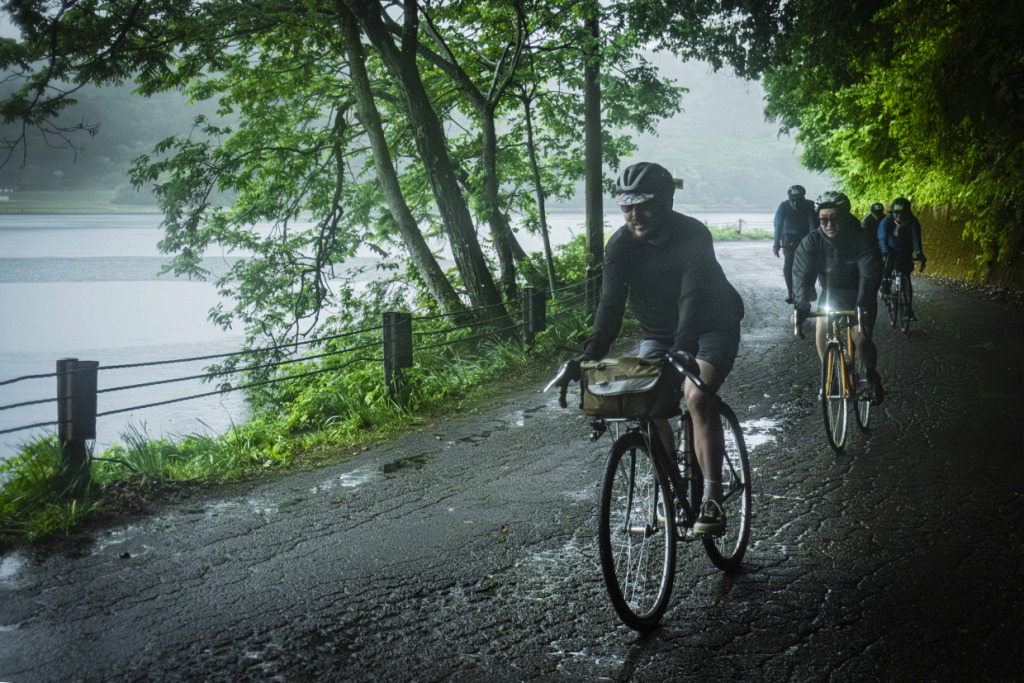
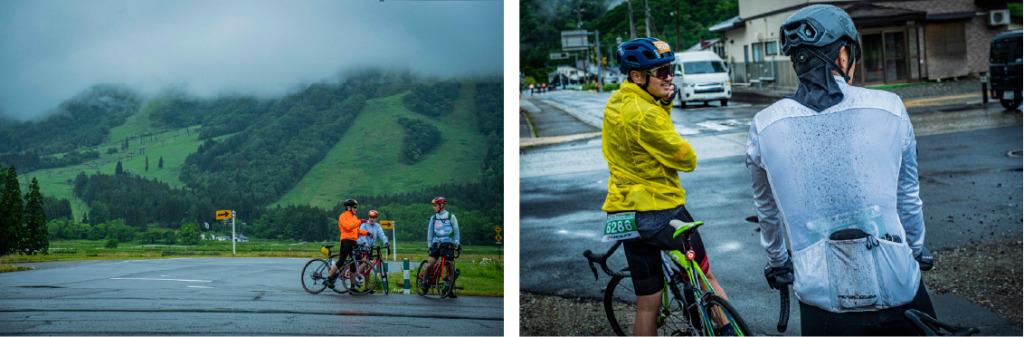
Eventually, the rain became a proper downpour. Yet even while getting soaked, there was still joy to be found. A casual exchange with a fellow rider I had never met—“Looks like we’re getting pretty wet!”—turned into a little conversation on the saddle. Somehow, even the rain became part of the experience. And that, too, is the pleasure of riding a bicycle.
As I pushed through the gradual climb, the view suddenly opened up before me. It was Lake Kizaki.
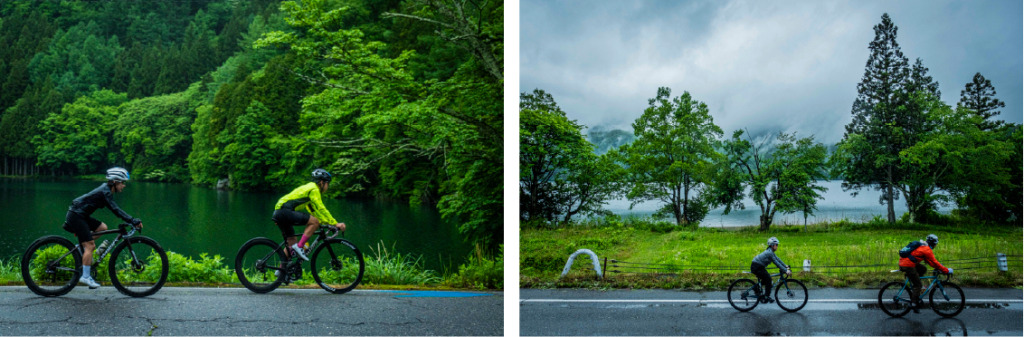
One of the three beautiful lakes of the Nishina Three Lakes, as they are known locally, it is famous for its crystal-clear waters. With heavy rain falling around me, the lake’s surface took on a soft, misty appearance, creating a quietly beautiful scene.
Riding along the lakeside road with the water stretching out to my right, cyclists passed and were passed again as we worked our way up the gentle incline. Before I knew it, I had ridden more than 20 kilometers—but the distance had flown by in an instant.
Ahead, I spotted what looked like an aid station perched on a small rise. A short but punchy climb led up toward it, and within the small group I had been riding with, a few riders suddenly launched an impromptu attack.
I couldn’t resist joining in, so I jumped on the move and gave it a little extra push. AACR is not a race, of course, but these spontaneous moments of friendly competition that naturally emerge along the way add another layer of fun to the ride.
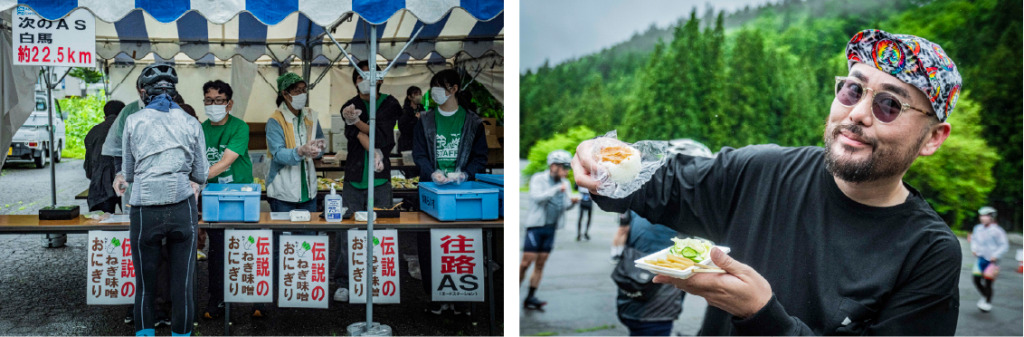
After powering up the climb, I arrived at a spacious parking area that serves as the gateway to Kashimayari Ski Resort in winter. Here, the second aid station was set up—and it was already bustling with riders happily stuffing their faces with local treats. The feast was clearly underway!
3. 42 km – Kashimayari Aid Station / Nakatsuna Parking Area, Kashimayari Ski Resort
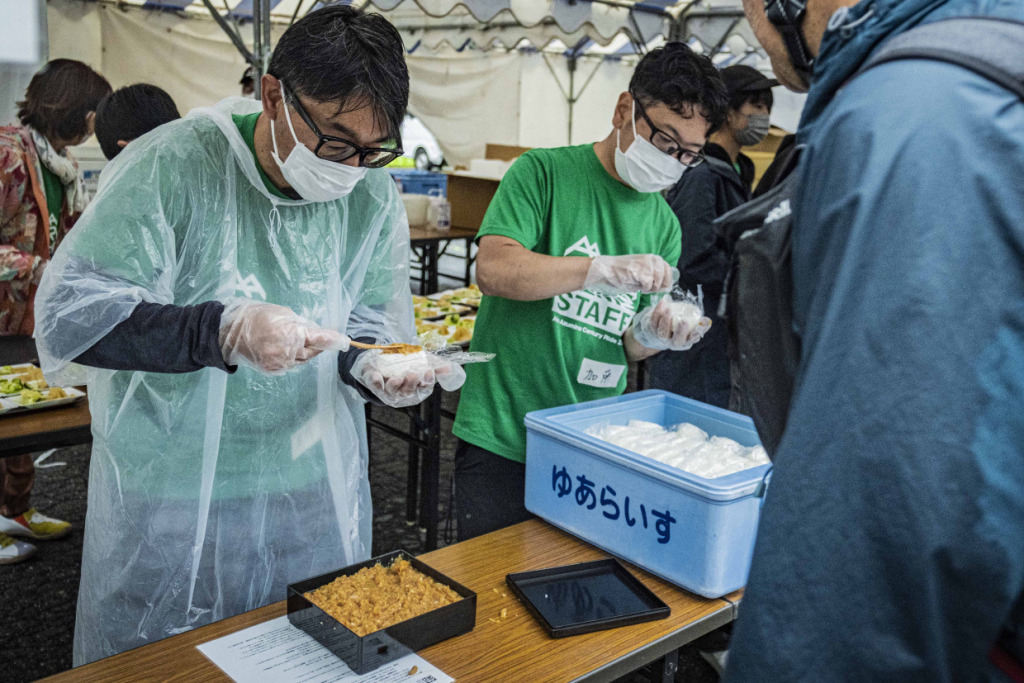
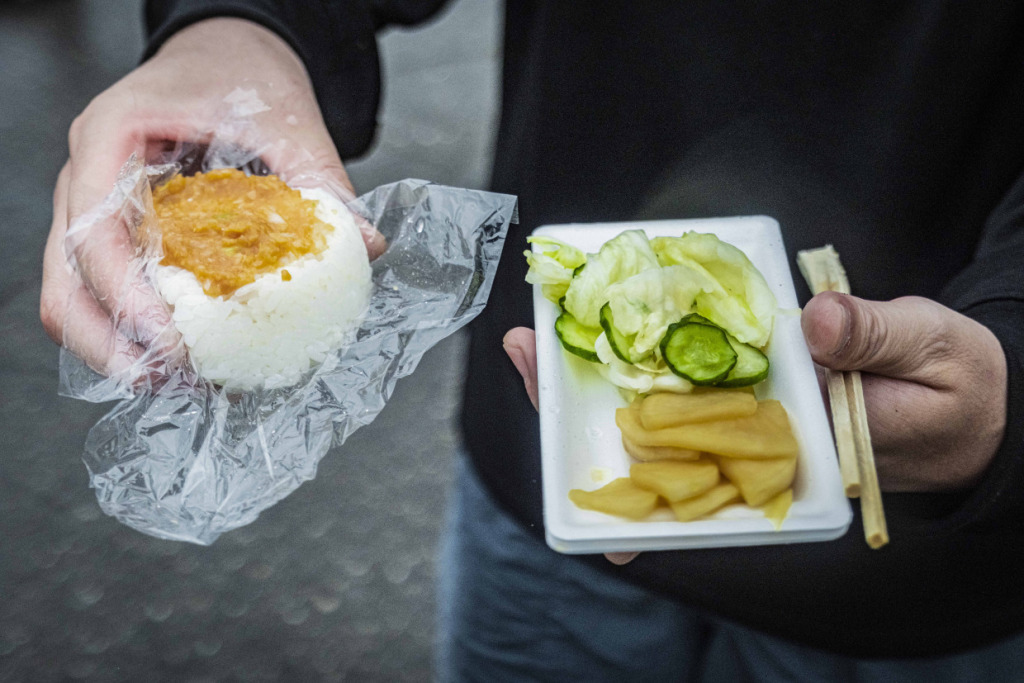
The “Legendary” Green Onion Miso Onigiri & Lightly Pickled Vegetables A gently formed white rice ball is carefully topped with homemade green onion miso, prepared with care by the local volunteers. The flavor itself is wonderful, but what makes it even more special is the time and effort put into each one. And since refills are available, going back for a second helping is highly recommended—especially with the more uphill sections of the route still ahead. On the return route, riders are treated to another local favorite: oyaki (filled dumplings, here with sweet red bean paste) and hiyayakko (chilled tofu), a refreshing taste of Shinshu’s regional cuisine.
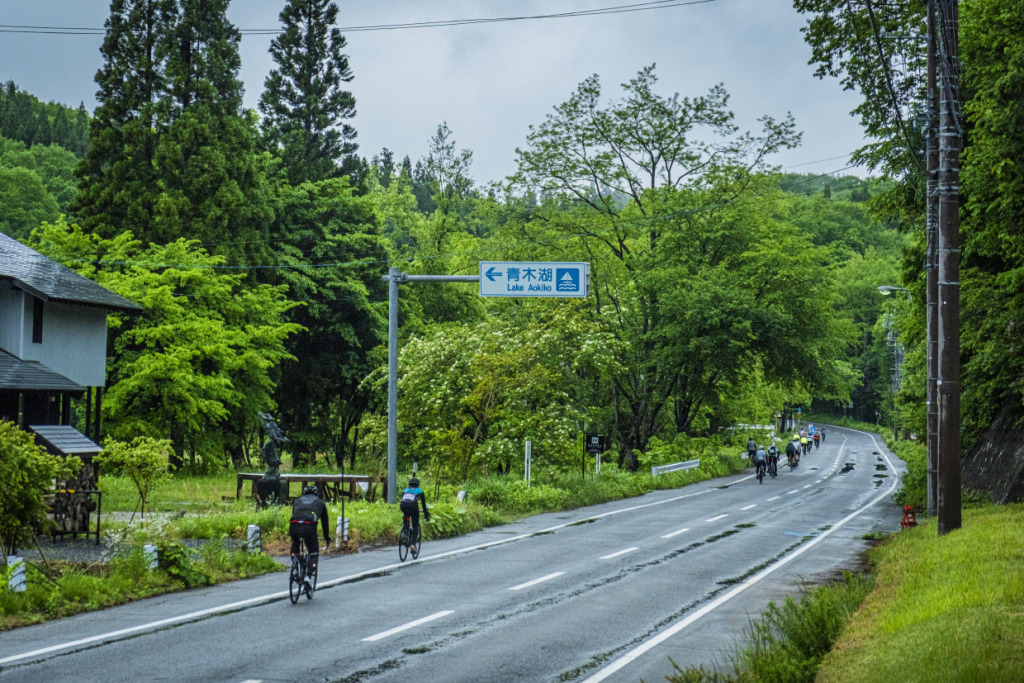
Refueled with onigiri, one of Japan’s ultimate soul foods, my heart and spirit are fully recharged. With a heavier gear and a faster pace, I continue along the scenic lakeside road connecting Lake Nakatsuna and Lake Aoki, two of the Nishina Three Lakes.
The area around the Nishina Three Lakes, including the Kashimayari Aid Station, sits on a highland plateau at around 800 meters above sea level, making it the highest section of the AACR route.
Riding through the priceless lakeside scenery surrounded by the forests of the highlands, I finally reach the long-awaited descent toward the Hakuba area—the true highlight of the AACR course.
Hakuba lies on a vast basin at the foot of the mountains, where expansive rice fields spread across the flatlands and the village’s communities are nestled among them. This contrast between dramatic alpine scenery and everyday local life is one of the area’s greatest charms.
The rice fields here are beautiful as well. On a clear day, the snow-covered peaks of the Northern Japan Alps would be reflected in the flooded paddies, creating an unforgettable scene. That will have to wait for another visit—but for now, the rain finally stopped, which was more than enough reason to celebrate.
I joined a fast-moving group of riders passing by and picked up the pace, becoming part of a small “herd of horses” racing toward the turnaround point. The return journey was about to begin.
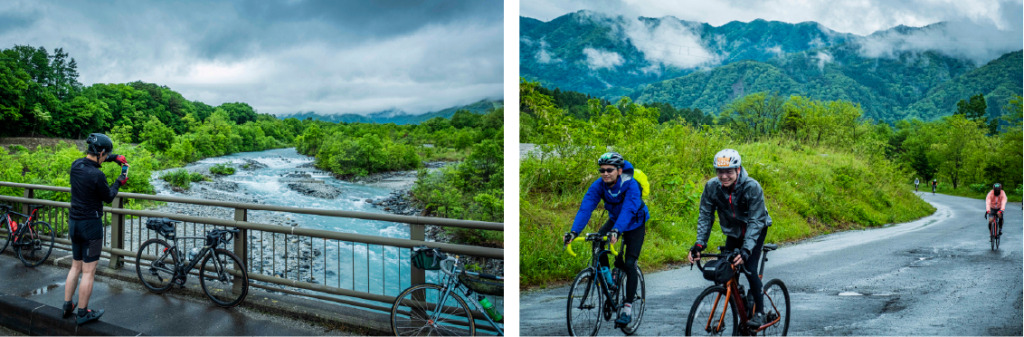
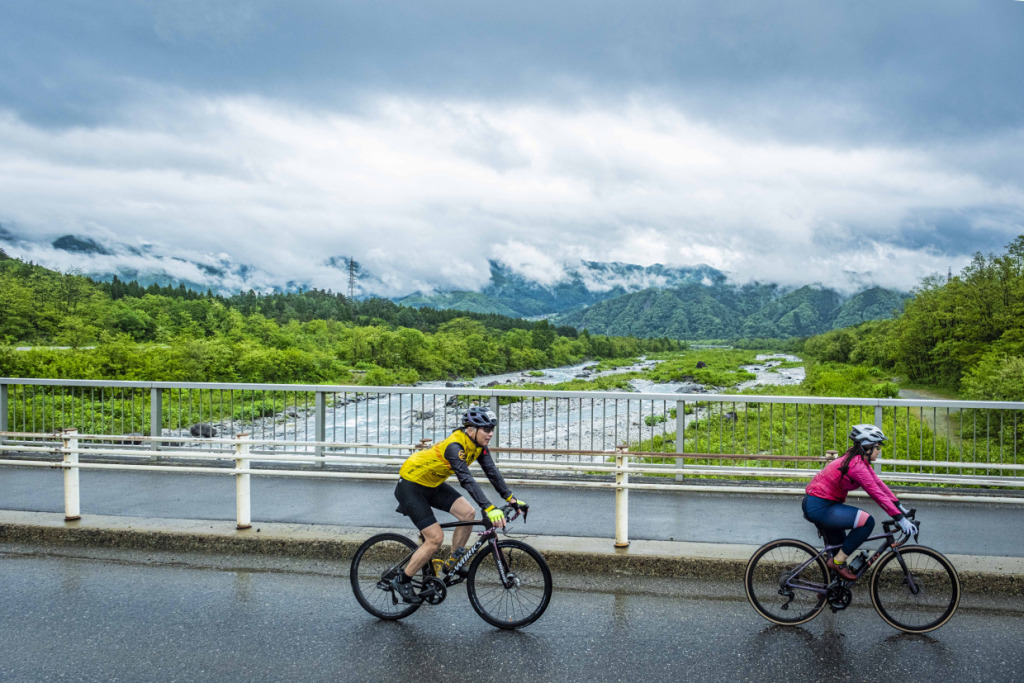
The rain had completely cleared, and across the river the mountains, now at the height of spring greenery, appeared in vivid colors. The ski slopes that are blanketed in snow during winter had transformed into lush green carpets for the season.
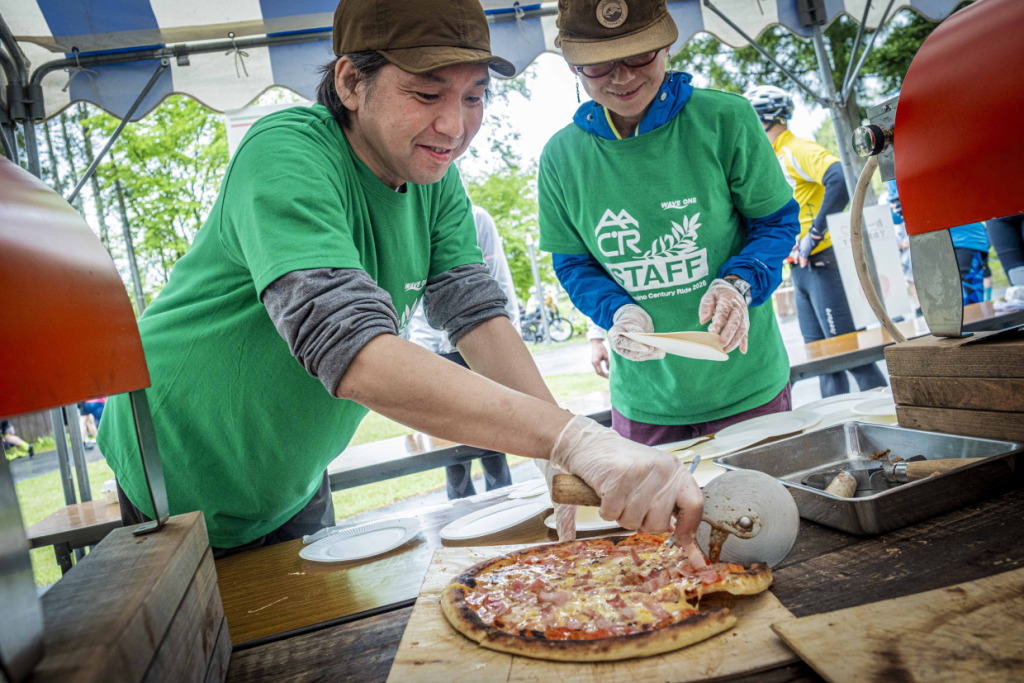
After tackling this short climb, the iconic Hakuba Ski Jumping Stadium, the venue of the 1998 Nagano Winter Olympics, came into view. By then, it was right around lunchtime—and I had arrived at the Hakuba Aid Station, where the much-talked-about stone-oven pizza was waiting.
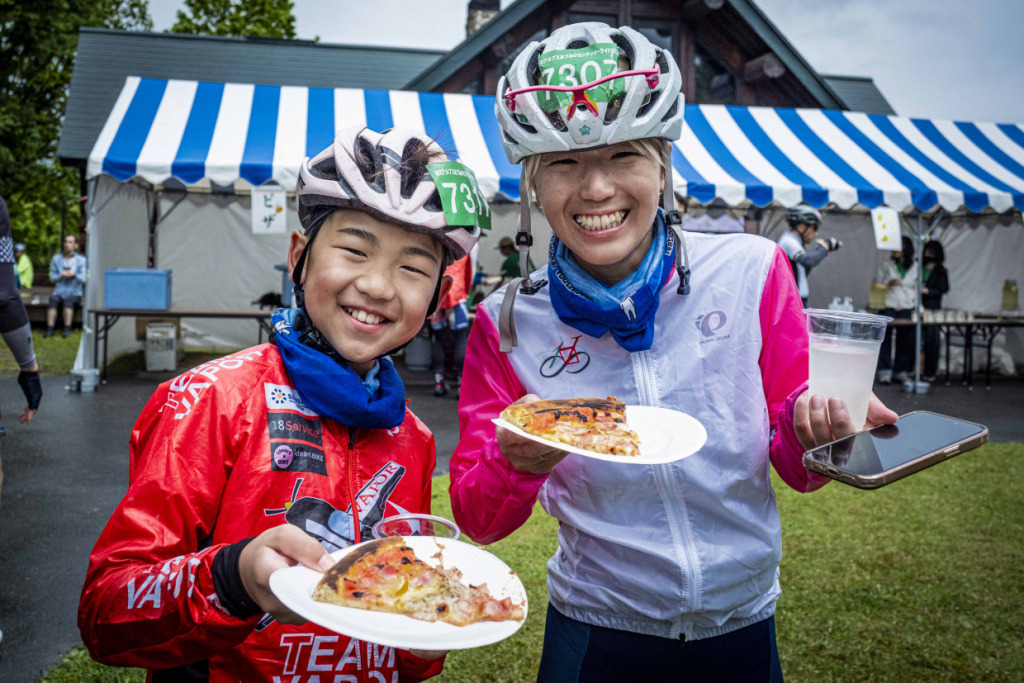
Stone-Oven Pizza (with Lemon Topping) & Homemade Lemonade A signature treat at the Hakuba Aid Station, this handmade pizza has become a beloved tradition of the event. Each freshly baked slice is carefully prepared in a stone oven, with a chewy crust topped with tomato, bacon, cheese, and a slice of lemon that adds a refreshing twist. Served together with homemade lemonade, rich in citric acid, it makes for the perfect recovery lunch after a long morning in the saddle. One important note: each rider receives only one slice of pizza, so be sure to enjoy every bite!
In the second half, we’ll turn back toward the finish aboard the much-talked-about Cycle Train, a unique feature of the Azumino Century Ride.
Stay tuned for the next chapter!
Profile
Eigo Shimojo Born in Nagano Prefecture in 1974 Belongs to IPU Japan Photographers Union He became independent in 2000 as a freelancer and established Greenhouse Studio, which handles a wide range of photography and video production. His life’s work is pursuing underground HIPHOP and bicycle culture around the world.